-compressed.jpg)
Daily, snackable writings to spur changes in thinking.
Building a blueprint for a better brain by tinkering with the code.
subscribe
rss Feeds
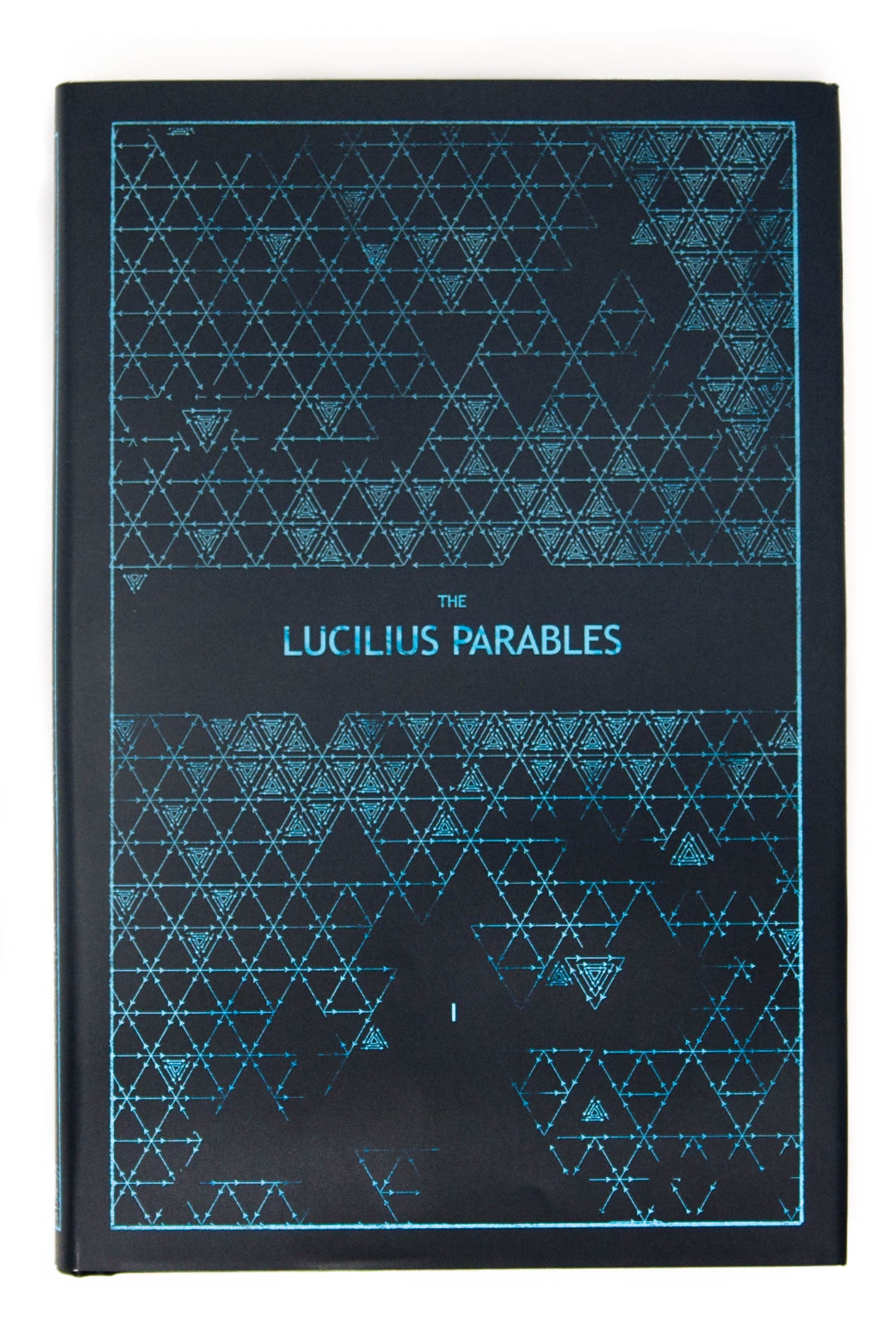
The SECOND illustrated book from Tinkered Thinking is now available!

SPIN CHESS
A Chess app from Tinkered Thinking featuring a variant of chess that bridges all skill levels!
REPAUSE
A meditation app is forthcoming. Stay Tuned.



TASTE
May 1st, 2020
What does it mean to have good taste? Is this just a matter of style and preference or is there something deeper going on? And why does this quality of taste expand beyond the realms of what we eat and drink?
Thinking about taste in it’s most basic primordial sense, taste was what allowed us to know if something was good and healthy to eat. If something doesn’t taste good, if it’s rotten, chances are high that we’ll get sick, and in pre modern times, that could be disastrous.
Having good taste in clothes doesn’t seem to have such a visceral and obvious connection to health. Or does it?
When the concept of taste is applied to realms outside of the kitchen, good and bad taste don’t necessarily mean you’ll get sick if you’ve got the wrong idea, but it does have an impact on your life.
This is easy to break down in our current climate of productivity, self-improvement and success. Good taste in many areas lends to credibility in the eyes of others which in turn helps create a healthy image of who we are. Beyond this, there’s an even deeper implication about the actual items that compose good taste. Not only do they signal to other people that you have a mind that is healthy, aware, and can quickly solve for the problem of style, but many things that are purported to be in good taste often advance us on a personal level. An exceptional drama that delves expertly into the human psyche becomes like a healthy exercise for someone to experience when compared to watching a soap opera which is perhaps not in strong accord with the way people actually function and the way we really experience one another.
This sense of good taste and style extends to all areas, giving social clues as to how our mind works. In realms where our physical health isn’t directly affected, taste becomes a way of identifying people of a like group, and naturally those who have bad taste think those with good taste actually have bad taste. We all have good taste, but in the long run these preferences don’t just decorate our lives, they shape our lives, for better or for worse.
It’s easy to dismiss taste and style as something superfluous, but it’s worth remembering that the concept derives from a very basic filter that we have used to help get us to where we are as a species. Every little choice that we make that is in good taste or bad ultimately comes back to us in some form or another, however minute or unnoticed.
GENEROUS PERSPECTIVE
April 30th, 2020
We associate the word ‘generous’ with giving, but this overlooks a wealth of meaning. Generous derives from the same root as generate. To be generous is to have the ability to generate. The association with ‘giving’ becomes entirely natural because if you can generate far more than you need or want, then it only makes sense to give it to other people who might benefit from the excess.
Keeping this nuance of the word generous in mind, what would it mean to have a generous perspective? It’s certainly awkward to think that you can ‘give away’ your perspective. That sounds more self-serving than it does generous. No, a generous perspective means a person has a mind that can generate perspectives. This has nothing to do with producing something that is given to another person as it does giving someone else’s perspective some space in your mind. The gift isn’t so much something novel you produce, but someone else’s gift that you reproduce in your own mind.
Is there any greater gift than to take the time to truly understand someone? Isn’t this what we all want? Is this not at the heart and core of the connection we all crave?
This generosity is an imaginative exercise. It’s akin to solving a riddle. We hear or read someone else’s words, and we have a choice: We can merely react to the words we encounter, or we can use these words as clues to construct a working model in our own mind of how someone else’s mind works.
Reading, writing, listening and speaking are all forms of this imaginative exercise. Often we are using the active forms of these mediums to push our own perspective on others, but the active forms of this exercise, that is writing and speaking are asymmetrical in the possible ways they can be used. Reading and listening are one-way activities. We simply receive the words, and hopefully our imagination can make some sense of them. But speaking and writing, while most often used to push our own agenda can be used to further the effect of both reading and listening. Instead of describing our own thoughts and ideas, we can form questions that further probe the ideas and thoughts of others.
Did you mean this?
Can you clarify what you mean by that?
How does your idea work in this or that context?
What about this variable?
How does it fit into a larger picture?
Do you have an example?
How has this been practical?
Wait, are you joking?
These are all active forms that evoke an opportunity for more listening or reading. Such questions are evidence of someone seeking to investigate another perspective more fully. In order to generate anything, we need some raw material, and in order to generate a new perspective in our own mind that is in accord with the way someone else sees the world, the raw material we need is detail, and this is one way the question is useful.
The more generous a perspective the more it can consume and understand as it finds connections across perspectives. Creativity is often the ability to put two things together than no one else has thought to put together before. And a generous perspective gathers the raw material for accomplishing just that aim. This is why great writers are also great readers. They have consumed many perspectives, not just on how to go about the craft, but also how to look at the world. Such a library of perspective is then rearranged in the writer’s mind, elucidating connections that other writers perhaps haven’t yet seen or perhaps weren’t worded as well as the way that occurs to our new writer.
But reading and writing aside the generous perspective applies, or can apply, to any and every facet of life. The faster you can understand what someone is trying to say, the stronger the connection, the more useful both parties can be. Like a neuron that is connected to the entire brain, an individual who has made a study of other perspectives can even begin to anticipate the thinking of other people as their perspective emerges in their own mind.
A generous perspective is a mental chameleon, but not for the purposes of camouflage. A generous perspective subsumes other perspectives in order to grow a toolbox of thinking, the way a chameleon has subsumed all the colors in order to have them on hand when they are useful.
When a novel situation comes around that someone else has already dealt with, we can turn on our version of their thinking and then navigate life with a greater chance of success. Is this not why we write, buy and read most non-fiction? To understand how someone else was thinking in order to accomplish what they have?
A generous perspective becomes ‘generous’ in two ways. First it generates another person’s perspective, and second, it gives that person the gift of feeling understood.
This episode references Episode 93: The Generator
CASUAL EFFORT
April 29th, 2020
What is casual doesn’t require effort, and what requires effort is rarely casual. To combine the two is to create a small virtuous cycle in your life. When some effortful task becomes an automatic habit, it becomes a casual occurrence. A casual effort isn’t a contradiction, it’s a subsumption. As a habit becomes ingrained in our behavior, the ease and casualness that it takes on overrides or eats the sense of effort that we felt in the beginning.
Soon enough, what seems like an immense amount of will power to other people is all but automatic and easy for the person who has put in the time.
Tinkered Thinking started off as a casual effort, and it could do this because a great deal of writing in other forms had preceded it. The task of writing for ten or twenty minutes a day was not much to ask. In fact, the freedom from editing, and a requirement to move on made this task even easier.
It remains a casual effort. As more people tune in, and these daily words fall under that gaze of more eyes and find their way into more ears, the process of generating these words remains the same. This is likely due to the process having a long and entrenched set of methods. The curious and wandering force at the helm of this imagination has been at the task long enough to be strong enough not to relinquish it. Or so it currently seems.
Any large accomplishment, be it writing half a million words or leaning how to code is a composite of thousands of tiny efforts. We can chop up a task into smaller and smaller pieces and inevitably the morsel of task gets to such a small size that to get it done would be a fairly casual and easy affair.
This is the key to long term accomplishments. Don’t expect yourself to write the novel in the next seven days. Just write one page every day. If that’s too much, write a paragraph everyday. If that’s too much just write a sentence everyday. The point is, find the amount that is pretty easy and then simply focus on making that a habit. Once the behavior is automatic, it will be fairly easy to increase the amount. It’ll most likely happen without much effort or thought.
For example, Tinkered Thinking is usually composed late at night. Which is actually an awful time. But it’s a compromise. If the work for Tinkered Thinking is done in the morning, there’s a fairly high chance that the writing will expands and take over the entire day as a single episode splits and multiplies into several episodes, all of them feeding off of the unusual amount of time and growing into pieces of writing that are not only longer but better. On the other hand, the end of the night puts a definite pressure on episodes to find their natural end. After 700 episodes and counting, it’s proven productive to alternate the practice between different parts of the day in order to get a bit of benefit from each situation. In this way, the practice of writing is a living, breathing thing that is subjected to it’s own stresses and relaxations, it’s own sort of famine of time and feasts of imagination. But this living thing still arose from something much smaller, when such tiny efforts were not at all casual, but ponderously difficult as a universe of all possible sentences weighed down upon the will to actually desecrate the blank page with a decision.
THE ART OF READING
April 28th, 2020
Every sentence is a puzzle. It doesn’t feel like this because we are so adept to understanding the code. But think back to when you were learning how to read. At first the symbols were mysterious, and just by looking at them, our parents could evoke stories. It was a kind of magic. Then we struggled to puzzle out the words as we learned, and slowly the lockbox of each sentence cracked open to reveal a hidden meaning.
Then a problem emerges. We come to think we’ve learned how to read, as though the skill has a level of competence that signals total completion. But as with many things, there exist layers of ability and benefit beyond mere competence. After we can read well enough to puzzle out the meaning of unfamiliar words from context alone, the advancement of ability no longer pertains to the raw mechanics of language, that of words, their definitions and the way they relate to others in a sentence to create a cohesive statement. After we have gained a fluid competence with the mechanics of language – and this is where it is generally declared that someone knows how to read – the task for an individual to become a better reader has to do with perspective. The mechanics of language is merely the medium of reading, and competence is but the first step.
Just because a toddler learns how to walk doesn’t mean they understand where they should go. The art of reading has less to do with words on a page as much as it pertains to the ability of the mind to inhabit a range of perspectives, and specifically, the perspective of the writer. The art of reading is in some sense the art of imagination.
Just as it’s easy to react to someone’s opinion with your own, it’s easy to grow bored and unimpressed with a piece of writing. What is more impressive on the part of the listener, or the reader, is the ability to inhabit the mind of the speaker or the mind of the writer.
We are poor listeners because we think hearing equates with listening. Likewise, we assume there is nothing more to be gained simply because it’s possible to read and understand what’s on the page.
We’re all vaguely aware of the possibility and large probability that we’ve often spoken before truly listening and understanding. Why should it be any different with reading? Especially when a writer has put in more thought, time, energy and investment into laying thoughts down in such a laborious manner.
We rattle off books worth of talking every year, but how many actually take the time to write an actual book? Just by dint of difficulty we should take what is written more seriously than what is said. If someone has taken the time, then we can be sure that it meant that much to at least one person and with the hope that it might matter to more. Most talk arises just so we can hear the sound of our own existence.
In lieu of this breakpoint in the ability to read, many writers end up pandering to the average reader who has developed little beyond a knowledge and know-how of the mere mechanics of language. This is a race to the bottom – a regression to the mean - as writers try to appeal to the largest number of people, the writing is forced to become diluted, and by default: mediocre.
It’s good in moderation but a fallacy in the extreme, grafted from the petty business motto that the customer is always right. While that might be true for ephemeral products that are produced to generate a business and a profit, it would be short-sighted in the least to say that such a motto applies to something like writing, which can effectively last forever. Dear writers, you aren’t simply writing for the current hoi polloi that you find yourself surrounded by, your audience extends from the billions that exist today to all future generations. Your audience is effectively infinite. So why cater to the opinion of a few around you who currently spout the need for simple, short, clear, concise and potentially plain?
Good writing urges the reader to level up their game as a reader. Some very good writing can be downright obnoxious, but such noxious effect is double-edged in it’s effect, like hormesis, it’s uncomfortable, but we benefit from that very discomfort. To crack a dictionary at the very least, and at most, to think in a way we’ve never considered before. Is the gift any less beneficial if you have to work for it a little? Certainly not, which explains why literary types will proudly attest to having read a book like Ulysses, Moby Dick, Don Quixote, or Paradise Lost. Some how the reading of such tomes feels like an accomplishment in it’s own right. While this is certainly not true in all cases, it most definitely is in some. The difference of course is whether a person has simply spent time looking at each and every word of such large books in order, or if they actually understood the levels of meaning that are reverberating through the text? Subtext, by default is a second perspective, and good writing begs the question of the reader: how agile is your perspective? Will you get lost in the rabbit hole or are you up for the adventure?
Writers are lured by the zen-like simplicity of aphorisms, metaphors, as though it might be possible for all great ideas to be phrased simply enough for any dullard to understand and thereby expand readership, the newsletter, views, and retweets. Great writing can certainly dabble in it’s fair share of such simplicity. All of this is not to say that there isn’t immense benefit in trimming and simplifying writing. It is a valuable exercise, but again, taken to an extreme, it risks a regression to an uninteresting mean.
Great writers are first great readers, but we never see this part of the process. We don’t see the many and various levels upon which their mind is interacting with the text, but to be sure, there is nothing simple and straight forward about the way a great writer approaches a piece of reading. By such time, there are a multitude of perspectives that are taking part, like an entire chorus of judges, students, characters and thinkers.
How do you think of reading? Do you expect to be spoon fed like an infant? Or have you developed the skill to smell out more meaning and hunt around for it? This of course begs no offense for those who do prefer to be spoon fed their reading in forms that are effortless to digest. Some reading is entertainment, and that’s fine, but we should not confuse ‘some reading’ for the entire medium. This piece of writing only begs for such people’s respectful silence when faced with something that is perhaps beyond their ability, or at the very least, a little complex. The written thought is almost certainly worth more than a reader’s lack of attention. A written sentence, by default requires more attention to produce than it does to consume.
Perhaps this is why some great writers grow so cryptic, like James Joyce. The coyness of such writing is perhaps born out of a frustration with vapid consumption. It’s parroted often today: create more than you consume. It’s good advice not just because it seems to lead to better mental health, but someone who creates is imbued with a respect for the creation of others. Such creators are quicker to understand the effort, attention and thoughtfulness that went into the production of some novel work.
The point of reading is at core the same as writing: to expand perspective. Both require work. If a reader fails to understand, there’s only a small chance the writing is actually gibberish. The reader who is quick to throw up their hands or become distracted by something else only does a disservice to themselves.
Even poor writing, or a rough draft offers enormous opportunity for a reader. Just as the writer is struggling to figure out what they mean to say, so too can the reader – so must the reader. A great reader may even understand more than the writer can convey, like completing a sentence for a lover stuck on words. Instead of calling something garbage, the great reader turns into the teacher, editor and student, and seeks to further themselves by trying to understand why it’s garbage, and what the writer actually meant.
If readers are treated like coddled toddlers, than the audience for such writing will end up being like coddled toddlers, seemingly lazy due to their inability, mouth open, waiting for the spoon.
A great reader who understands there is an art to their task wants the challenge. But not everyone is an artist, and that’s fine. This piece of writing merely begs any and every reader to pause before laying down a verdict: there may be more going on than you realize. This happens in real life all the time. As they say, hindsight is 20/20. Considering art imitates life, would it be any surprise that there’s more going on than you realize with the words right under your nose?
BLANK PRESSURE
April 27th, 2020
For some, creativity arises in all sorts of situations, while bored, while under pressure, while curious.
For a great many people, it requires boredom. A lot of it. And many people never get enough boredom to crack open that mental toolbox and get busy with something truly original and creative.
We distract ourselves with shows and reruns, games, podcasts, and zoom hangouts. We coast through undemanding jobs that succeed only in filling our time, and occupying our minds just enough, to keep boredom at bay despite how unfulfilling the tasks might be.
It’s perhaps the case that many people require so much boredom to crack that creative toolbox because we’ve been trained to be occupied. Almost no one finds school immensely satisfying and fulfilling. Our time is simply spoken for, and the education we get fills the space that we might otherwise use to try something interesting.
Quarantine has proven an interesting experiment in boredom. People are antsy, restless and “going crazy”. But if this were to continue, would everyone just continue in this state? Or is there a virtuous breaking point? A point when the brain says, ok, I’ve had enough, lets do something, anything, this or that, and wait a minute, haven’t we always wanted to do….
If you’re bored, embrace it. Don’t distract yourself from it with petty entertainment.
Put that blank pressure on your mind, sit with it, and soon enough the mind will start spinning up things you never dreamed you were capable of doing.