-compressed.jpg)
Daily, snackable writings to spur changes in thinking.
Building a blueprint for a better brain by tinkering with the code.
subscribe
rss Feeds
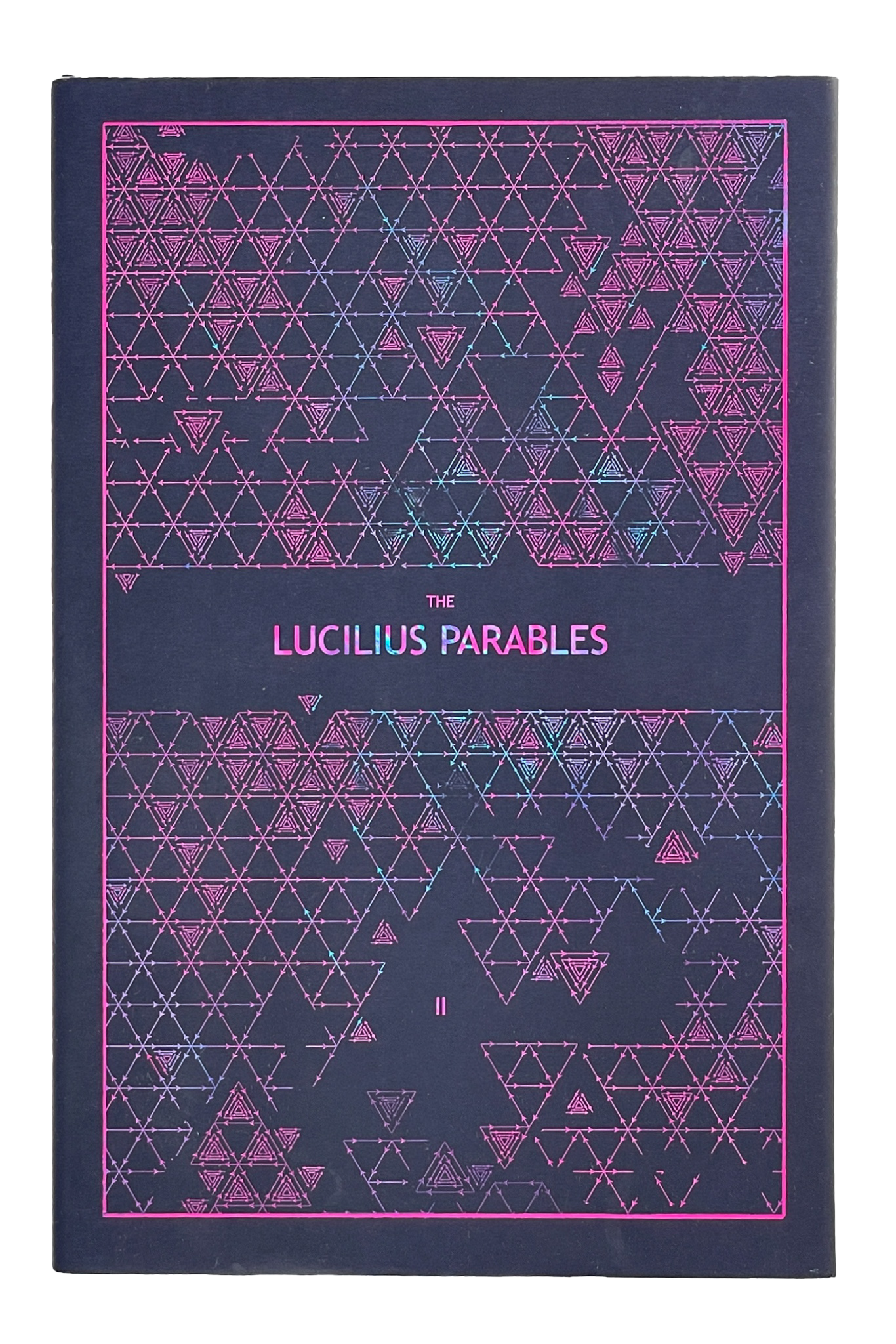
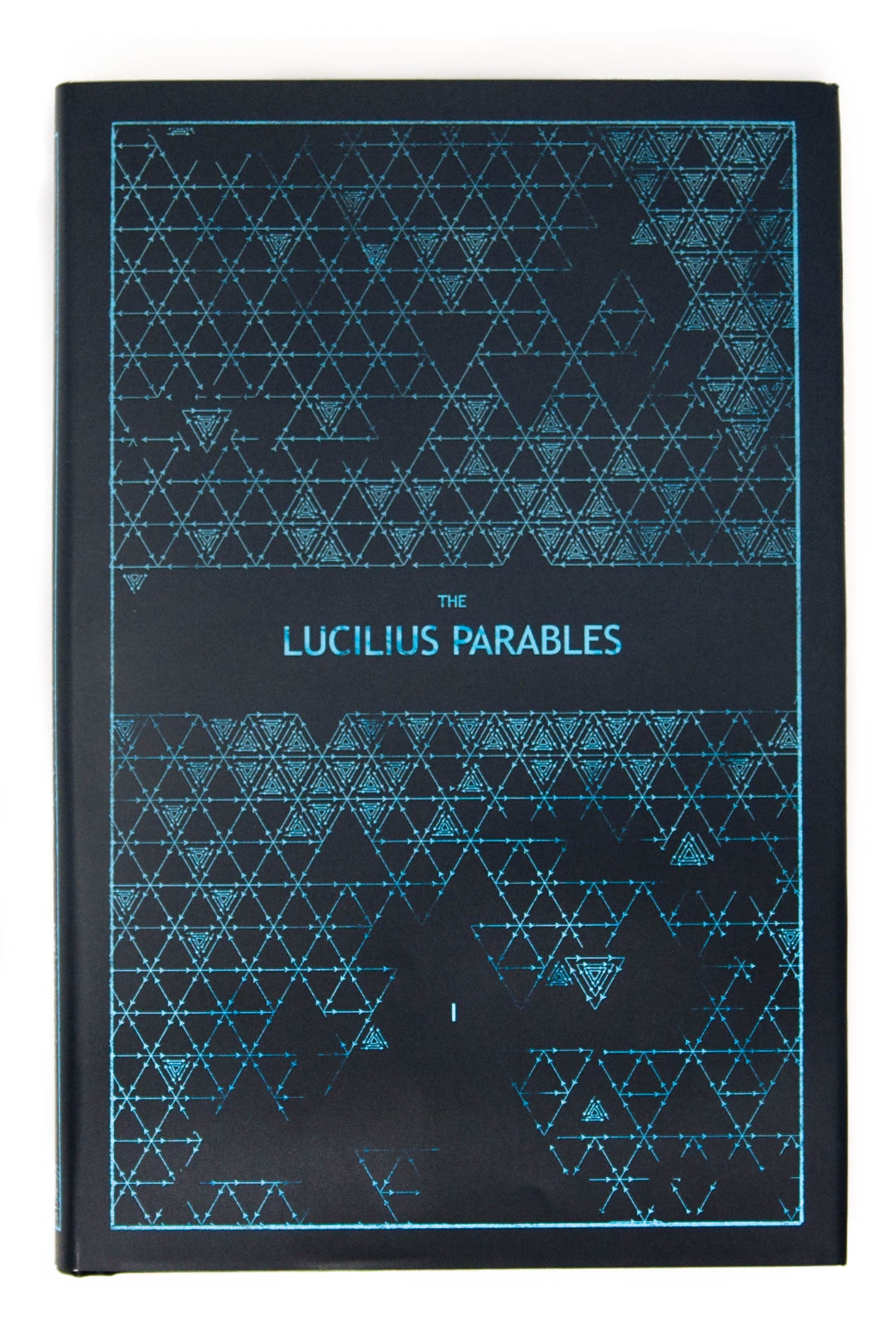
The SECOND illustrated book from Tinkered Thinking is now available!

SPIN CHESS
A Chess app from Tinkered Thinking featuring a variant of chess that bridges all skill levels!

REPAUSE
A meditation app is forthcoming. Stay Tuned.




A LUCILIUS PARABLE: PANDEMICS OF CAUTION AND WEALTH
April 26th, 2020
When the bureaucrats finally understood what the scholars were suggesting, they began to laugh, astonished at the audacity, the enormous cost they were suggesting.
Lucilius stood along a wall with other scribes as the looked on at the great circular table where the meeting was taking place. Torches lined the walls and smoke rose from a small fire in a vast copper bowl that was affixed in the center of the great table.
The scholars had delivered their presentation in a formal language, and the first of the bureaucrats to speak after their laughter had calmed, spoke in a ghettoed tongue, one they all knew but never spoke, one spoken only by the lowest and poorest of the city. The bureaucrat looked at the head scholar and sneered with a smile as he insulted him doubly, by his words and by the deep subordination his choice of language insinuated.
“Are you crazy, old man?”
The bureaucrat switched to the language of bureaucrats, still different from the chosen language of the scholars. Everyone in attendance knew dozens of languages, spoke them, wrote them, and switched their use to further flavor their nuance of message.
“The cost alone…” the bureaucrat closed his eyes, gently shaking his head as though to indicate the enormity of the mental task he was undertaking.
“Inconceivable.”
The head scholar, whom Lucilius worked closely with spoke, switching languages again, this time a tongue used by the merchants where all were comfortable with numbers and calculations.
“It is only a matter of time before our great library is visited upon by some disaster, and in order to preserve our knowledge, our history and our wisdom, we must as once begin a second library and begin the long process of duplicating our treasure.”
“Not enough to do?” The bureaucrat shot back. “It seems the library must be benefitting too much from the support of the state if it’s looking to undertake such needless duplicative work, and then asking for more money for such an extraneous proposal. Can you scribbling men not be happy with what you have?”
“One leg cannot walk without the other,” The scholar retorted.
“One needs only a single copy of a scroll to read it. Come now old man, where is your cup of Hemlock, your rhetoric is as bad as your old reasoning.”
Lucilius could see the scholar was unruffled, unfazed. “And if I plucked out one of your eyes, would you be glad the Gods wasted their time giving you two?”
The bureaucrat across the wide table sighed. “The answer is ‘no’, there’s no need to entertain this matter any further, and in fact, I am going to recommend to the treasury that we decrease funding for the library, since you all clearly have enough time to come up with such ridiculous ideas.”
The scholar slammed his fist upon the table. “We must build a second library, or we risk losing everything, and then all our children, and their children and the people for a hundred generations will be as lost as our ancestors were. The only reason you can banter back at me in the diseased languages, and the merchant languages, and hear our words in the formal languages is because this library exists. And there is only one. If we lose it then all of this fades from our world as the past fades from our memories and as the flesh fades from cold bones that move no more.”
The lesser bureaucrats shifted, uneasily, looking at their leader who held the gaze of the scholar, unimpressed. Then he looked down at the scroll he’d been given at the beginning, outlining the plan, the costs and the details. He rolled it back up, stood, and then tossed the plan into the copper bowl in the center of the table where it flamed up, the dry paper quickly disintegrating into tiny bright ashes that floated up in the smoke.
Some scholars gasped at the treachery, the audacity of burning such an important commodity.
“Your precious library will be just fine, and it’s enough library for Alexandria” the bureaucrat stated before he turned and walked away, the lesser bureaucrats rising and trailing in tow.
The scholars rose and huddled into a gaggle of nervous, hushed talking, and the leader of them all emerged from the group, walking away from the table.
Lucilius joined his side, likewise nervous but noticed the calm expression on the scholar’s face.
“What are we going to do?” Lucilius asked?
The scholar smiled a bit, looking to Lucilius.
“Whatever we can.”
RIPPLES
April 25th, 2020
The way yesterday went has a great impact on how today goes. That virtuous or vicious relation carries over and marches forward. What we do today has a big impact on the way tomorrow goes.
Each day is a balancing act where things can pivot for better or for worse.
Two easy examples demonstrate just how loaded this ripple effect is and how viscerally we realize it in some cases and totally fail to see it in others.
The first is cramming for a test. We’ve all done this. During the day before we pack every waking moment with a scan of information, a repetition of knowledge, believing that we’ll be better prepared if we can just cover as much content as possible and retrace our steps over the most important parts. In this instance it’s fairly obvious and pretty straight forward how one day effects the next.
The second example is a hangover. The night is full of celebration, and we live it up, and the next day, we’re practically out of commission. We know that this happens, but our ability to willfully ignore it is sometimes just as strong as our concentration when cramming for a test.
Each day sets up the next, but we are only sometimes thinking about our current efforts in terms of future efforts. When we do, the efforts can compound. Preparing for the test for several days in a row, or even several weeks makes the experience of that information far more efficient and effective than cramming it all into a day. There is an aspect of momentum that seems to exist in our minds, and ripples sent from the past time and again have a capacity to compound upon the present, sometimes giving us incredible abilities.
We know how easy or difficult it can be to get back into the groove. Leave off working on a project for a few days and it can easily balloon into weeks, months, and forever. Diving back into it can leave a person scratching their own head, wondering what took so long. The next step rarely turns out to be as difficult as we fear, yet the time of unseized days has a way of rippling forward and compounding into a barrier. The same seems to be true in relationships when people fall out of touch. As time goes by it becomes somehow harder and harder to make that first step.
We get into a rhythm, and the beat of that rhythm is set by the days we’ve just played. Each day is a chance when that beat might change. It’s not too hard to tweak, especially if you have a history of tweaking those days. Those ripples of change carry forward, making each new iteration a bit easier.
QUESTIONS & ANSWERS
April 24th, 2020
Our most difficult task at all times is to look at reality and determine what is possible, and what is not. As powerful and essential as our imagination is, it leads us astray much of the time. Imagination often fails to pay heed to some true laws of nature and pays too much heed to imaginary customs, invented by people, fake laws, if you will.
It’s well known that you can teach a gorilla sign language. But strangely enough, even though you can ask a gorilla a question and it will answer, such animals don’t ask questions.
This might give a clue as to why our species has been able to accomplish so many outrageous things. There aren’t any fish or caterpillars, whales or giraffes that have been able to send any of their kind to the moon.
Clearly our imagination plays a huge role in our success, and at the core of our imagination may be the ability to form and ask a question.
Questions are the product of imagination. Answers are a product of observation.
A question reorients your perspective on the world. The question makes you curious, and somewhat suspicious of reality, as though it’s hiding something that you can discover.
The process is fairly straight forward, and it’s a lot like the scientific method: you ask a question, and you poke reality in a way that hopefully answers your question. Sometimes you get the sort of response you’re looking for, sometimes you get something totally surprising, and often you get no answer at all. This process repeats. Based on the feedback, we ask another question that’s been informed by our first experiment. Eventually, we end up rephrasing our initial question until the framing of the question creates a perspective on reality where the answer emerges.
The art of the question is the art of rephrasing, and doing so until the question phrases the parameters of that unknown answer so well that the question actually begins to describe the answer.
It’s never just one question and one answer. It’s a game that volleys between reality and our imagination.
This whole space is indeterminate. It’s uncertain, and while it can feel as though it lacks the order that accompanies certainty, it’s a fluid process that has a method and a logic of it’s own, the way two people dancing together don’t know what the next few moves are going to be, but they operate on heuristics that allow them to move gracefully through that improvisation.
The analogy of volley goes even further. Just as it only takes one ball to play a game of tennis with two people, the volley of questions and answers has one thing at its core: our perspective. It’s the way we view things and understand the situation that is getting volleyed between reality and our imagination. It’s important to realize the difference between our perspective and our imagination. Our perspective is an understanding, whereas imagination is this chaos machine that we have somewhat separately from our perspective. We understand the world to be a certain way, but still have some confusion, and our imagination supplies us with these odd ways of looking at the world, seeing connections that aren’t explicit when we just look at the parts, and from that warp of imagination we then question reality. The answer we get isn’t somehow a raw piece of reality, it’s just another influence that shapes our perception. We then go back to the imagination with this new understanding, and with luck, we get another question.
The true power of the imagination is that it allows us to wonder if reality isn’t as it seems. It allows us to wonder if there is a secret mechanism that is making things work and behave the way they are. Essentially, the imagination allows us to see a different reality. It’s messy, and clearly the imagination can be disorienting, but this is why it’s so important to try and pin down reality with the points of those questions. The way to stay grounded is to actually try and find the ground, the bedrock of reality, that waits for us to see it as it really is.
This episode references 739: Fake Laws
FAKE LAWS
April 23rd, 2020
What guidelines does imagination follow? It certainly breaks some laws, the big obvious ones, like gravity, and a variety of other chemical laws and those of physics as we imagine castles in the sky and things appearing out of thin air and then transform into something else. Meanwhile, imagination pays heed to other guidelines that aren’t actually real. We imagine within the confines of our culture.
How is it that our one superpower is so irreverent of the laws of nature, but behaves in the light of other people’s opinions?
We are limited not by what is actually physically possible, but by what we believe is acceptable in the eyes of other people.
This isn’t too hard to realize, and it’s encapsulated by such platitudes as the perennial “don’t care what other people think.”
But here’s the thing about caring about what other people think. If you don’t explicitly question why people behave the way they do and why you operate within the customs of normal society, then your default will be to operate within those constraints, regardless of whether you have a suspicion that they might be bullshit or not.
An explicit question cleaves a subject, deconstructs it, reveals it’s gut, or lack of substance, and this process of questioning is an emotional realization more than it is a logical understanding.
Dietary suggestions prove to be a good example of this if you dig into the history of it a little. We would benefit from asking why we eat certain things. Did hunter gatherers have a bowl of cereal before they went out to do their hunting and gathering? It’s a banal example, but considering how tremendous the shift in health and weight has been over the last century, it goes to show just how susceptible we are to following the herd. Few buffalo ask why they shouldn’t turn off from the herd. There seems to be good reason for this, but being unable to do this means you’ll have no other option when the herd is going over a cliff.
The only laws that really need to be studies are the natural laws of physics. Is it at all surprising that we don’t learn the laws of our country in school despite their being thousands of laws? Somehow they all fall within the realm of ‘common sense’, or rather, we’re so good at picking up on these laws from what others do that we abide due to an osmosis. Not to mention the fact that few people care about breaking a law if it’s clear that it won’t hurt anyone.
But we might do well to take this further: what frivolous laws are we unconsciously following that would be a great benefit for us to question?
THE REINS
April 22nd, 2020
Our imagination is our one true superpower. But the benefit of this superpower also creates the biggest bottleneck between what we imagine and the reality we live in. Our imagination manifests superpowers that only exist in the imaginary world.
Each of us can close our eyes and picture castles assembling themselves in the sky, spaceships cracking the fabric of space, or perhaps things far more quaint, like that cabin in the woods we’d like to build, or that family we’d like to be surrounded by. The ease with which these things can be imagined is somewhat deceptive. Converting products of the imagination into works of reality is to negotiate an immense gulf. This void, bottlenecking dreams from entering the world we know, is the true realm of the exceptional imagination – one that can imagine in terms of the real.
Things is, it’s all fine and good to imagine a castle in the sky. It’s a delightful image, but it does little more than encourage someone to disassociate from the real world.
There is nothing special about imagining the impossible. What’s truly impressive is achieving what has never been done but what is entirely within the realm of possibility.
With our entertainment, perhaps our religions, and even with our personal dreams we allows our imaginations to venture ridiculously. It is like the friend we go for a hike with who is simply too fast and is out of sight in no time, leaving us to feel lost and lonely where we are.
Some people go on and on about IQ tests, others point at their social skills, others flex muscles, but at the end of the day, is not the greatest and most basic display of being alive the ability to imagine something and then do it? To make that imaginary thing exist in the real world?
The problem isn’t that we lack imagination, it’s that we let our imagination run wild without us. The subtlety lies in keeping tight reins on that imagination, not in the sense of keeping it reined in, but making sure it takes you along for the ride, weighed down as you are with all the laws and possibilities of the real world.