-compressed.jpg)
Daily, snackable writings to spur changes in thinking.
Building a blueprint for a better brain by tinkering with the code.
subscribe
rss Feeds
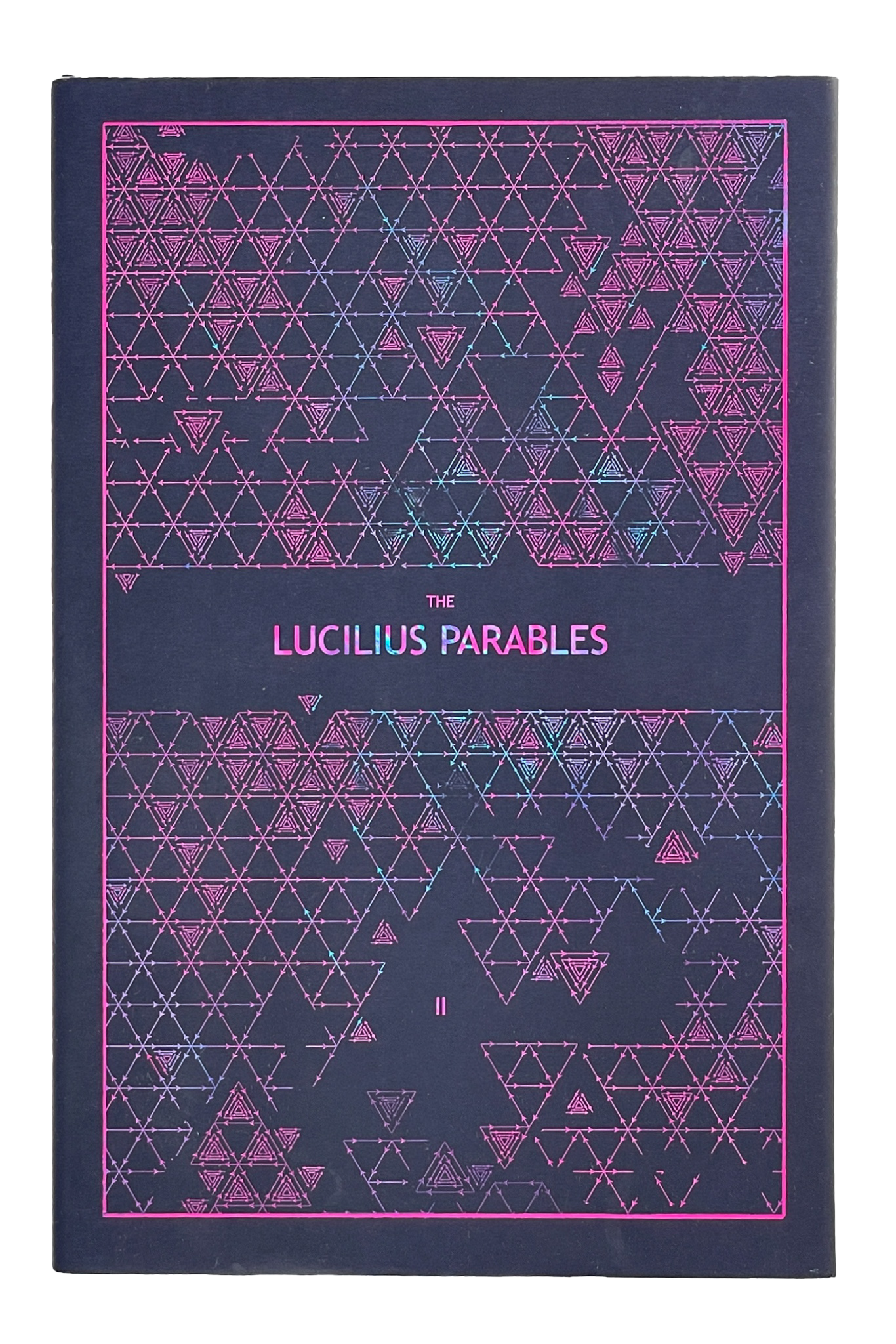
The SECOND illustrated book from Tinkered Thinking is now available!

SPIN CHESS
A Chess app from Tinkered Thinking featuring a variant of chess that bridges all skill levels!
REPAUSE
A meditation app is forthcoming. Stay Tuned.




WANDER
May 6th, 2020
Conscious aimlessness is a form of courage. Another way to phrase this is to describe how it begins. For many people it would mean being bored and simply immersing one’s self in the experience. Boredom is aimlessness without movement.
Given enough time the imagination begins to move and that aimlessness is cut down from all possible directions to an actual handful.
One of the purposes of civilization, perhaps even the main purpose, is to make things more predictable. No one wants to be subjected to the chaos of being hunted by unknown beasts that lurk around every corner. Being lost is a stressful and dangerous predicament, and modern society creates an order that allows for far more fidelity between what we expect to happen and what actually does happen. Though the pendulum on this gift has perhaps swung so far in it’s own direction that it’s hitched itself up in some corner of it’s own cage, and now, the benefits of the unpredictable only leak in by chance. We have set things up in a way that does not allow many of us to wander safely and productively. We can only traverse set and decided channels.
But such avenues can only lead to places that we already know about. These pathways not only maintain the status quo, they are the status quo. And who is happy with the status quo? Few if any.
So we must ask, what is required to find something new? Is it possible to find something new by travelling the same tried and true avenues that we have previously carved out? Or are we required to venture into the unknown in order to find the new? Perhaps there are undiscovered niches hidden within the circuits of our system that can be found if we wander the well beaten paths with a curious eye.
No discussion of wandering would be complete without highlighting the popular quote:
All who wander are not lost.
But where do such wanderers end up? To be lost is to have no bearings about where you are. Of course this doesn’t necessarily mean a person can’t figure out which direction might be most promising given the information available in the situation at hand.
We might not know where we are, but that doesn’t mean we can’t figure out which way to go.
What this means is that conscious aimlessness is a form of courage. It’s difficult and stressful to leave the predictable and venture out in new directions. There’s simply no telling what you’ll come across. It could be terrible, but it could also be good beyond your wildest dreams. The reason being of course that our dreams are often based on what we think is possible, and what we think is possible is highly informed by what we’ve seen done. It’s a true act of imagination to envision something that’s possible but which has never been done. The path towards such an accomplishment is never known because by default that path has never been travelled before.
The discovery of something new will always look like wandering before it is found.
What’s important to note is that there’s a difference between wandering aimlessly and wandering purposefully. In both cases one is bound to come across the unexpected, and that unexpected might be a useful treasure. But the second is the adventure of the true imagination, one that reads the echoes of reality and surmises that there may be a real place that has yet to be discovered.
Perhaps such purposeful wandering is simply what we call exploration.
IMAGINATIVE MAINTENANCE
May 5th, 2020
Boredom is the imagination’s punishment for being ignored. Of course, this humanizes the imagination, anthropomorphizes it, making it out to be like another person, one that has feelings and opinions about what we’ve done, or haven’t done. And for the most part, this is a mistake. As powerfully diverse and creative as the imagination is, it should be regarded less like some sort of entity or muse and more like a muscle.
A muscle has no opinion on what workouts you have or haven’t done. It simply exists and responds according to what has happened previously and what is currently happening. Just as boredom is the imagination’s punishment for being ignored, physical pain is the muscle’s response for being unused for so long.
Everything dies off if it is not fed in some way. Muscles atrophy when not used, the imagination goes blank, hunger fades after enough fasting, good relationships crumble if not nurtured, fire snuffs out if given no fuel.
It’s a universal principle: Use it or lose it.
But perhaps even more important is the inverse implication of this principle:
Use it to boost it.
There is no middle ground where we assume things stay at rest. Things either decay or improve. Rocks slowly chip and weather. Even the glass in windows slowly slumps downward over decades. Change is the only constant. And nothing highlights the state of an individual’s imagination more than a fat dollop of free time.
With this quarantine, for example, many people are having such a hard time with all this free time because life has normally been packed with the busyness of a bullshit job that only ever requires a sliver of creativity and imagination. And now, with the feeble constraints of a busy job gone, the true weakness of people’s imaginations becomes obvious, like an astronaut who cannot stand against the force of gravity after a long enough time in space.
On the other hand, for those who have by fortune or habit maintained a healthy exercise of their own imagination – these people are feasting on this opportunity of free time like never before.
Reminders that great things have been achieved during times of quarantine have circulated social media in recent months. Newton created Calculus during the plague. John Milton finished writing Paradise Lost during quarantine. Shakespeare’s most productive years were likewise during an epidemic. But the missing key for all of these anecdotes is the fact that these people were exercising their imaginations rather obsessively before the opportunity of such free time became available during times of the plague. It’s easy to imagine the mental health of your run-of-the-mill laborer during such times declining while these people created some humanity’s greatest works. In short, these creative people were prepared when the opportunity came along.
What harms one person is an opportunity to another. But where is the real difference if it’s the same event that both people are experiencing?
The good thing is that we can only stand so much pain before we get fed up and do something about it. What we do, of course, determines everything. If we don’t placate boredom with mindless entertainment – if we sit with that boredom, it burns itself out. The rusted gears of the imagination grow warm, and crackle back to life. The mind, if left to it’s own devices for long enough begins to create. Even those who have been mentally blindsided by this event have an opportunity, to once again, get their most powerful asset rolling again.
CHANGE MY MIND
May 4th, 2020
For a moment, think about what this sort of request entails: change my mind. Imagine if we changed the request with a simple substitution that is often mentioned in conjunction with the mind. Imagine if we were as casual with saying change my body. The invasive and deeply profound implication of a phrase like change my mind suddenly starts to resonate in a way that doesn’t normally come across when we use this common phrase.
Change my mind asks someone else to do something at once magical and devastating. To have a changed mind is to become a changed person. This sort of transformation doesn’t even extend to alterations of the body, whether we speak of whimsical tattoos or a missing toe or some hair that has fallen out, these changes don’t really change who we are. But a changed mind? The way we think is everything, and if the way we think becomes altered, does it not mean that our whole life is now different? That it’s not impossible to look at the world and reality in the way we did before?
To change a mind, whether it be one’s own or someone else’s is not just profound in its reverberations, it’s quite difficult.
Changing the body isn’t terribly difficult. We have much of the medical industry devoted to this practice, whether for health or aesthetics, and then of course there are tattoo artists, and pretty much everyone right down to the physical trainer and the absent minded woodworker - has quite a bit of ability when it comes to altering the body. But the mind?
Nothing is more intimate than to have one’s mind changed. Which perhaps lends some understanding to our rampant stubbornness, our squabbling, yelling, squawking, bickering, name-calling and biting speech. On the one hand we resist having our own mind changed, and on the other we attack the obstinate walls in other people’s minds with as much vitriol as might exist in the crown of a nuclear missile. The revelation on the one hand reveals the flaw on the other. No amount of caustic treatment is going to dissolve the walls of the stubborn. The tactic needs to be inverted.
The way to change someone’s mind is to first be welcomed into that mind. The process of being welcomed into another’s mind is the same as discovering it.
See, we make the mistake of thinking someone’s mind is located in their head, behind their eyes. The mistake is that we can somehow talk at it, in the direction to which it seems. But this is a mistake, the head of a person is just the portal to their mind. The location of the mind cannot be pinned down, it’s quality can only be revealed. The only way for this to happen is to listen. It’s the first step to changing someone’s mind, because it’s the only way to touch that elusive quality in each person. It remains nowhere until it begins to make itself known to us in our own mind by what we hear, and what we see.
The second step is to want more, to ask questions, and by doing so we coax more of that person’s mind into our own as we build a working model of the structure we uncover. We begin to build a map of a place we cannot visit, but to which only our words might echo and reverberate through. And if such words and ideas are welcomed then they gain that precious opportunity to fuse and further mold that elusive place that somehow exists within each and every one of us.
To seek it out from another, perhaps when we want to learn, is to see some possible improvement that can be made to our mind and by extension to the physical shape of our brain. The change might be tiny, some little stimulating weight change on a few neurons, perhaps some dendritic strengthening, but nonetheless a meaningful change.
How welcoming would you be to a stranger who wants to rearrange the furniture in your house? Is it any surprise that the wild protestations of our culture mostly land on deaf ears?
A LUCILIUS PARABLE: WELL READ
May 3rd, 2020
Lucilius closed the back cover of the book he had been reading and smiled. It was a good read. He stretched and yawned and looked around at the countless books, covering the walls, stacked up on tables, forming their own walls as stacks that wound around the tables. He got up and went to the counter and ordered another coffee and little pastry. He closed his eyes as he waited, listening to the grinder at it’s beans, the click clack of the espresso machine and the clink of the plate with his pastry on the marble counter.
He took his treats back to his seat and looked at the books that were stacked on the table. He realized he’d read the last of the bunch. It was time to find some more. He sipped the hot coffee and took a little bite of the pastry and then hauled himself up. He tossed the stack of books on a sorting cart and then gleefully went about his perusal. He held up a hand as he sauntered, a finger tracing against the spines, tapping their tops and tantalizing them with a chance of being read.
Countless stories riddled these pages. Perhaps all the adventures of humanity, and then even more. Perhaps all the stories of the universe could be found in these pages, he wondered. His eyes scanned the titles, seeing all the ones he had already read, images and visions, lyrics and passages from each lighting up in his mind. Such good living it was to live in these words.
He arrived at the last section he’d been mining and realized that he’d read the last book there. The rest he’d come across at some time or another. So he went in search of another shelf that he’d yet to explore. But as he walked around, he recognized each and every title.
So he got the ladder and started looking up at the higher stacks. But they too offered nothing new. Lucilius looked around the vast space of books, like a cathedral. It had been a while since he’d looked around at the gorgeous space, and he smiled again before turning back to his task. He searched for hours, but all he could find were books that he’d already read. He scratched his head and looked around again. The place was endless, surely he couldn’t have read them all.
Then Lucilius wondered how long he’d been there. He pondered a moment, and then realized he also couldn’t think of how he’d gotten there, nor where he might have been before. So many images from novels and stories seemed to crowd his mind. He had trouble trying to sift out what might be his life from all the lives he’d been immersed in.
He grew nervous. What he needed was a good book. Another to get lost in. He was just having an off day. Perhaps he’d think a bit better after the coffee and pastry, he reasoned. But before he went back to his snack, he needed a book to enjoy it proper. So he kept searching, until finally down low in a corner, Lucilius spotted a spine he’d never seen before. It was a small book and the spine was blank, which is how he knew he’d never read it. He’d never seen a book with a blank spine. He threaded it out from it’s neighbors and practically skipped back to his cozy seat. His coffee was luckily still warm and it was delicious to wash the pastry down with the bitter heat. He licked the flaking crumbs from his fingers as he chewed the last bit of pastry, and then after he’d hastily swept his hands clean with one another, he picked up the book to get started.
He opened it to find the title page blank. He flipped another page, and it too was blank. Perhaps it was an experimental novel? He flipped through the rest of the book, but the whole thing was blank. He turned it over, flipped through it again. He’d never seen a blank book before. He placed it down, wondering what to do. Then he picked up the book and went back to the spot where he’d found it. He recognized all the books it was surrounded by. There was nothing else here to read.
Frustrated, Lucilius shoved the book back into it’s spot, and as he stood he realized that it was still sticking out a few inches. He frowned, and kicked into place, as he turned to leave. But he heard a crack. He looked back, hunkered down and gently pushed the book. He heard the grating sound of fractured glass upon itself. He removed the book and a thin beam of light spilled out on his hand. He turned it over, watching the foot of the beam trace over the contours of his hand. He slipped the blank book into his back pocket and got down even lower to look. He squinted at the bright light. He couldn’t make out anything.
He began taking out books and as he did he began to see himself doing so. Behind the books was a mirror, and light was shinning through a small crack he’d made. It ran upwards so he began pulling out books on the next shelf and the next, until he was removing the shelves themselves, and soon stood in a mangled pile of books, looking at himself. He didn’t recognize the person in the mirror. It seemed like someone new, but then, he also realized he had no idea what he looked like.
The crack from the blank book ran up all the way through his image. He reached out to touch the crack that split the sight of his face. He could feel the crisp edge. He began to push and another crack sprung out in a wild direction. And then another, and another, until they began to glow, the whole of it like lightening, slowly growing to find it’s strike.
Then the whole thing shattered and Lucilius turned to shield himself from the blinding light. Slowly he looked back, waiting for his eyes to adjust. He stepped forward, still unsure of what lay ahead, unable to see for all the light that now filled the way. Lucilius tried to shield his eyes, waiting for them to adjust, but it was no use. He took another step into the light, and then another and another, with the blank book still in his back pocket.
HATEFUL VICTIM
May 2nd, 2020
What is the connection between harm and hate? If we are harmed, are we obligated to hate the source of that harm? More importantly, if we fail to hate the source of harm, is it still harm?
Consider it in even simpler terms. If hate were impossible, if it simply was not an option, how would harm be interpreted?
How much of a connection is there between the concept of a ‘victim’ and the way we interpret harm and feel towards the source of that harm?
Is victimhood the only interpretation of harm? Perhaps not all harm. But then is it possible to for all harms to be understood without the concept of being a victim?
The stoics and the Buddhists would certainly say so. The literature of such traditions is replete with instructions and examples for interpreting what happens in the best possible way, or at least in such a way that one is never without a say in the final effect of any harm or circumstance.
It’s interesting to note the etymology of the word victim. It comes from the Latin victima, and it denotes a creature killed as a religious sacrifice.
Oh how the word has drifted in meaning. Or perhaps it hasn’t. Perhaps people who identify as victims do so in relation to some larger meaning or structure, a bit like a martyr would. Other traditions are certainly filled with vainglorious stories of people who self-sacrificed, and in many cases this was a literal sacrifice.
We must ask: do such stories, either inherited or the one’s we tell ourselves, really serve us well by casting us in such a role?