-compressed.jpg)

Daily, snackable writings to spur changes in thinking.
Building a blueprint for a better brain by tinkering with the code.
subscribe
rss Feeds
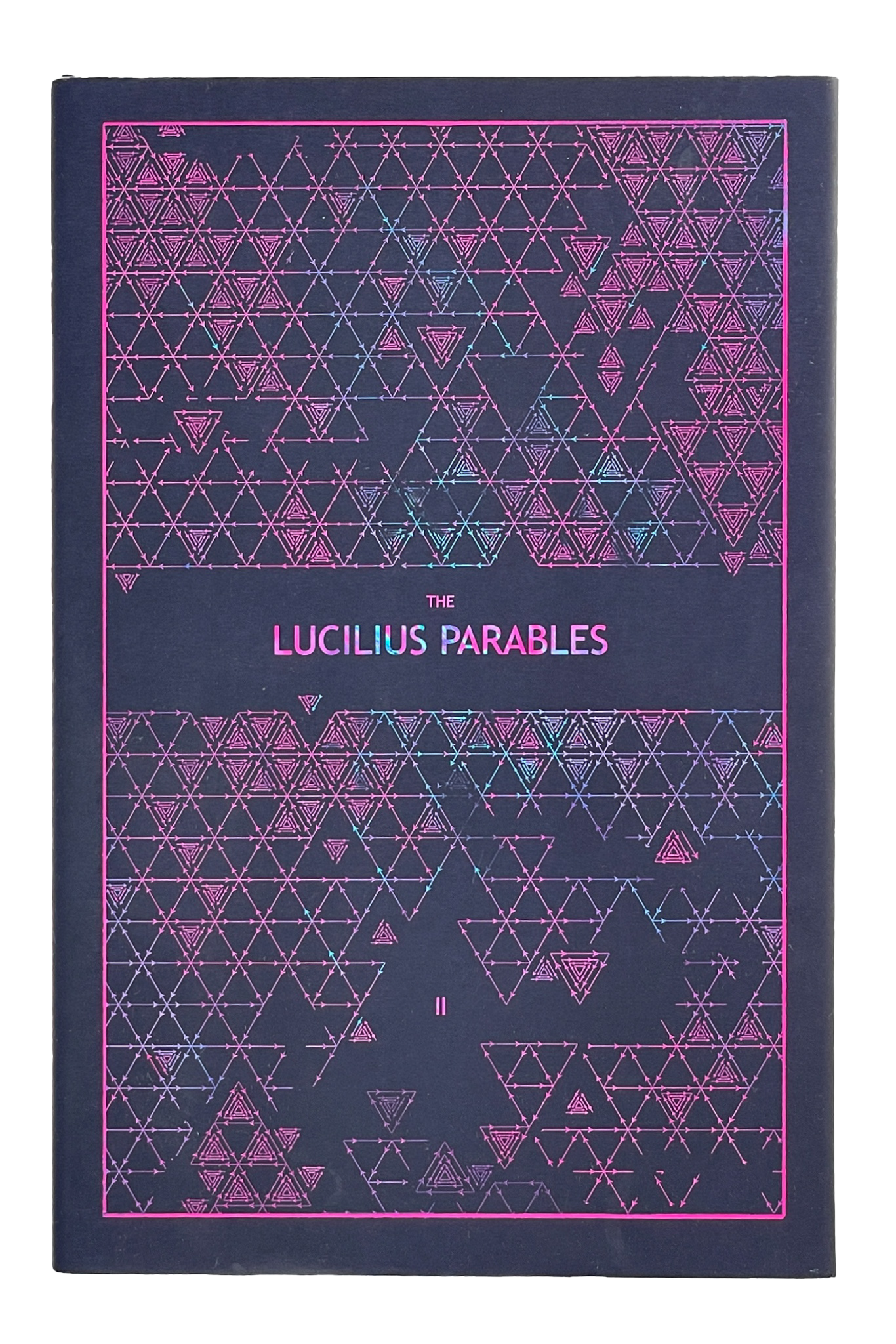

The SECOND illustrated book from Tinkered Thinking is now available!

SPIN CHESS
A Chess app from Tinkered Thinking featuring a variant of chess that bridges all skill levels!

REPAUSE
A meditation app is forthcoming. Stay Tuned.




ANTILINDY
May 11th, 2020
The Lindy effect is a supposition that the future life expectancy of things like technology or ideas - things that are non-perishable, is proportional to their age. In short, things that have existed for a long time will probably continue to exist for a long time.
There is a class of situations, perspectives, or rather phenomena that inhabit a unique intersection of what appears to be lindy but is inherently perishable. They are,
problems.
Many problems are longstanding, they have existed for years, centuries and even millennia. And given this life span, it can seem as though such incidences of reality are permanent. The catch to this may in fact be the reason why the Lindy effect is observed with technologies and ideas. Such developments may be solutions to problems that existed beforehand. The Lindy effect is perhaps bolstered by the lifespan of the problem that existed before the solution in addition to the lifespan of the solution itself.
This is perhaps a transformation of the Lindy effect as opposed to a negation, but the psychological implications are far more important.
A long standing problem can feel like an immutable fact of reality, but this is an illusion. It’s a false effect of the seeming Lindyness of problems. The longevity of any given problem becomes less likely over time as problems are solved and resources and time to solve problems expand to tackle other problems. David Deutsch would likely call this The Beginning of Infinity. All problems are inherently antilindy by default because of the way we identify and interact with these phenomena. The concept of a problem is similar to a bull’s-eye. It is something we have subtly or overtly marked out for future attention, with the aim of transforming the pieces of reality involved so that the situation is better fit to our liking and well-being.
This steamrolling power of progress is extremely important to hold in mind on an individual level. It must be used as a defense and remedy for learned helplessness, an unfortunate phenomena that many people develop. Learned helplessness is when a person comes to believe they cannot do anything about a particular problem or situation, that they are in fact helpless. This tendency is likewise antilindy, a problem in it’s own right that bars an individual from dealing with other problems. But as with any problem, with enough time, attention and effort, it will yield as do other problems. Every solution and development should serve as a reminder both for the individual and the group that problems exist only as long as a solution doesn’t exist, and that there’s no downside to betting on the possible existence of a solution. The very effort itself, at the very least solves that insidious individual problem since merely trying extinguishes any helplessness we have learned.
A LUCILIUS PARABLE: REUNION
May 10th, 2020
This episode is dedicated to Dr. David Sinclair. Check out his book entitled Lifespan to get a glimpse of what our future healthspan might look like.
This parable is now published in the second volume of Lucilius Parables. Click on the book below to visit the store to consider purchasing.
Several decades into the twenty-second century, the theory of Information Aging finally began to yield fruit, and shortly after, people began perfect maintenance of their bodies. Many used such regenerative techniques to reverse their biological age back in time. There was much experimenting, and strangely it turned out that people preferred to have their body at the age they were when they were most satisfied with life. The range of distribution wasn’t much of a surprise, but there was still a range. Not everyone was happy during their late teenage years and early twenties.
After some initial laziness about getting on board with the whole program, Lucilius finally felt enough pressure from his insurance company to start with his own regenerative program. Exponentially increasing costs, was the new phrase that insurance companies were using to goad people in the direction of the new therapies.
Lucilius had been around for quite a while at this point and was already well-read on the science and had plans for the perks the medicine would allow. His hearing had been rather poor for a while and it would be nice to get that low-grade ringing out of his skull. His current projects came to a nice breakpoint and so he took the dive.
Within a month his body was as it had been at age twenty-five. Lucilius felt great. But there were all sorts of other things attached to the new phase of living that he hadn’t anticipated. New kinds of social groups were forming as identities became compounded with old abilities regained.
Lucilius was vaguely surfing one of these forums which curated all these new groups and came across one that peaked his interest.
High School.
Lucilius expanded the link and discovered that there were groups of people who had regenerated their bodies back to high school age and then recreated their high school life from scratch, building a perfect replica of the school and even whole towns so that these people could live in a state of perpetual summer break.
Curious, Lucilius looked up his old high school and his year of graduation, and found that a number of the students had done just this – recreated the circumstances of that idyllic time.
Anyone was free to join the community for any length of time. The only requirements was that one actually did attend the school and that they now possessed a body regenerated back to one of those late teenage years.
Lucilius had decided to take off some time before starting his next project, and figured this would be as interesting as any other vacation he could think of.
He set the dial on his system for regenerative medicine and within a week he was back to the state he’d been at eighteen, just in time for his arrival.
The place was exactly the same. He was astonished at the detail. Each day was a repetition of the last day of school before summer vacation, and he walked into the high school just as the last bell was ringing. Everyone was there, as missing people were filled in with AI generated holograms, recreated from the communal memories of every real person who was taking part.
An old friend saw him and raised a hand for a high-five.
“You made it.”
“Thought I’d visit.”
“Careful, it’s a lot more fun second time around with a little life under your belt.”
“Yea, I bet.”
The two chatted, throwing around the usual dialogue to catch up on decades, when the rhythmic clack of a pair of Mary Jane’s tapped out the stretch of distance. Lucilius looked, as the two kept talking, and between the fluttering gaps of people in the hall Lucilius could see the figure of a girl he’d once had a crush on. The young woman pushed open a door, walking out of the school, sunshine spilling over her, and she was gone.
Lucilius smiled at the old feelings that suddenly rushed up within him. He felt the heat of blush in his face, and laughed a bit.
“What’s funny,” his old buddy asked.
“Nothing, just so weird to be back here, like this. So what are we doing?”
“Party. You know how the school year ends, always.”
And then in unison, the two said “Miller’s parents always go away.” The two laughed and took off to find some beers and catch up with a night on the town before things got under way.
Later that night the two were in the roil of the party, laughing as one of the class clowns had finally passed out after holding court, standing atop a keg. Lucilius could barely breathe, he hadn’t laughed so hard in so long, and it was as though all the life he had lived since were but a mere dream and he were back to who he’d been in this place.
“You,” he suddenly heard.
Lucilius looked to find the girl from before, the young woman he’d spent so many sleepless teenage nights thinking about.
“Finally decided to show up?” she said, an eyebrow raising.
Lucilius shrugged. “Figured I’d check it out. See who’s here.”
She reached out a hand to him. Lucilius was puzzled. He slowly reached out, unsure what she wanted. She grasped his hand and tugged him to stand.
“You know,” she said, “after the neural privacy laws were passed it was impossible to look you up.”
Lucilius was a little confused as she went on.
“I’ve been here at this stupid school, waiting for three years.”
By now the rest of the room had grown quiet, curious as the prom queen spoke.
“and, finally, you decide to show up.”
Lucilius looked merely perplexed. The girl rolled her eyes. “You dummy,” she said. She gently grabbed the front of his shirt and slowly curled her fist for a grip as she bit her lower lip.
“I’ve had a crush on you for almost a century.”
Then she pulled Lucilius toward her and kissed him.
GRASPING NOTHING
May 9th, 2020
Much of our day, perhaps all of it in many cases, and much of our life is spent grasping for something new, something different, something other than what we currently have. We find ourselves overcome with an unpleasant feeling so we reach for comfort food, or perhaps we reach for the gym bag. Both, regardless of how effective they are in the short term or long term are strategies for dealing with the present, a present that we often find ourselves trying to escape.
When sitting down the the aim of being more present, we apply the same tactic. We try to grasp for something. But what is the present, and how does one touch it?
At once it’s always with us and yet always seems to be receding.
Trying to grasp the present is much like cupping hands and scooping some water out of a swift river. Did you end up with that part of the river? Or is that spot suddenly overrun with more water from upstream? Does the pocket of water from which the hands took not rush off downstream, as though into the past? What exactly do we end up with in our hands if not just a memory of trying to grasp something that eludes our touch?
All of our grasping, reaching and yearning happens inside of the present. To grasp at it is like trying to shade one’s eyes in order to get a better view of the sun- it is what allows us to see everything else, and to look directly at the sun, we have to do something counter-intuitive, we have to put a special set of filters in the way. The present requires a similar sort of counter-intuitive approach.
In order to touch the present, we must let everything else be at rest. Let the memory of that event yesterday fade, let the monologue fizzle, let the hopes and dreams of the future dissolve, and then for a moment, we sense the present reaching for our mind. Some sort of glimmer, something both new, fresh, and very old seems to occur. Then we are lost to the handsy whims of the mind picking up some new source of attention, be it that thing you forgot to do or the breakfast you can’t wait to have.
The only way to hold on to the present moment is to let go of everything else.
FROWN
May 8th, 2020
Given a sea of smilie faces, and one frown, we will pick up on that frown far faster than if the situation were reversed and there were one smilie face in a sea of frowns.
Why?
Evolution has primed us to be concerned with threats. Those who weren’t concerned with threats, and who weren’t quick to pick up on them didn’t make it.
And thus, we are left with an obnoxious ability to focus unnecessarily on the negative. This might seem like just bad luck, but as it has served us before, it still serves us. We developed this tendency in order to learn. There is more to learn from the bad than there is the good. This extends far beyond threats to our survival.
It’s far easier to figure out what’s wrong with something you’ve built than to suss out why it’s working well. A broken down car has a finite set of problems, but once fixed, the reasons why it charges forward are myriad and intensely complicated compared to a few problems where the whole process gets hung up.
As much as we fear and spurn criticism, it contains the kernel for our most important and our most efficient way of improving.
Our aim isn’t so much to create things that receive no criticism as it is to become comfortable and welcoming of such criticism.
HOW TO USE A THESAURUS
May 7th, 2020
Most decent writers will tell you that if your using a thesaurus, you’re doing it wrong. The sentiment is that one is trying to plump up their own writing, as though substituting a few words in a sentence of a paragraph will suddenly make it bedazzled enough to be special. In short it seems at first to be a tactic for masking a lack of substance.
So if the thesaurus has such a bad rap, why do we have them? Are they just an obligation of our cataloging nature?
No. The most important use of the thesaurus is actually an inversion of the way amateur writers use it. The thesaurus comes in handy when a writer has a concept on the tip of their mind and it splinters into a variety of ways to be expressed, but there’s one missing – the most appropriate way to capture that meaning. It’s best used when there’s a word on the tip of your tongue, or you sense that there’s a nuanced flavor of the meaning you’re trying to express that you sense is captured by a word you know, or know of.
This is the reason why a wood worker or a mechanic or a hobbyist goes to a hardware store. They’re working on a project and come across a situation where a specific tool would come in handy. The writer goes to the thesaurus just as the hobbyist goes in search of that one particular tool they saw once. In short, to use a thesaurus well means to already be well acquainted with the realm you enter.
But given no rush, what does the woodworker or hobbyist do at the hardware store? Well it’s like a kid in a candystore. You just have to meander, browse and wander around and take a look at everything else that’s available. It’s in this way that the thesaurus then begins to inhabit a spectrum of use that stretches in the direction of the amateur writer.
The amateur writer usually has an innate sense that their writing isn’t worded as well as it could be. The only way to get better is to get better acquainted with the tools available, and a thesaurus is a far more efficient way of doing this than a dictionary, but only when it is used in conjunction with a dictionary.
The thesaurus groups things vaguely, dictionaries highlight individual nuance.
We learn by association. The thesaurus is most closely related to this, but we understand deeply only through detail, and this is the dictionary. Both are important tools. And just as a beautiful woodshop is just a room full of tools without a woodworker, dictionaries, the thesaurus, and the words they contain are meaningless without the people who use them.