-compressed.jpg)
Daily, snackable writings to spur changes in thinking.
Building a blueprint for a better brain by tinkering with the code.
subscribe
rss Feeds
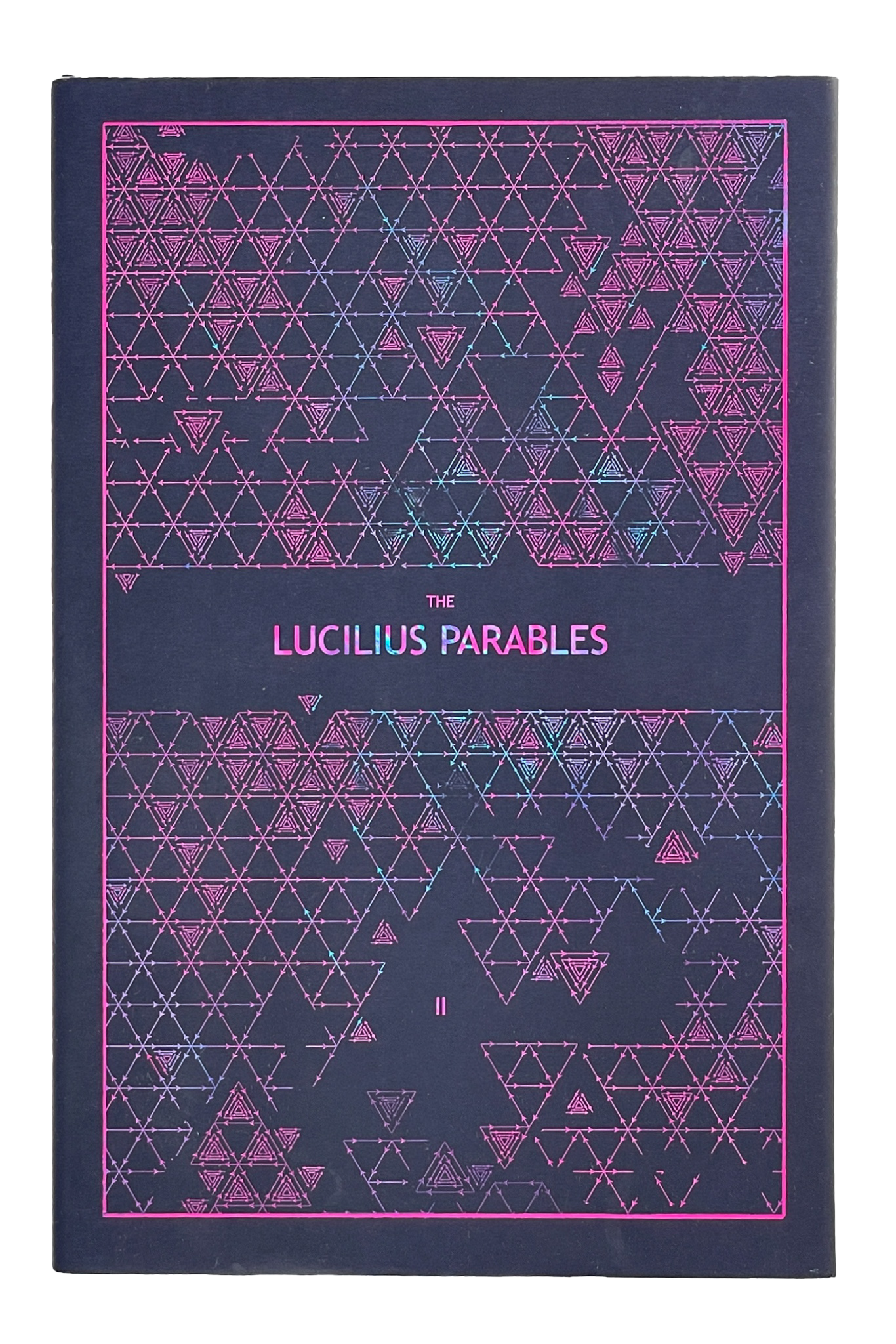
The SECOND illustrated book from Tinkered Thinking is now available!

SPIN CHESS
A Chess app from Tinkered Thinking featuring a variant of chess that bridges all skill levels!

REPAUSE
A meditation app is forthcoming. Stay Tuned.




BUILDING ROADS
May 16th, 2020
Hofstadter’s Law states that everything takes longer than anticipated, even when Hofstadter’s Law is accounted for. Despite the delightful humor of this recursive law, it is excruciatingly on point, as anyone who has ever tried to accomplish anything will know.
There is much to bemoan regarding the promises and ills of technology. Every new update seems accompanied by some new break and bug in the system. But these annoyances are mere details when we zoom out and look at trends on a long enough timeline. Technology clearly has a tendency to create something new, and then double back on it’s own own progress to improve the process of that progress. This results in a jerky forward and backward motion of progress.
Take for instance locomotion. We started with just our own two feet. And then we hopped on a horse and became quite a bit faster going anywhere. Then of course we built the carriage and the wagon and our speed slowed and so did the scope of places we could go. Four wooden wheels are quite limited compared to four hooves.
Eventually we built the automobile, which is faster than any horse, but this development also required the building of roads. It’s in the coupling of automobile and road that we see technology compounding with an interesting variation of speeds. A car is faster than a horse, but a horse moves much faster than the construction of a road. In many ways the road is the more important technology when paired with the car. Every car is going to be far slower if it doesn’t have a road. We ultimately saw the wisdom of slowing way down to build the road which would create a much faster infrastructure for cars. The road isn’t an automation of a process but it’s similar. It’s a smoothing of a crucial part of that allows for a huge enhancement later on down in the locomotive process.
What seems like an adjunct technology is actually essential. After all, people spend their time ogling cars, not the beauty of the roads they ride upon.
This essential supplementation occurs all over the place. With the written word, at first we painstakingly inscribed each letter. Then we developed the press which enabled us to copy large portions of text quickly, then typewriters enabled for the fast production of custom print, and now with computers language can be captured, edited, copied and saved at speeds that are only limited by the flicker of fingers across keyboards. Attempts are even now being made to remove the necessity of our hands while writing. Just imagine, composing text as fast as you can think.
This concept of greasing the rails, or smoothing the path of our technologies, can extend even into personal areas regarding how we function. People engage in this sort of development all the time while building businesses. But something like exercising or meditating can be regarded as having a similar effect on the mind. 20 minutes of meditation can, with time and practice, function like a smooth road for the mind to operate on.
One might see meal prep for the week in a similar light. Instead of stopping and restarting the same process with food everyday or several times a day, it suddenly collapses to mere grab and go.
Each habit that we posses or wish to posses can benefit in similar ways. We need only ask: where is the friction in my life? And what would a road look like?
SPIRAL STAIRCASE
May 15th, 2020
This episode is dedicated to Kriste on twitter who goes by the handle @Garbo1614
A fairly intelligent person once pointed out that “we cannot solve our problems with the same thinking we used when we created them.”*
Sure sounds smart, and it seems to plug into the infamous marketing slogan from Apple,
Think Different.
Both seem obviously smart, a no brainer. But how exactly do we make the shift? How do we crack the old mold of thinking and stretch out into new territory? Valid questions, but more importantly, what is the next step after such a question? Do we jump from such a question straight to an answer, or do we need to a few more questions, like stepping stones in thinking, to leap away from the old and into the new?
If we have dug ourselves into a hole, the answer is not to keep digging down, and digging up is nonsensical. But its exactly the sort of direction we need to go. If the only direction for our effort is bound to make things worse, how is it possible to make progress in the opposite direction?
In such a case, we are still not asking the right question. The cognitive leap requires zooming out a little on the options available. What about this question: Are their any other directions available than just down and up?
Such a question expands the mind. Our perspective zooms out, and this is where the old mold cracks. Digging your own hole, the action of it, whether it be a real hole in the ground, or a dead end habit of binging tv, or bad nutritional choices, or calling up that same toxic person during weak moments. In each, the decision always seems binary: should I do it or not? This is like being stuck in that hole. It’s akin to asking: should I dig or not?
When framed in this way, there doesn’t seem like much of a choice. We are active living, restless, beings that want to make progress. Given a choice between something and nothing, we’ll end up choosing that something, even if it’s ultimately bad. The key is to wonder if there are more choices. Is my only option to keep digging down?
As with many things, the answer is orthogonal. We must not go forward or backward, we have to think laterally. We need to ask if it’s possible to make progress going sideways.
If you’re stuck in the bottom of a hole, you can dig sideways and carve a spiral staircase into the round wall of the hole you find yourself in.
Say for instance a person has decided to give up smoking. The choice at first is binary: to smoke or not to smoke. This is a terrible game, and for most people, it will wear down on the psychology until the only choice that is actually an action (aka smoking) will win. But if additional options are added, something somewhat magical can happen. If the choice expands to include going for a run, then the choice is do nothing, smoke, or go for a run. That third option allows us to be proactive. To move sideways and shift out of the old model of thinking.
Forming the right question is merely a way of reframing the perspective of the situation. This is how questions can be so powerful and why it’s worth thinking about how we construct them and iterate them. If a situation can be reframed correctly, suddenly a way out illuminates like an obvious path. And when we find ourselves finally headed in the right direction, we wonder how we could have been so blind.
PRINCIPLES
May 14th, 2020
Ray Dalio has famously published his book Principles where he outlines the methods and strategies for the way he operates on a personal level. In the book he repeatedly invites readers to take on the same task, to write down the principles by which they operate.
Tinkered Thinking is naturally poised to knock together some principles considering the hefty amount of pondering on the page that has emerged over the course of hundreds of episodes. And certainly this episode is an initial attempt to fashion some principles, with conscientious plans to iterate these principles through time.
Truth is, though, every one is well poised to take Dalio up on his suggested exercise of writing down a set of personal principles, whether we are accustomed to jotting down our thoughts or not. We all operate on heuristics and codes of conduct, whether we’re conscious of it or not, whether we’d like to face them or not.
Those who worry about what they might find when confronted with the question of how they operate, may in fact benefit from the exercise the most. If we discover something we don’t like, the written word endures in a way that is much harder to ignore when we compare it to some fleeting action or statement. More importantly, the written word can be edited, whereas the past cannot. There is freedom in writing because we can tinker with the form and substance of our thought. We can craft it, and sculpt it to approach an ideal. Then, in the form of a principle, it can be something that we strive to emulate in action. In this way, we can leverage our thoughts against our actions in order to change them for the better.
And without further ado:
The Tinkered Thinking Principles
- Has the best question been asked?
- Use it to boost it or lose it.
- The discovery of the new will always look like wandering before it is found.
- The ‘question’ is the only real tool. Questions allow for the creation of new tools and all tools are useless without the concurrent use of questions that unlock their use.
- The sole resource of persuasion is the other person’s mind, a resource which can only be mined with the use of questions.
- Time is not a resource. Money is a resource because it can be sourced again. Time is only a source because it depletes of its own accord without the option of renewal.
- Understanding is knowledge in motion. In order to integrate knowledge, one must actively use it until it’s possible to produce predictable outcomes.
- Honesty is the master variable and it is a skill. Honesty determines how much friction there is in human systems. The less honesty there is, the more friction exists.
- Peace is a subtractive process. It requires simplification, like the surface of water, any attempt to actively create peace only generates more ripples.


SMART FOOL
May 13th, 2020
There is an entire spectrum of strategies for trying to achieve a certain end. And while it’s clear the probabilities are fairly skewed towards one end of this spectrum, there are still some incredibly foolish things that pan out quite well. But no one wants to be a fool.
Unfortunately our default strategy for avoiding the possibility of being a fool is itself a bit foolish.
We read, we plan, we read more, we study, we observe, we educate ourselves, and we continue on this hamster wheel as if one day, we will have consumed all the knowledge of the universe and finally, the time will have come to finally do something.
The irony of such an outlook is that action opens up an new realm of information to analyze and understand, much of which cannot exist in books by default of the fact that books are always objects from the past. While there exist frameworks and fundamental principles that persist reliably through time which can be learned from book, nothing can be understood without action.
Knowledge is static.
Understanding is active.
Understanding is knowledge in motion.
We understand only when we can apply knowledge to achieve predictable outcomes. We create new knowledge by reversing this process. We actively explore and as a result we come to understand something new, and then this understanding becomes knowledge when we share it, either by explaining the pattern of the new phenomenon we observed, or writing it down, or any other method of communication. And here we strike upon a balance, a dance of give and take.
The fool just dives right in.
The smart one reads up on it first.
But the wise person knows how to be a smart fool.
TITLE
May 12th, 2020
How is knowledge categorized? Of course, we have encyclopedias and dictionaries, but how is knowledge categorized on an individual level?
We take notes, we highlight, we summarize, we create folders, collections, collages and for the most part..
we forget all of it.
Perhaps there is an innovation in the arena of note taking that will substantially level-up our abilities to organize knowledge on an individual level. But the flip side is that we might be growing weak leaning on a crutch.
A universal principle is use it or lose it.
Tinkered Thinking’s version of this is:
Use it to boost it or lose it.
As this applies to muscles, it’s likely to apply to memory. The question of course is, how to use one’s memory. Does the mere writing down of a desirable conceptual morsel relieve our mind of any sense of obligation to remember it? Perhaps.
If you regularly have to write a list of items with quantities in order to have them on hand a few minutes later, say it’s a dozen things, it doesn’t take much time and pain to verbally list those quantities and remember them. The mind finds the way if it’s pushed in that direction. This is only to say that memory is trainable in different ways.
The Homeric bards had epics consisting of tens of thousands of lines memorized by heart. And even though it is an incredible feat of immense memory, those poems are riddled with mnemonic techniques to help the bard in that titanic task.
Here is a suggestion that has arisen during the creation of Tinkered Thinking. Many times, when an idea of what to write about pops into the mind, it is then summarized in the smallest possible unit, usually, it’s summed up as a potential title for the post. That word, or short phrase becomes a seed which collapses the entire subject, but also allows it to regrow once the time and space of a blank page is available. This has become a valuable memory exercise because the expansion of the topic is expected to stay in the brain until the time to explore it comes around.
This brings up an even more important point.
A collection of knowledge is useless if not used, and using it is the best way to winnow out the unnecessary and entrench the influence of the good.
This is one of the reasons that makes writing such a powerful tool on a personal level. It is a medium of cognitive exploration. A writer is quite literally exploring their own mind in a structured, captured way. It’s a way to figure out what you really think about something, a way to edit what you think about something, and importantly here, it’s a way to integrate new knowledge, by putting it in your own words and mixing it in with other ideas that come to mind during the process.
Writing –in this way- serves us in two ways, as a memory exercise and as an evolution engine that gives rise to new ideas..