
Daily, snackable writings to spur changes in thinking.
Building a blueprint for a better brain by tinkering with the code.
subscribe
rss Feeds
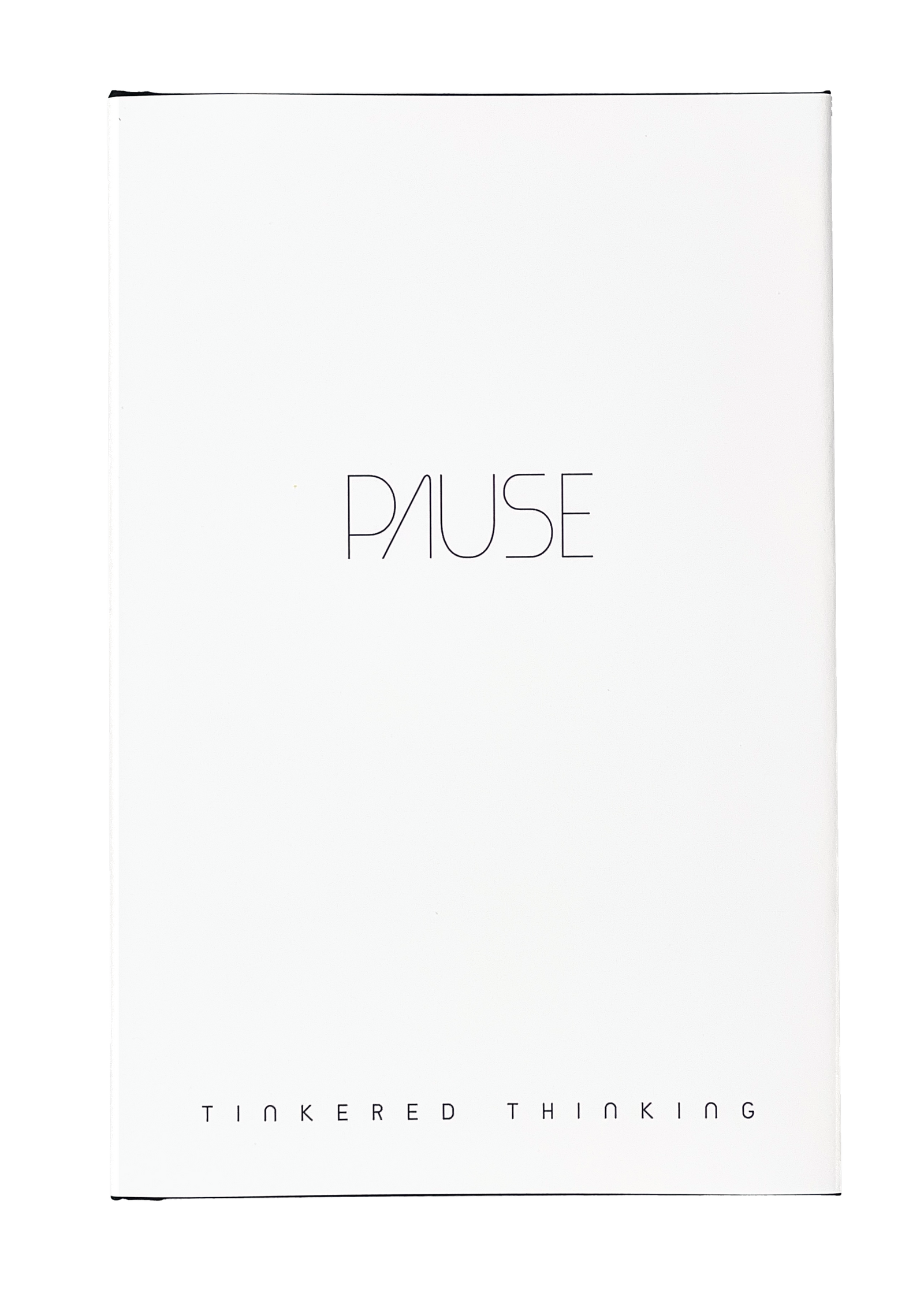
The first non-fiction book from Tinkered Thinking. PAUSE is a short book on meditation. Now available on the Tinkered Thinking Bookstore.
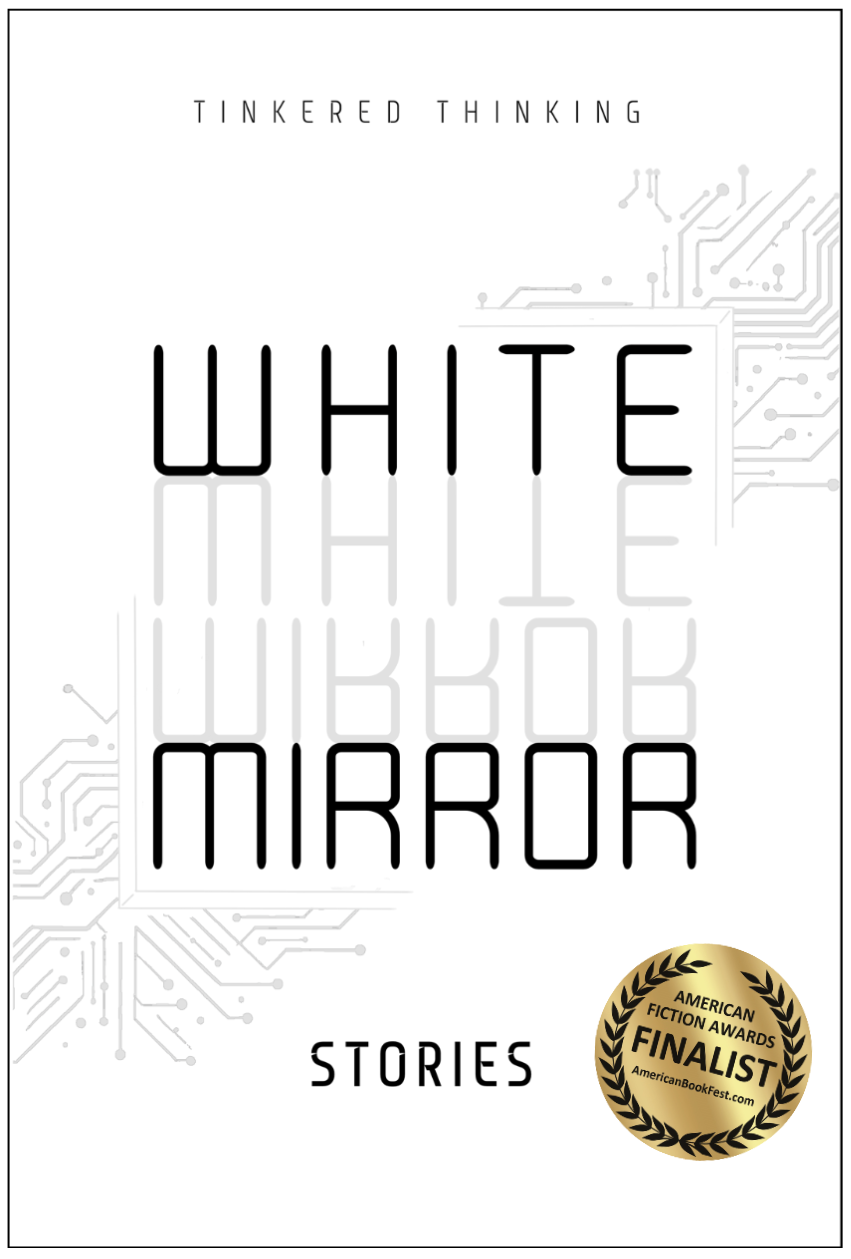
The SECOND illustrated book from Tinkered Thinking is now available!

SPIN CHESS
A Chess app from Tinkered Thinking featuring a variant of chess that bridges all skill levels!

REPAUSE
A meditation app is forthcoming. Stay Tuned.




A PRISON CELL NAMED COMFORT
May 25th, 2018
What would you do if fear didn’t exist?
What would you do if pain wasn’t a thing?
Those with chronic pain get used to it. Those with courage feel fear but simply respond to it differently.
If we can get used to pain, and we can change our reaction to fear: Might we do those things we dream of if fear did not hold us back, if pain wasn’t an issue?
It works the other way.
Those who have it easy get used to it: and then everything becomes difficult. Those who have nothing to fear begin to fear everything.
Luxury becomes just as much a prison.
How free can we become by opening ourselves up to just a little more pain, pushing the boundary of that fear just a little further?
THE RESOURCES
May 24th, 2018
The perfect conditions will never arise.
The ideal plan will never form.
The resources are limited.
We must do what we can with what resources we have.
We must edit the plan as we go, as per the resources we have.
The only condition is now, and that condition only changes as we edit the plan by taking action with the resources we have.
Don’t wait for the perfect condition. Create it.
Don’t tinker the plan too much. Just start it.
Don’t make excuses because the resources aren’t available.
We already have the two most valuable resources:
A brain + time.
These two resources are responsible for all the conditions of others you might admire, all the imperfect plans that got someone somewhere, for all other resources, period. Indeed they are the only two true resources.
Because,
A resource without a brain to figure out what to do with it, is, useless.
To be resourceful, is indeed, the ability to see resources where others see nothing and to see obvious resources in new ways.
The greatest attribute of the first resource, our brain: it can change it's self and become MORE resourceful. A resource that can edit it's own resourcefulness.
Time to MacGuyver your brain.
CONFIDENCE 2.0
May 23rd, 2018
How is that magical, coveted, confidence that some people seem to have, captured... and held?
For most it’s like Pan’s shadow, constantly running away, never staying stitched to our soles.
Confidence is just a word though. It means many things depending on who you ask. It certainly doesn’t mean the same thing to someone who has confidence compared to someone who doesn’thave confidence.
Many pieces of psychology are involved, and because of this, ignored. All are lumped into the single word. And in doing so, it becomes mysterious.
Some unpacking might be useful.
A related idea, potentially a subcategory of confidence that is much spoken of is ‘Positive Mental Attitude.”
This is a good starting point. Not just for understanding confidence, but for anything. But it is just a starting point. It will not carry you to the stars.
Positive Mental Attitude is like the beta version of confidence.
It does not last on it’s own. It can become depleted and destroyed when faced with enough failure that has not been interpreted properly. A fuller form of confidence would carry us through these failures. This is why PMA is beta-confidence. It’s the precursor. First gear. The spark that gets the engine going. It provides the motivation to take the first step - the first action.
This enthusiasm has a dangerous edge. PMA creates optimism, and optimism creates hope. And
Hope is one side of a dangerous coin that is easy to flip. The other side is expectation.
Expectation only leads to disappointment. And disappointment is disastrous for a positive mental attitude. This is how it can be depleted and destroyed.
The essential ingredient for moving from failure to re-action is the ability to properly interpret failure.
How? Seeing failure - not as some huge demoralizing experience – but merely as feedback from reality. This allows us to take it less personally. This removes the fog of emotion. We can then see clearly and learn.
We can move much more fluidly from one ‘failure’ to the next action. The next attempt. The next poke at reality. . .if the emotional investment is consistently downregulated.
Take enough of these actions and our picture of reality becomes stronger, more accurate. More precise.
Which would you trust more:
A map of Boston drawn by a two-year old.
or.
A map of Boston found at the entrance to a subway station in Boston.
Why the difference? One is more accurate. More precise. Because. The creator gathered more information. We can have confidence in the second map of Boston because we can trust it.
We can take actions based on it’s accuracy that will lead to the destinations we hope for.
This destination is an exact analog for the endeavors we hope to achieve, the goals we hope to arrive at.
If we do the difficult work of improving our own mental map of the world, gathering more information through action, through trial and error, and slowly making our map more precise, more accurate.. then we can have more confidence in that map. Confidence is trust. And if our map is strong, then
we can have confidence in ourselves.
Confidence 2.0 is built slowly and methodically with information gathered through action.
Do you trust yourself?
How accurate is your mental map of the world?
THE INSTRUCTIONS ARE ALWAYS WRITTEN AFTERWARDS
May 22nd, 2018
Doesn’t matter what it is, there once was the first person to do it. That person didn’t have the instructions.
They figured it out as they went.
The instructions were written afterwards.
And then everyone else learns in the wrong order: We are given instructions and then take action.
This pattern does not teach us how to discover, how to invent, how to progress. This process only perpetuates what has already been discovered and invented. It holds us at the current point of progress. Allowing us no further.
To move forward, we must operate backwards:
Take action. Figure it out.
Then write the instructions.
CAUTION:
Do not confuse plans with instructions.
Plans come before action. Instructions come after action.
Instructions are sure-fire ways to do something.
Plans are educated guesses.
Plans should be tentative, flexible and mutable... if they are going to be of any use.
BREAKING IT DOWN
May 21st, 2018
I hated the play.
That’s easy as hell to do. Take a glance at the painting, watch the movie, hear the song, wait for a feeling to pop up, and oh hey THAT’S convincing.
Feelings convince us of everything. If you are ‘convinced’ it does not mean that someone has defeated some part of your holistic rational system and now you are simply adding to it or repairing an over-looked segment.
No, that’s the idealized version of what’s going on. In reality when we’ve been convinced, we just feel different about the subject. Very few of us are practiced enough in the art of breaking it down to be convinced by rational means.
Breaking it down requires attention, awareness, time and effort. It is the opposite of the snap judgment we usually default to. And in the process of breaking it down the emotion provoked by the subject becomes emotion(s). Now there is a story, many stories to explain how it works, how it was put together and why.
Breaking it down breeds an appreciation. The extreme emotions that we usually categorize things with: I love it! I hate it! disappear. because with understanding comes knowledge of both the shortcomings and innovative successes of any given subject. Feelings about the subject become nuanced, requiring explanation, requiring the story of understanding.
But remember, whatever piece that you uncovered while breaking it down that convinced you, probably isn’t going to be the convincing piece for someone else. And taking that ‘fact’ you found while breaking it and throwing it in someone’s face is going to do absolutely nothing. This is why people are unconvinced in the face of facts, and why a single photo of a burning girl can end a war. They need a story to feel for. A story for their heart to chew on. When the heart has had it’s fill, the mind will spout the new gospel as though it was derived like some Euclid proof.
Stories are important, they are emotionally efficient. They cut out all the time people don’t have, and get the message across convincingly.
But breaking it down is the whole enchilada. It spawns many specific and detailed stories. One of which might be convincing.
You might have hated the play.
But when the assistant stage manager writes the book about what was happening backstage during the performance, and it get’s picked up by Hollywood, and the movie comes out and you see not just the play you hated, but everything that was happening behind the scenes. (hmm, kinda like Birdman)
When the whole experience is broken down.
You just might love it.
At the very least, you’ll understand
a little more.