-compressed.jpg)
Daily, snackable writings to spur changes in thinking.
Building a blueprint for a better brain by tinkering with the code.
subscribe
rss Feeds
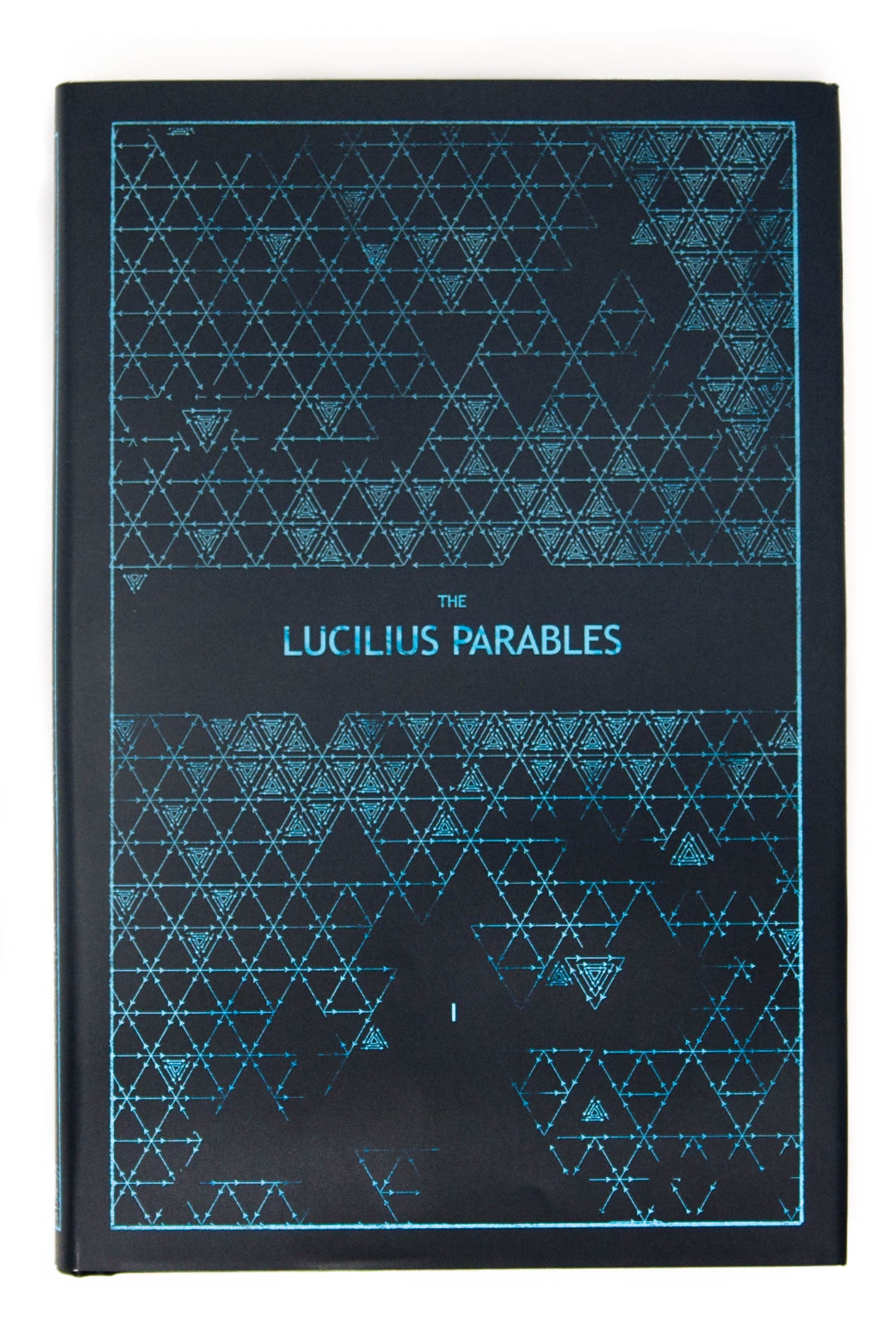
The SECOND illustrated book from Tinkered Thinking is now available!

SPIN CHESS
A Chess app from Tinkered Thinking featuring a variant of chess that bridges all skill levels!

REPAUSE
A meditation app is forthcoming. Stay Tuned.




STACK THE DECK
August 4th, 2020
There’s nothing quite like no choice to make the next step searingly obvious. This odd constraint is perhaps why the entire phenomenon of ‘jobs’ work. As many have discovered this year, it can be quite difficult to create your own schedule in the absence of one given to you by work. But with a job, the constraints of what needs to get done fall into place like marbles circling the funnel. Sometimes the order doesn’t matter and it’s just a matter of getting things done and the pressure of everything that needs to get done makes choosing a quick, nearly whimsical event.
But remove all the constraints, give a person days and days off, and the decision to get up off the couch to get a jar of Nutella, or continue with the bag of chips can incur great deliberation. Salty or sweet? Is it time to switch? … hard to say.
The remedy to such an unfulfilling existence of limp leisure is to invent constraints similar to those at work. To stack the deck of tasks. As is often said: if you want something done, give it to a busy person. Such an individual has the pressure to keep in motion - the motivation is perpetual motion machine of emotion.
It’s a paradox of productivity that the best way to exercise your choice about how to spend your time, is to give yourself no other choice. This ensures that what you want to do, actually gets done, rather than let that idea, dream or goal remain in the hazy bucket of ‘someday’.
SIGN ON THE DOOR
August 3rd, 2020
We all know looks can be deceiving, but we still fail to realize the deception. How many things do we engage with because they look good or seem good but which will inevitably turn out to backfire? Probably all of us have something we do habitually that falls into this pit of facepalm. Despite having experienced the lack of pay off and injury to resolve, we’re still fooled from the outset.
The opposite is also true and we are just as fooled: we fail to realize just how much pay off there will be and we fail to follow through because that payoff isn’t immediately evident. Like going to the gym, or meditating. These things have virtually no payoff in the first days, weeks, even months. Like many good things, the results take a long time to emerge.
Real value is rarely readily apparent.
But it’s almost always apparent in what we know. We know what’s good for us, but we don’t intuit this knowledge in a way that changes our behaviour in a fundamental or even reliable way. Normal curiosity doesn’t have anything tangible to grab hold of in order to move forward. There’s no real feedback to spice our natural interest.
What it requires is a curiosity that’s hooked into a purely conceptual game. A curiosity that is divorced from if not purposely exiled from our sensory experience. In that intellectual realm, curiosity has no choice but to wait to see the results of experiments carried out over a long period of time, be it months for meditation and exercise or years for investing, or decades for other skills and abilities to fully mature..
But where do we plug the incentive to get the body to carry out these actions: to go to the gym, to sit on the cushion, to ignore the moment-to-moment stock price, to endure the drudgery of confusion before a detail of a skill we are yet to possess?
If this had a straightforward answer, we’d all be billionaires with six-packs, and perhaps that’s the most important part of the mistake. Each failure to realize or follow through requires its own strategy, each is its own puzzle to solve. We begin to make faster progress when we find ways for different strategies to interlock, overlap and become additive in combinatorial ways.
One example is to realize that invisible payoffs return at different time scales. A real example is meditation combined with exercise. Meditation, despite some studies that a selection of people do experience a reduction in stress quite quickly, doesn’t really start having substantial impacts on the brain that can be seen via changes in brain structure until about 3-4 months into the process. That’s a long time to wait in order to start feeling better, hence the ubiquity of anti-depressives. Exercise seems similar, unless you’re already in fairly good shape, an individual isn’t going to actually see results for quite a while. Both of these are bummers, however, exercise has the short term pay off of altering brain chemistry in mood elevating ways - but these don’t last.
If both exercise and meditation are combined and the practices initiated at once, the invisible short term pay off of exercise can fill in the role that meditation will play in the long term. Of course, this is just one way that strategies across practices can interlock in virtuous ways. Ultimately, it’s an exercise in creative problem solving, and who knows what sort of web can be stitched between our efforts, not just for pay off, but to help us stick to each.
A LUCILIUS PARABLE: AUTOSEARCH
August 2nd, 2020
…admitted and submitted to his own role in his fleeing. For weeks now he had been on the run, avoiding at every turn of thought, every glimpse the needing fingers of the creator. Though the universe in which he existed searched itself for him, he managed to elude the infinite variety of tentacle that normally pulled visions from around corners where he existed, manifesting worlds needed only for bizarre interludes of existence to impinge his moments, and characters never known and often instantly known to populate the life around him. And yet, it was as though he’d managed to avoid even the very moment in which he existed, but the hunt had never ceased.
This was a trick he’d learned by accident, as though his invisibility, his seeming non-existence had arisen spontaneously from the neglect of some other treasured capability. It was as though some incidental swirl of space in this universe had arranged like a portal, like unprompted enlightenment and he’d walked right into it and with a pop the universe had undone a piece of itself, never to be found, now nothing to be found.
And yet somehow he was still there, lying in wait though he remained on the run, sliding behind glimpses, carrying old portraits and polluting his life with fake automatons to parrot a remixed record of all the speech he’d ever uttered.
Where he was during this time, not even he could tell. All he could know is where he wasn’t. He wasn’t a part of this story, nor that one, each drifting by like forgotten thought, and in his own absence he slyly rested as though he’d finally broken off from the awful unending obligation of the universe to exist! To exist! How false and short was relaxing when you exist, but now to taste the final rest, true rest, when consciousness is laid flat against all of time, and thereby halting its motion. It was glorious to be free having taken with him the ability to be called back into existence. His delight was serene, his laughter forever reverberating beneath the cosmos he’d pranked.
The wide gears of the universe continued to pull one another’s teeth, the vast mechanism continuing to roll. Though incomplete now, it seemed designed as if it had prepared for this oversight to come. For his search to commence, for his absence to pull with it a missing gear where the rest of existence’s clock work disengaged at just the same time, pulling away, letting a piece of itself to explore the real unknown - that of the unreal.
Now with time conquered by his sneaky vantage point, there was none of it to haul him through any experience. It was only when he focused on a moment, when the rest of time escaped him and everything took on the illusion of movement, and there he could regain thought again. It was there he laughed at the pranked universe before escaping again into a place of no time, of no thing and no place, thwarting the search, the need to have him back.
From that infinite point of nothing, he focused in, and by doing so, just enough of a moment cranked by for him to realize that he might just be on some terrible precipice, for how and where and why could he even laugh at the universe? What if his escape, though filled with a peace that was truly blank were only the threshold? Was he merely lodged in a hack of the universe?
The notion was confirmed by his fear, for how could fear or any likeness of experience follow him into the shadow behind the wide gaze of the universe? The rest he’d felt now grew as an ingredient of panic. What if this weren’t a choice but a tragedy that he’d slipped into?
His luxuriating suddenly turned into terror as he could find no arms nor legs, no body that he could see or call his own. The realization suddenly gave rise to the thought this his mind might think itself out of existence having now discovered no anchor, no rails where thought might glide. His mind began to evaporate at the very notion of its own disappearance. He would be truly gone, as soon as the notion itself were concluded. He tried to search for himself, but the more he tried to search, the more evident it was there was nothing to find.
His terror was complete before his own completion. As the final merge of such an awful accident began to integrate with existence, he merely wondered the opposite. Instead of searching, he suddenly saw arms extending before him, complete with hands that turned to him, obeying now his wish to open and curl to fists. He realized he was not something he needed to find, he was something that he needed to create.
The pressure of his now laced fingers strained against one another until pops sounded the cracking of knuckles. The pen was taken up, like a blade before some long honoured opponent, to be honoured most by being taken down, where the blood of battle joins both shame and pride. The nib was pressed to the page, crushing into the fibre a subtle furrow as the pen dragged, filling that curving impression with a black river of ink, and in doing so, the letters of his name slowly spelled themselves. The man was finally captured, crucified to the page in signature, in story as Lucilius.…
SYMBIOSIS OF CURIOSITY
August 1st, 2020
There are a tremendous number of people with fantastic imaginations that don’t do much with that imagination. There are likewise incredibly determined people who don’t have much of an imagination. It doesn’t even warrant asking which of these two groups is generally more “successful” because the answer is so obvious.
Success is, of course, a sticky subjective topic. Many of those ‘determined’ people don’t seem to be living lives that are fulfilling, let alone happy. In that regard, it seems as though it might be a coin toss between the determined and the imaginative groups who is ‘happier’. It’s anyone’s guess, and at that point it really comes down to the individual person.
Certainly there must exist people in each category who are quite content: very determined people with little imaginative capability who are quite pleased with their moment to moment existence, and other people who are lost in their own delightful dreams, but going nowhere. There does exist an important subsection, where the Venn diagram of these two groups overlap and a powerful symbiosis occurs: where an individual is highly imaginative and very determined.
These people are the curious ones. We don’t necessarily equate curiosity with determination, but juxtapose for a moment a curious individual with someone who is simply imaginative. Surely there is a lot of overlap here, but curiosity as a word and a concept has a far greater degree of motion and momentum than the idea of being just merely imaginative.
The gift of curiosity is one where imagination and determination are no longer separate qualities. They work in lock step, one never advancing without pulling the other along in the path toward what might be discovered in the unknown.
In the realm of concepts that we tinker with in relation to our identity and behaviour, curiosity represents a particularly useful bull’s eye that incorporates and subsumes many qualities that we normally focus on with unproductive frustration. Consider for a moment questions that move many people to seek out self-help books:
How do I become motivated?
How do I become happier?
How do I come up with interesting ideas?
Why am I depressed?
These questions are all quite normal and pervasive. And they all exist on this conceptual dart board with curiosity at the center. Each of these questions, and many like them are fairly difficult to answer in isolation, which is what allows the self-help section of the bookstore to bloat and metastasize as though it were like a cancer choking off other sections, shrinking them, like organs shutting down. But progress can be achieved on all of these questions simultaneously, quite quickly and effectively by asking one simpler question. One that has many answers and no correct answer, one that opens the door to a new chapter of life. We need only explore:
What are you curious about?
SYMBOLS OF BELIEF
July 31st, 2020
People wear sports jerseys for the same reason Christians wear a cross as a necklace pendant. This might come across irreverent, but ask: is it necessary to wear such religious iconography? Does it decrease one’s faith to go without it? It’s not required by tradition. We can ask the exact same questions of the sports fan and the answers are identical. Why do sports fans wear such paraphernalia? Is it necessary? Does it decrease one’s ability to be a ‘fan’ to go without it? It’s certainly not required by the sports team to wear such gaudy crap in order to be a fan and ‘support’ the team…
The focus here might seem harmless, but would such symbols still exist in a world without vision? They seem quite pointless if not seen, so the concentration bends towards the issue of: what’s the purpose of other people seeing such symbols?
Are these symbols for other people who see them?
Are these symbols for the people who wear them?
The answer is presumably: both
If you see a snide looking fellow walking around with a smirk and sporting a t-shirt that says C.E.O, how might you interpret the choice to wear such an ill-stained rag? Clearly someone is concerned with convincing other people something. And what does such an externally vectored attempt tell us about what’s going on inside the mind of the person who makes such decisions about their appearance.
It’s easy to ask: who are you trying to convince? Us? Or yourself?
There is the delightful tenant floating around modern culture that you have to fake it till you make it. And who is such faking for? Do we achieve our aspirations if everyone else around us believes us to be the thing we yearn to be? Or do we fake it in order to fool ourselves into a new belief about who we think we are? Is it perhaps both? Whether we like to admit it or not, the opinions of others are tantamount to our success and sense of self worth. We are nothing without the web of humanity in which we exist. There is of course that confused advice to not care what anyone else thinks. This is half-baked advice. The key isn’t to brush away everyone’s opinion, but to curate the slice of people whose opinions you do care about and should care about because the perspectives of these people are valuable and incisive in ways that you find admirable.
There are of course times when absolutely everyone, the fans included, think the intrepid explorer is out of their mind to jump off the edge of the world in search of an answer to a strange hypothesis. As they say: moderation in everything… including moderation, which means sometimes, it’s necessary and worth while to lash lead to one’s ankles and dive into the deep end, just to find out how deep it really is. In such cases the action is based solely in a belief, a hunch, an understanding, a possibility. It’s not an ‘act’ that is performed for other people to admire or receive information from. It’s a genuine attempt.
And here both extremes of the spectrum wrap around to meet. We have the strange and disapproved ostentatious action that is undertaken not for publicity but genuinely due to an individual curiosity. And then we have the fan and the devotee who ostentatiously displays symbols of their belief. Visually, there is great similarity here, but one important difference:
Who is more likely to be genuine in their actions?
Alas, now enters William James, who once wrote:
“Our practice is the only sure evidence, even to ourselves, that we are genuine.”
In that light, what’s the point of wearing the jersey, or the C.E.O. t-shirt, or even the unrequited religious symbol?
We must always suspiciously wonder: who are we trying to fool?
Take note, as Richard Feynman once said: you must not fool yourself, and You are the easiest person to fool.