-compressed.jpg)

Daily, snackable writings to spur changes in thinking.
Building a blueprint for a better brain by tinkering with the code.
subscribe
rss Feeds
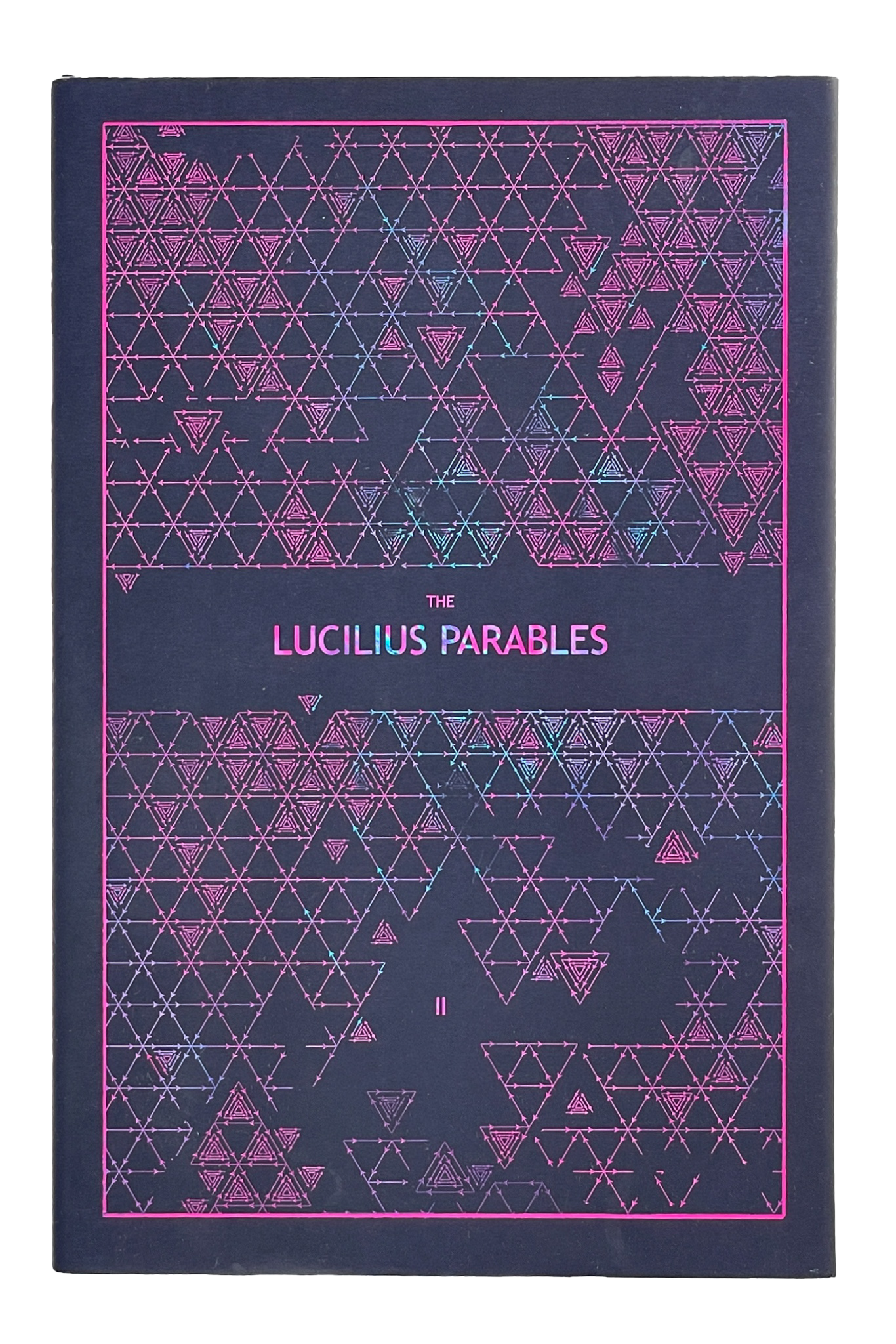
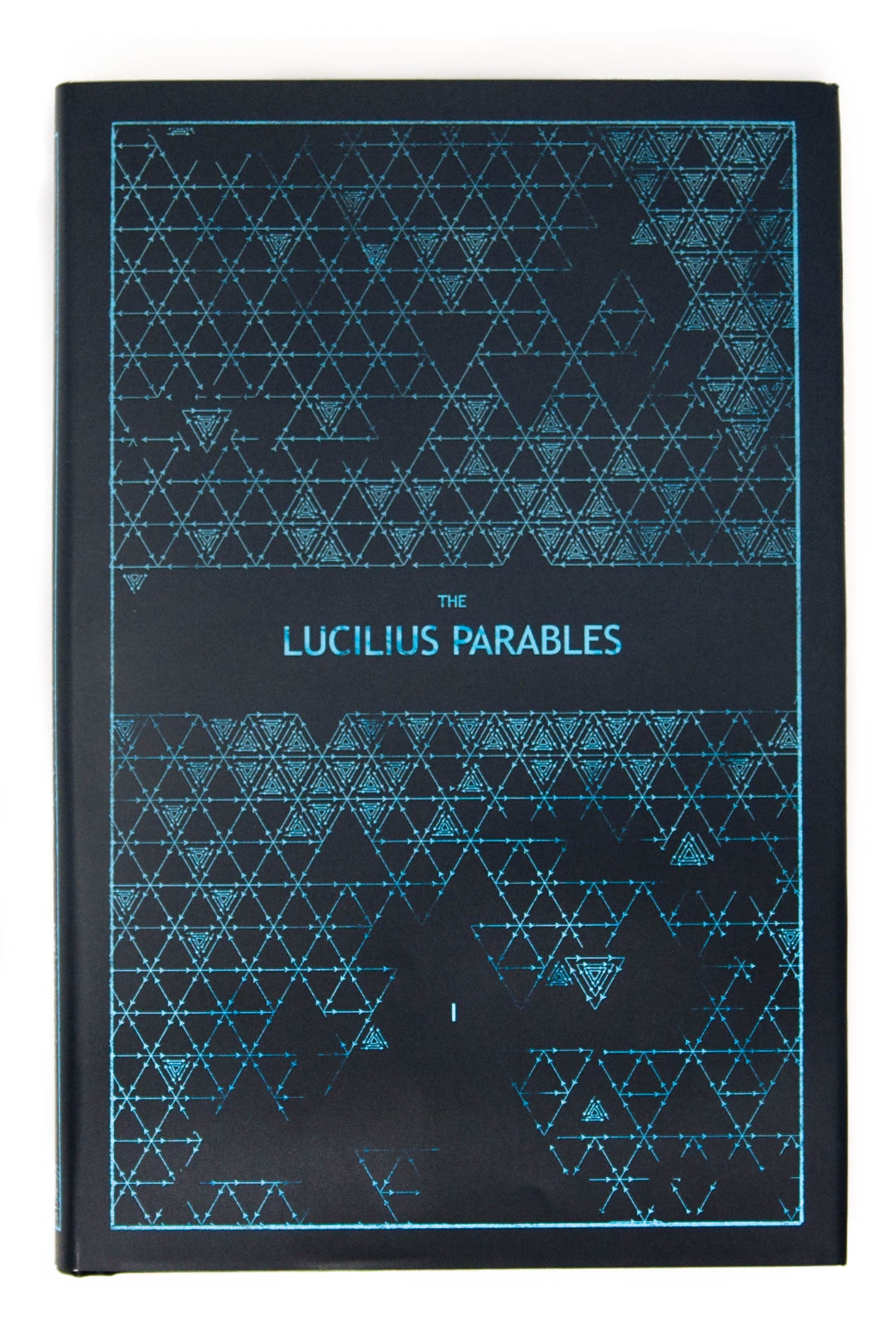
The SECOND illustrated book from Tinkered Thinking is now available!

SPIN CHESS
A Chess app from Tinkered Thinking featuring a variant of chess that bridges all skill levels!
REPAUSE
A meditation app is forthcoming. Stay Tuned.




A LUCILIUS PARABLE: QUESTION IN CRISIS
August 9th, 2020
This parable is dedicated to Bruno who reached out on Twitter. You can connect with Bruno on Twitter with the handle @olivedrivin
Lucilius was paralyzed. His body was technically fine, he’d sustained no injury, no crippling virus nor bacteria had wiggled its way into his blood. No, this was a disease of a far deeper kind that imprisoned Lucilius. He now spent his days wrapped in terror, purely unable to wrench himself from the infinite swirl within which he was bound. His mind coursed through the same flow of thought, each time leading to nowhere new, but back to the beginning of the confusion that only perpetuated itself, over and over. He’d distanced himself from friends and had begun to recede from the whole world, now unable - totally at a loss for how he was supposed to interact with people and their huge noisy apparatus of life. No matter what he tried, no matter what angle of the issue he took, he couldn't find the bug that had wheedled its way into the waves of his mind.
The alarm sounded, and momentarily he was pulled from his dark reverie. He’d forgotten his appointment, and now knowing he had to get up and get going and go out into that obnoxious clanking world, he cursed his luck. But he’d already rescheduled several times. He pulled back the covers, and it was another 10 minutes before he was able to swing his legs down and sit on the edge of the bed.
Several slow hours later, he sat in the waiting room, his face shielded from that awful gaze of others with wide sunglasses. It was just his luck that he’d forgotten his headphones and couldn’t make for himself that artificial cocoon that claps off all the rest of the world: their jabber, their pestering sounds, the construction, the vacuums and weed-whackers. How was it that he could belong to this ridiculous species that had no respect for the domain of sound? Couldn’t we all just be quiet for one minute?
Of course not, he thought. There was no way to get along, not like this, not when such sadness can be invisible in front of everyone, no matter how flagrant, how genuine, no matter how loud these unending thoughts screamed into the echoing walls of his skull.
A finely dressed, clean cut man sitting next to Lucilius noticed the tear run itself out, streaking Lucilius’ face just a short distance below his sunglasses. The man notice Lucilius did not wipe it away, and surmised correctly that the young boy was worried that the movement of his hand to his face in such a way would draw more attention than the actual tear had. Few, if any had noticed that diamond turn on his face, and chances were, Lucilius figured in the choking smoke of his mind that no one had.
The man sitting next to Lucilius looked around at everyone else in the waiting room and realized that everyone had headphones on. He and this boy next to him might as well be alone, he figured. The workers at the desks they waited for were far enough off to be out of earshot. The man decided, what the hell..
Keeping his eyes to the perusal of his newspaper, the man said “I also shed a tear when I can’t stand how beautiful the moment is.”
Lucilius nearly choked on the single disgusted sneer that masqueraded angrily as the false start of a laugh.
The man smiled widely. “So interesting how anything can be funny with the right perspective. Even the suffering of others can be funny if you’ve grown bitter enough.”
The expression on Lucilius’ face grew quiet, suddenly aware and nervous of a proximity he hadn’t really considered.
“I remember once,” the man said, “I was stuck. Just stuck in life. Couldn’t figure out how to get out of some sort of mental morass that I seemed to be stuck in.”
The man let his words linger a few moments in the air, hoping to draw in the interest of this troubled young man next to him.
“Couldn’t remember really how I got there either. It was strange. I could remember being happy, but it was as though that were all in the past, and happiness had become a memory that can’t be visited, like someone whose died, who you can’t see or talk to anymore. There was something sick about the situation, as though happiness were haunting me.”
In his periphery, by the sliver afforded behind his own sunglasses, the man could see Lucilius’ head unconsciously turned a little, certain tensions now present in his posture. The man knew he had Lucilius’ attention. But he remained quiet a few moments, turning the page of his newspaper, scanning the head lines, picking out a line here and there, sampling the articles with a rapid set of hops, testing for tone and rhythm, quickly gathering whether they warranted a full read.
“What’d you do?” Lucilius asked.
“Oh,” said the man, “didn’t realize you were listening. Sometimes I just sort of talk to myself, or kind of imagine conversations with people. Sometimes those wires get crossed, and I just start talking to people. Always figured keeping company is like painting a portrait: the cheapest model is always yourself. Maybe that sounds a bit kooky.” The man smiled, purposely forgetting the question Lucilius had asked, wanting to test this boy’s attention and interest. The short silence stretched out fast, and with it, spinning attention to a point until the machinery of the moment clicked into place.
“So?” Lucilius asked again.
“Oh.” The man smiled and chuckled. “Sorry, I go off on tangents. What were we talking about?”
“You said you were haunted by happiness.” Lucilius looked at the man fully, his clean cut appearance, the health and vibrancy that seemed to radiate from him. “certainly.. seems like maybe things are different now.”
The man lowered the newspaper into a folded heap. “Yea, they are.”
“So what happened?”
“Well,” the man said. “I realized I was trying to answer a bad question.”
“What do you mean?”
“See, now that right there is a good question. Do you know why?”
Lucilius shook his head.
“Because it has an answer, a definitive one that can be figured out. By asking it, you prompt me to explain what I mean, and regardless of how good the answer is, whether you like it or not, whether it’s convincing or not, it’s still a definitive answer. And from there we can move on to another question. But a bad question doesn’t lend itself to that sort of answer, and that’s why you can get stuck. When you try to answer a bad question, there’s nothing to really grab on to, there’s nothing to really tell you if you’re on the right track, if your answer is helpful or productive. The question doesn’t resolve, it just quietly remains, like that cruel memory of happiness, it offers you no help nor response. And most importantly, a bad question prevents you from moving on to a better question.”
The man feigned a need to take out a notebook and reference something, as though a pressing thought had just jumped to mind. He fished a pen from his pocket, unscrewed the cap and jotted something down in the notebook. But it was all an act to give this young man next to him a moment of time, to take in what he’d said, to give his perspective a moment to breathe, to digest.
“What was the question you were struck on?” Lucilius asked.
The man looked up, squinting. “Oh, I don’t remember anymore. It was one of these awfully dumb questions that people get hung up on: what’s the meaning of life? or… Who am I? Something like that. They’re all the same, they’re just quagmires for your mind.”
“How do you get out of that question?”
“Oh simple, you leave it to itself and get busy answering a better question.”
“Like what?” Lucilius asked.
The buzzer in the waiting room rang and the man looked at his ticket number. It matched the one flashing on the buzzer screen. He had to go.
“Like, what can I do with the rest of today that might set up tomorrow to be better?”
Lucilius contemplated it. “I need to remember that one,” he muttered.
The man ripped out a page from his notebook and handed the sheet to Lucilius along with his pen.
“Here, write it down, look at it in the mornings and see what happens.”
The man paused, watching Lucilius write the question, then he got up to go to his appointment.
“You pen!” Lucilius called as the man walked away. He turned.
“Keep it. Writing is another good way to fumigate thoughts when the mind gets a bit too stagnant,” he said, smiling as he tapped his head. “Plus, he said, it’s always good to carry a pen, you never know who you’ll come across that might need it more than you.”
The man turned and left Lucilius on his own, wondering how many times that pen had moved between his own hands.
ATTENTIONAL CURATION
August 8th, 2020
It’s one skill to curate your own attention when left to your own devices. It’s a subskill to analyze how other things curate your attention for you, and we already do it to a large degree, but placing it in strictly attentional language can yield a helpful nuance for moving forward.
How is that we already analyze how other things curate our attention?
How was the movie?
How good was the book?
Should I get into that show?
How’d the date go?
When you have an amazing conversation with someone, what exactly is happening in terms of the flow and shape of our attention. Does our attention wander during a great conversation, or does it feel naturally bound up in the moment? And while bound up in the moment, what is happening to that attention? How might we describe the changing shape of our attention as it’s influenced by each nuance of what’s going on? The words and concepts flying back and forth? The tone, rhythm and cadence of voice, the setting, and even the time in relation to all other recent things that have been happening.
Obviously we can say that something very good and worthwhile is happening with our attention during such a fruitful and juicy conversation.
Now reflect on the same sorts of questions during some kind of awkward encounter. In such a circumstance attention seems unable to wander off into better territory. We’re somehow masochistically bound to endure whatever misalignment is clearly present in the situation. And when we finally emerge, released from the tendrils of situation we shiver and try to shake the memory from our current attention.
Highlighting these sorts of situations in terms of attention is simply to give context to a new sort of question that can be used to filter our interaction with different parts of the world:
How did that curate my attention?
For example, we can apply this question to a social media platform like, say, Instagram. Many will be acquainted with the undeniable power that Instagram has to hold your attention. So when we ask: What sort of job did Instagram do to curate my attention?
In some sense it did an amazing job. It held your attention as though that attention were locked within an invisible vault. At the same time, the question opens up the situation up to a more nuanced answer. My attention was held, but were good things happening to my attention while it was so tightly bound up?
This subquestion gets at the real value of examining different things in terms of our curated attention. Many, would have some negative answers to this subquestion. And so the original question How did this curate my attention? Allows us to separate out important distinctions in our experience. It becomes much easier and quicker to identify things that are wastes of time. But beyond this, we start to develop the ability to peek inside the ‘why’ of such experiences.
Why did this grab my attention so well even though I didn’t really enjoy or value any of it?
This becomes a portal of introspection, and it can quickly branch off into a productive exercise that helps a person identify all sorts of inequities in their daily life. Beyond this, it also enables a person to start thinking and developing a mental alarm system for avoiding harmful things that can function like traps for our attention.
From a higher level, it shows just how powerful the concept of a question is when it comes to the direction and curation of our attention. Be sure, questions are not immune to becoming harmful traps for our attention. Any existential crisis is most likely borne of being unable to answer a bad question when it’s accompanied with an inability to move on to a better question.
(As a side note, Episode 843 entitled “The First MetaQuestion” explores this sort of issue involving bad questions more fully)
It’s only natural that this episode now commit to it’s own message and ask you:
How well did this episode of Tinkered Thinking curate your attention?
UGLY OPPORTUNITY
August 7th, 2020
Nothing goes perfectly, and things are always going wrong. An obvious platitude to be sure, but the next step in the story is the crucial one, often so poorly addressed: how do we respond to a continual onslaught of disappointment and attempts by fate to shove us off balance. Do we fall down? Tempted by stagnant comfort, or do we go through the extra effort of standing back up again?
Beyond any skill, whether it be writing, or coding, painting, people management, finance management, or picking the right stock out of the sky, the ability to navigate the disappointment is the primary skill that reins above and rules them all. Because no matter how skilled you are in all that you do, the universe is constantly tapping its fingers together around the next corner, giggling quietly and waiting for that perfect moment to stick a foot out and trip you up. It’s going to happen, and it’s best to expect it optimistically.
How on earth does a person expect disappointment optimistically?
Is this not a concept of pure nonsense? No. Because disappointment is an opportunity. Opportunity for what? To navigate that disappointment - to get better at the one skill that improves all the others: to pivot and dance with the fickle will and whim of the universe.
We can dive in a little deeper and examine disappointment in relation to the nature of our plans. Why do we plan anything? Why do we do anything really?
Each and every action can be described as an attempted solution to some sort of problem. You scratch your forearm to solve the problem of an itch, you start a business to solve the problem of wanting a better life, or even better, you start a business to solve the issue of living in a world without the solution your business offers. You eat to solve the problem of hunger, you socialize to solve loneliness, among other things. You learned to code to solve the problem of your inability to build what you want to see in the world.
The point here isn’t to merely define life in terms of problems and solutions, but to merely point out that it can be done. And the purpose is to highlight that our skills all boil down to this one higher level skill: problem solving. Every large endeavour, wish or problem resolves into a net of tiny easy problems.
But we can get hung up on these easy problems, due to the emotional resonance of disappointment. We can stew for hours and days, cursing our luck and wondering how we are going to move forward. How strange is it that when we finally do figure out to move forward, we rarely reflect on that troublesome time of cursing our luck? Is it not possible to analyze the uselessness of that period and project it forward and think: well the next time some sort of disappointment comes along, perhaps I should remember that it’s probably not as bad as I think?
Follow this line of questioning far enough, and one starts to wonder if this refractory period initiated by disappointment is itself a kink in the process to be solved. Spoiler alert: of course it is. The more effortlessly we can glide through the emotions that pop up as a response to disappointment, the faster we can honour our original vision and our ongoing intention to make something happen. Once this issue has been identified as a solvable problem, we start looking out for it, and that ugly experience suddenly starts looking like..
…an opportunity.
TIME & ATTENTION
August 6th, 2020
Attention is time.
Not all time is attention.
You only have one chance in each moment to pay attention.
The obvious truism is to try and not miss that moment. But this presents a further paradox about the present: can you actually get anything done if you are focusing on the moment in a sense that you want to be present?
These flashes of time that remain shining in memory as moments when we were truly present are often passive, meaning we appreciate and experience the present best from an observatory role. This is much of what the practice of meditation involves: just observe the moment. That’s it.
But is it possible to observe the moment and do something at the same time? Does action require a narrowing of focus that drops our experience out of the observatory role? At first pass the answer seems to be yes. But it should be noted that there exists the possibility with a great deal of meditative practice to bridge the two sides of this paradox and become present in an appreciatively observatory role while quite active.
This bears a remarkable similarity to what’s commonly referred to as flow. The athlete who falls into a virtuous synchronicity with the game feels as though they have taken a step back from their own experience, observing all at once and fitting in their movements with ease, as though those movements were mere obvious choices provoked by the details blooming from the situation rather than some complicated calculation of free will.
Flow can also seem like quite the opposite, where gobs of time fly by while we are buried within a vault of concentration. The task finds its completion and we finally breathe deep, lean back and notice with astonishment the first rays of sunrise.
Strangely, this second description bears more similarity to our experience of the exact opposite: think of half a dozen hours wasted in front of Netflix autoplaying show after show. A season finishes and finally we wake up from the wasteful daze and realize that another day is now gone. While oddly similar in subjective experience, the difference here is enormous: one experience is active, the other is passive.
What exactly is happening with our attention in each of these circumstances? We might be tempted to ascribe a direction to flow in each of these. With the passive day wasted in front of Netflix, the flow is from the external to the internal, we just receive sound and light and whatever other accoutrement might accompany entertainment. And then with the productive flow state, the direction is reversed: we are generating something, putting out into the world and changing the state of the universe in some tiny way.
With this rubric of direction it can seem like the act of being mindfully present as practiced in meditation is of the wasteful, passive variety. It’s not at all unfair to say that this is true: you could be getting something else done. But this is an example of short-term logic, and it misses the larger point which only emerges after months or years, and perhaps even decades of practice: the point of meditation isn’t to passively witness your life during a couple dozen minutes a day, but to gain the ability to incorporate the skill into life at large and ultimately, to have your cake and eat it too.
Your life, as witnessed from your eyes and through your ears, by the sensation of your skin, the weight of your bones and the movement or your whole self through space and time is like the quintessential movie. It’s not just during the quiet moments, nor the practiced moments or the special moments that we can observe this vast spectacle. With practice, we can observe with joy and gratitude that single protagonist during their most strenuous or concentrated moments.
Meditation practice, defined as that group of wasted minutes when we sit and try to do nothing is very much like backing up from the edge of the precipice in order to get a running start. The daily practice of meditation adds just a little momentum to a growing way of thought and experience that can, with time & attention, bridge the paradox of focus and presence, ensuring that you don’t miss out on life while you’re busy getting it done.
THE FIRST METAQUESTION
August 5th, 2020
It’s possible and all too common to waste an enormous amount of time trying to answer a bad question. What’s the meaning of life? Who am I? What’s my passion? These are all bad questions. Why exactly are they bad questions? Very simple: none of them fit the definition of a good question:
A question is an open ended concept that creates forward momentum.
While the above questions are open-ended concepts, they don’t create momentum in any particular direction. They are questions ripe for round-about wondering - rumination that goes nowhere. Such questions can be tempting because they seem to offer such an expanse of possibility. But without constraint, we get lost in such nebulous spaces, and questions - good questions - are the only tool we have to navigate that nebulous space of the unknown.
The first metaquestion - that is, the first question we must ask about our current question is:
Is this a good question or bad question?
This question itself requires a small family of subquestions in order to find its answer. One subquestion that enables a judgement of goodness or badness has to do with action:
Does the question describe an actionable next step that can provoke feedback that can help answer the question?
If the answer is ‘no’, then the question is either a bad one, or simply to large, too vague, and in need of focus. We can also ask:
Does this question circumscribe a single answer or many possible answers?
If a question clearly has a single answer that we can find, then it’s likely a better one. For example: will this business experiment work? That question has a definitive answer, and it’s a decent starting question because it provokes the path for its own answer. Compare that question to What’s the meaning of life? This question might have one answer, but there’s no way to know before hand when equipped just with the question. The business experiment, on the other hand, is either going to work, or not.
We can examine a sort of in-between amalgam of these two questions to get a cleaner sense of good and bad questions relative to the number of possible answers they hint at. We can ask:
What business should I start?
This is a debilitatingly open-ended question. And while it is more specific than what’s the meaning of life?, it circumscribes an area that is simply too large. We have to ask: what would be a better form of this question? Or how can the cloud of possible answers be narrowed in some way? From those subquestions we can wonder:
How many different types of businesses are there, and which might create a lifestyle that seems attractive to me?
This is a far better question because it immediately points to a path of action. We can do something as simple as google that question and see what sort of types have been identified. Furthermore, it has a much smaller number of answers. There are effectively infinite businesses that could be started, but all of them fall into a far smaller number of possible categories.
Notice how this chain of questions has grown more specific with each jump. First we went from something totally open-ended and stagnant, like What’s the meaning of life? To a binary situation: is that question good or bad? From there we can narrow in on better questions merely by assessing the quantity of possible answers.
But this whole process begins with the first metaquestion where we can turn the tool of the question onto itself and bootstrap our mind out of the circular morass caused by a bad question by asking: is this question helping me move in a productive direction?