-compressed.jpg)
Daily, snackable writings to spur changes in thinking.
Building a blueprint for a better brain by tinkering with the code.
subscribe
rss Feeds
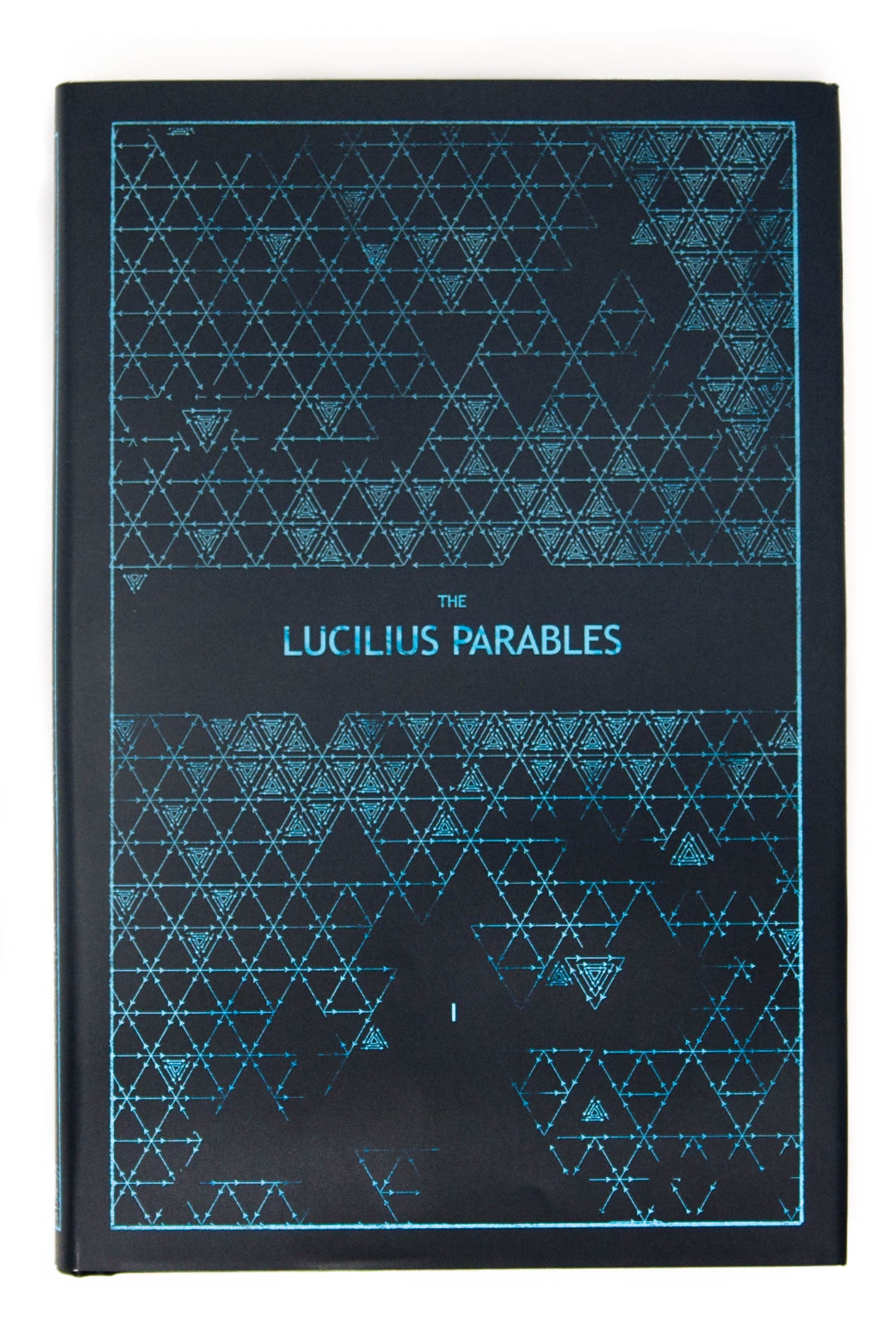
The SECOND illustrated book from Tinkered Thinking is now available!

SPIN CHESS
A Chess app from Tinkered Thinking featuring a variant of chess that bridges all skill levels!
REPAUSE
A meditation app is forthcoming. Stay Tuned.




WRITING: THE CORE IDEA
July 30th, 2020
Often the question comes in: how do you write so much? Tinkered Thinking has put out a podcast episode and the corresponding written transcript everyday for the last 837 days. (And most that has been on time.). The word count is nearing 600,000. That’s a fair number of words, certainly a few more than what the average person has written. So where does it all come from?
Imagine you are taking a creative writing course and the assignment is to think of a title that you can imagine seeing on a bestseller list. It’s pretty fun exercise. If you look at a few best seller lists you can notice trends quite quickly, in tone, phrasing, the number of words used as relative to the subject, a whole bunch of things start seeming obvious. Try it out. Write down a few titles that you could imagine thinking: I’d read that book, or at the very least scoff at the fact that it’s on the best seller list. Of course it’s a best seller with a name like that!
Hearing about such an exercise as recounted by someone who took that creative writing course spurred the core idea of Tinkered Thinking. A few titles came to mind, and one seemed particularly good in terms of how catchy it is, how flamboyant it is and how there exists a delightful turn of wit and logic beneath the bombasity of that title. This came to mind before the story about the creative writing course was finished.
Apparently the assignment for the succeeding day in that creative writing course was: ok, pick the best title and now write that book. Ballsy move on the part of a writing instructor, but exactly the sort of mentality and challenge that every aspiring writer should be faced with.
Without going into too much of the backstory, this title became the core ponderance of Tinkered Thinking, but the strategy goes a little further than just trying to write a book. Indeed the size of Tinkered Thinking would now fill a couple heavy books. So how does it keep going?
Imagine that this core idea, this topic is at the centre of a circle. Imagine this idea is like an object, say a sculpture of incredible beauty. Now unlike a painting which you simply look at, what do we do when we see a beautiful sculpture in a gallery or a museum? There’s a reason why they are usually situated in the middle of the room. We walk around them. If you think about it, a painting usually only has one intended perspective: looking at it straight on. But a sculpture teases you to look at it from all sorts of angles. Each time you move on the circle that surrounds a sculpture, you get a different shape, a nuance of the overall piece. There are arguably infinite points on this circle that you can move to in order to get a slightly different perspective. And then of course, you can move in closer and look at the sculpture in detail, or you can back away farther to take in the whole thing. Then you could get a ladder and place it in any of the spots you’ve already stood and then look at the sculpture from a higher angle. Indeed, there exists a sphere of infinite points from which you could take in the sculpture. Now replace that sculpture with the original concept, the core idea. Perhaps it becomes clear how so much could be written about one topic. All you have to do is tweak your own perspective, and suddenly the same concept yields new fruit. We zoom in, we zoom out, we look at it sideways, we take a step to the side. Each time we see something new…
Each episode of Tinkered Thinking is like a point of a sphere that surrounds the core idea. Each episode is an attempt to see that core idea from a new angle, in a new light, with a different resolution and zoom.
And to be clear, the core idea is not “Tinkered Thinking”. It’s certainly related, but this attempts to strike a subtle balance between being a synonym and describing the process of how to address that core concept.
Naturally, the core idea, the title to that imaginary book - the kernel from which all of Tinkered Thinking has grown will have to remain a mystery. Such a source of inspiration, like a prospector who has found a gold bedded river before a mountain, or a hunter who covets a particular ground, must be kept secret..
ATTENTIONAL CONCESSION
July 29th, 2020
At what point in the pursuit of a solution do you give up? This is a tricky question for many sticky reasons. Exploring possible answers can easily lead you down a rabbit hole regarding IQ, genetics, group differences, and a lot of touchy science, the lot of which isn’t interpreted with a blanket of stellar wisdom. The musings here seek to deal with none of these things, because they all disappear when we consider just a single individual. The answer to that question: when do you give up? Requires a purely personal response from individual to individual no matter what ties of biology, culture and circumstance bind or separate us.
The question is specifically, when do YOU give up?
Such a question boils down to an examination of individual attention: how much attention are you willing to pour into the issue, in order to understand it, solve it, grow from it?
This could imaginably be classified with a number. We can ask further: How much time did you spend on the most difficult problem you’ve ever solved?
This perhaps simplifies things too much. There are things that we could solve given more time, indeed that’s the entire point we’re circling, but many things just don’t warrant the attention required for a solution.
Then of course there are other things that are in line with our desires, reflective of our wants, things that we are willing to go extra miles and marathons in order to make the issue concede to our effort, to bend reality in a particular way. What determines the difference in our personal taste for problems to solve?
Unfortunately, there’s an issue of even greater pestilence: the vast majority of people don’t have free rein on the time allotted to their attention. Much of our lives, and therefore out attention is dedicated to the solution of uninteresting problems that we are under duress to solve due to a paycheque or a grade in school. Far more influential is the fact that we often don’t have the opportunity to ply our attention to conundrums of real interest.
This is perhaps the primary problem that we should whet our attention against, but alas, obligations of family and work, and mortgages, and bills rope us into ways of being that confine our attention to a specific rhythm of tasks - boring problems that need to be solved for it’s placement in a larger organization.
This routine becomes so entrenched in people that when given a long reprieve, the attentional powers of the individual are warped to the needs of dictation, and the attention has lost its ability to dictate itself. Just think: have you ever known a child, or can you even think of a child being at a total loss about how to play? Of course not: when it comes to curiosity, children are masters of attention, pulled in every direction, restless for discovery and discontent only with standing still.
Then of course children enter the school system, designed after the industrial factory, especially in terms of attention. Being on time is really a training of attention more than anything else, and being able to call out ‘present’ in response to your name at the beginning of class is mostly an act of fitting attention into a systematic set of boxes.
It begs to wonder: would people, children, teenagers be more apt to tackling interesting and meaningful problems if we weren’t rigorously training their attention with this systematic set of timed boxes, each equipped with a lacklustre subject that extends not just through school, but through most professions?
What would your attention be like if it were freed from constraints? Perhaps uncomfortable and destabilizing. But what if you’d never had your attention crushed into the iterative confines of modern life? What would have happened if you attention had enjoyed free rein uninterrupted from the beginning?
Would your ability to turn that attention upon a difficult problem be less, or would it be greater?
STUDYING THE MOMENT
July 28th, 2020
As you read or listen to this sentence, your attention is focused, ideally captured, and molded by the shape of meaning and cadence created by this string of words. So much of your experience is pushed out of the way in order to do this. When you stop reading or listening, your senses will open up and you’ll take in a much larger slice of what’s going on. Perhaps someone will start blaring some music and interrupt this focus. Our attention is grabbed, and so we try to refocus over and over.
If attention is the thing we are trying to guide to a specific end, then what exactly is paying attention to this process?
Does attention have the capacity to pay attention to itself? It may take a bit of practice, often accomplished through meditation, but it does seem possible to consciously attempt this recursive look. The results, of course, are left for the person attempting this high-wire trick to examine. The fruits of this simple exercise seem to unlock unexpected avenues that lace across the way we experience time.
Might sound a bit froo-froo, a bit woo. But wandering in this area, and investigating the moment in such a way begins yield possible solutions to a question like:
How do we ensure that life doesn’t pass us by while we’re busy doing other things?
This is, of course, a famous quote rearranged into a question of caution and preparation. It can be shocking how quickly time passes by, even disturbing, and perhaps tragic. And these possible reactions to the past are exactly the reason why it’s so important to investigate that intangible, finicky, slippery opportunity that always seems to arrive and leave at once - it’s the reason to study the moment.
Memory tries to capture it.
Accomplishment attempts to demarcate it.
Pleasure can seem to honor it and waste it at the same time.
We engage in all of these different practices and techniques and facets of human life in an attempt to somehow do something to the moment. Often we are trying to transform the moment into a peak state, as when the bow is finally tied on the accomplishment or when the glass of wine is raised, or when we finally breath a sigh of relief before the view at the top of the mountain. It’s as if the best moment is captured by the word ‘finally’. But no sooner is it said than the moment that seems to express that feeling has fled and we are left with the beginning of a new chase.
Meditation, and the practice of investigating the nature of attention itself, is in some sense, an exercise done by putting all that chase and those peaks states, all that pleasure and strenuous endurance - putting all that aside for a bit of time in order to experience the moment as it is in as naked a form as possible.
What one comes to realize after some time, is that the experience of this pared down moment begins -or can begin- to trickle into the rest of life. The strenuous endurance seems less stressful, because the stress itself can be separated from the task at hand and be manipulated by a flexible and powerful attention. When the alarms are all blaring in the cockpit of the mind, most of us are rightfully overwhelmed. A well exercised attention gains the ability to silence the alarms and address the underlying causes with calmness and peace, almost as though the right decision becomes a passive reaction to the needs of the moment.
The true needs of the moment can often be counter-intuitive, especially if our intuition has been trained in a life that has lacked this mindful practice, and so grows the need to study the moment.
CREATE SPACE
July 27th, 2020
We are so busy. The underlying reason why is excellent: nothing gets done otherwise, and we have a lot of work to do. The question of course arises as to whether or not the work we are doing is actually getting good things done. Enormous strains of society consist of fairly useless work - i.e. Bullshit Jobs. But all this busyness is itself a kind of self-fulfilling prophecy, a vicious cycle that reinforces itself in order to grow.
Not doing anything, is a pretty nervous statement to utter, especially in productive circles. Of course there’s cause for relaxing, unwinding, and enjoying life a little, but this is often just another way to fill the time. And this is really at the core of much busyness - to fill time. The logic of busyness in this way, if we apply it to money sounds like this: well the point of money is that it can buy things, so I should spend every last penny I have, because that’s the whole point..
That’s exactly how time is regarded across much of modern western culture. But it is a resource far more precious than money. It is money that spends itself no matter what. Our only involvement is that we get a say in what that dwindling resource gets fed into. The mortality-fuelled anxiety behind this task creates a situation that seems fairly understandable: do as much as you can with your time because it’ll run out!
Unfortunately or fortunately, a counter-intuitive approach yields benefits that are simply not achieved through a mind chock-full of busyness. Creating space in time in order to do nothing refreshes the perspective. Now to be clear, this doesn’t mean getting around to that book on the night table, or finally pressing a hand to that crafty project. Those are just other things to stay busy with. What’s meant here is doing nothing, actually nothing. What many productivity die-hards would call wasting time.
Here’s a personal example: Tinkered Thinking is on the verge of releasing a beautiful, illustrated book. The book, along with the brand new online store that will be a part of Tinkered Thinking have been effectively complete for a couple weeks. The reason it hasn’t been launched has to do with a particular business credit card that has met delay after delay due to an amount of ineptitude on the part of a bank that is so astonishing it’s become a form of entertainment.
This created an interesting and unexpected space. There are a number of other projects on the chopping block to get started on, but the perpetual tease of this Credit Card which was dragged out by “accident” created a space where there wasn’t too much to do. As a result the new GPT-3 technology from OpenAI found it’s way into my attention with no searching on my behalf. There was time to play around with it and waste time musing over the implications of the technology. Naturally a few episodes arose from it. But the time available created a space that allowed for a few key insights. If the card had showed up a week earlier, then the book would have been launched by now. But instead, due to the whimsical and unfettered allowance of curiosity, Tinkered Thinking is now in the final stages of developing an app with this new technology that will undergo security review with OpenAI and ideally be available for all quite soon. Now the retrospective question arises: if that credit card had shown up earlier, would The Tinkered Question app exist?
Perhaps the bank should be thanked for their ineptitude: they inadvertently created space for the mind to truly wander in directions that have proved quite…productive.
A LUCILIUS PARABLE: CHAINED ATTENTION
July 26th, 2020
Lucilius gazed at the worn skin beneath the hot iron rings shackled round his wrists. The skin was bruised and crusted with blood. His hands were curled beyond, pressing a wider shape on the outer rim of each shackle, pushing each up and off from the centre of each pained part of his wrists. He breathed a light sigh, and closed his eyes, feeling the weight of his chest slowly drop. He took in the of the colosseum again, the stagnant taste, in the gated wings, now sweet to the one who could feel such simple pleasure.
He was to be put in the arena, with what he had no notion. Some terrible fate, he supposed, awaited him. He’d been living now for so many strange years, and despite the youth he could still taste in the air, it didn’t strike him as much of a bother that these moments might be his last. They were moments like any other - to be missed and lost in thought, of to be settled to see what those moments had. Dust filled air. The taught sheets of old light pulled out from the cracks in the wooden gate. The nervous smell of sweat among the other men worrying about nearing moments beyond the door, the hot iron round his wrists. No matter his fortune, the moment was much the same as any other. His eyes meandered shut and once again he was among coarse sheets, hot with different sweat. Light fingers grazing his brow as he felt himself nearly gripped by sleep. His eyes opened then to the touch and met softer eyes, a face so calm in its beauty, as though fascinated by the common lines of his own face. Hoe long ago those tender moments had been. And now, here he was at the end of such a common twist of fate. But such was the ways of states, conquered and subsumed, enslaved by those foreign men who braved their own borders, pushing them ever farther into others.
He heard common screams and cheers. The commotion of the arena was not new to Lucilius, though now it was odd to hear it from that machine’s own bowels as he waited to be fed into the heart of its purpose, its mission of violence.
Finally, the sheets of light began to tilt and the door to the arena was pulled wide. He, along with all the other chained slaves were hustled out into sand pit, where pools of blood caked spots of ground with new and simple mud.
They were all still shackled and it was to be a common slaughter, the cheapest of thrills during that day, and when the executor, mounted upon his horse started towards them to cut them down, there then rang out a rare horn, and the charging blade held up.
There was commotion among the crowd in a language Lucilius did not know. A solitary voice called out in announcement, further words Lucilius was blind to. He merely stood in the sand pit among others, waiting.
But the blade never came, and Lucilius along with the other gang of slaves was rounded up, and with an enraged owner screaming at a government official, they were marched off across an immense distance, the lot of them being rotated in wagons while others walked in order to speed the process.
It was months before Lucilius and the others glimpsed the ramparts of the capital in the distance. And there within the immense city they were herded before the capital building aside hundreds of thousands of other people: slaves, commoners, visitors, of all kinds. Ferried into the bowels of the empire, Lucilius supposed, to be fed into a thicker need of thrill. And then this new arena towered stories above any Lucilius had ever seen, and again, he found himself sitting in the rank wings, waiting for death. Each of the men before him was lead one after another into the wide baked pit of sand where it seemed to Lucilius, each perished, until it was his own turn. A guard unlocked the iron rings that Lucilius had grown so accustomed to and as he walked out onto the sand he held up his wrists to watch what he could only feel: the delight among this worn part of his body, lifted by being lighter without the weight of iron. He smiled, as it seemed he walked out to his death.
There, on all sides, were more people than Lucilius had ever seen. Whatever it was they screamed, Lucilius knew none of these foreign tongues, but the sound, the swelling of yells, the dip between it’s surges - he knew the words they probably used, but even here, in this terrible place, Lucilius could only but wonder what else might be musing in the stands - what other person might share a thought with him.
And then the mounted warrior jostled his horse into position yards before Lucilius. When the crowd finally reached its crescendo, the warrior charged at Lucilius, but he did not move, but simply watched the sweating horse, blindly charge his way.
He felt his arm light up with pain, and to it he looked to see deep coloured blood streaming down the length of his arm. The mounted warrior had sliced his shoulder open. And before all that pain blistering through his mind Lucilius wondered at the strangeness of the strike. It was unusual custom in this new capital, he figured, to be slowly torn down with nicks and simple cuts instead of the gore he knew the crowd wanted.
The mounted warrior rounded and returning upon Lucilius, he opened up the side of his leg. Lucilius felt that side of his body crumple, the stance now inoperable from the new wound. From his rest on the folded leg, he looked at the new wound, the hot sand caking dark beneath him. Surely the next blow would be the end of this strange execution, he wondered and look up to find the warrior bearing down upon him. The horse slowed, and the warrior swung over his leg and fell to a stance upon the sand. He walked up till he stood above Lucilius, and there he raised his sword.
Lucilius looked up at the man, squinting, and as he took in the sight, he couldn’t help but yawn. The air filling him seemed the most delicious thing he’d ever had, and in those dwindling moments, Lucilius felt the smile of his mind, grateful for that last moment before the sword: how lovely it was to close out such a long life while still in the present.
But as the raised blade was unhooked form that position, a whistle sang out from somewhere high in the stands. Lucilius was grabbed and pulled up by other men and after he was dragged off the sandy arena, he was patched and bandaged and left to rest in a cell.
The next day, upon waking, he was pulled from the cell and confined to a carriage that bumped along the cobbled streets and when he was pulled forth again, he was before the grand palace. He was lead up the hundreds of tiers and there left before the grand entrance, already open and wide.
A courtier was there, waiting and after the guards left Lucilius, he beckoned him to follow. He was lead into the splendid hall of marble and was told in his own language to sit before a spread of meats and grapes with clean water and wine also left before him. But Lucilius took none of it, gazing upon the fine craftsmanship of stone all around him. The courtier seemed to have a constant stream of attendants added to a line, waiting to his attention, and with each he attended to the scroll they held while he waited with Lucilius.
And finally, the emperor emerged. The courtier raised himself to attention, but Lucilius remained seated, entranced by the fine work of the emperor’s clothes. The guards to either side of the emperor moved to haul Lucilius to his feet, but the emperor waved them off, and then the man decked in splendour spoke to Lucilius, the language ever new and unknown to Lucilius. At length he went on, until he nodded and then left.
Lucilius looked to the courtier.
“You will need to learn the emperor’s language,” the courtier said.
“For what reason, why am I hear?” Lucilius asked.
The courtier looked displeased. He glanced up from the scroll he held and exchanged it for the next in line.
“The emperor has decided that you shall be his spiritual advisor.”
“But why?” Lucilius asked.
The courtier looked back at him briefly before resuming his study of the scroll. “Of thousands of men, you were the only one who did not cower before blade and death. The emperor has been searching for you, and now you will teach the emperor to be like you, to find peace with his fear.”