-compressed.jpg)

Daily, snackable writings to spur changes in thinking.
Building a blueprint for a better brain by tinkering with the code.
subscribe
rss Feeds
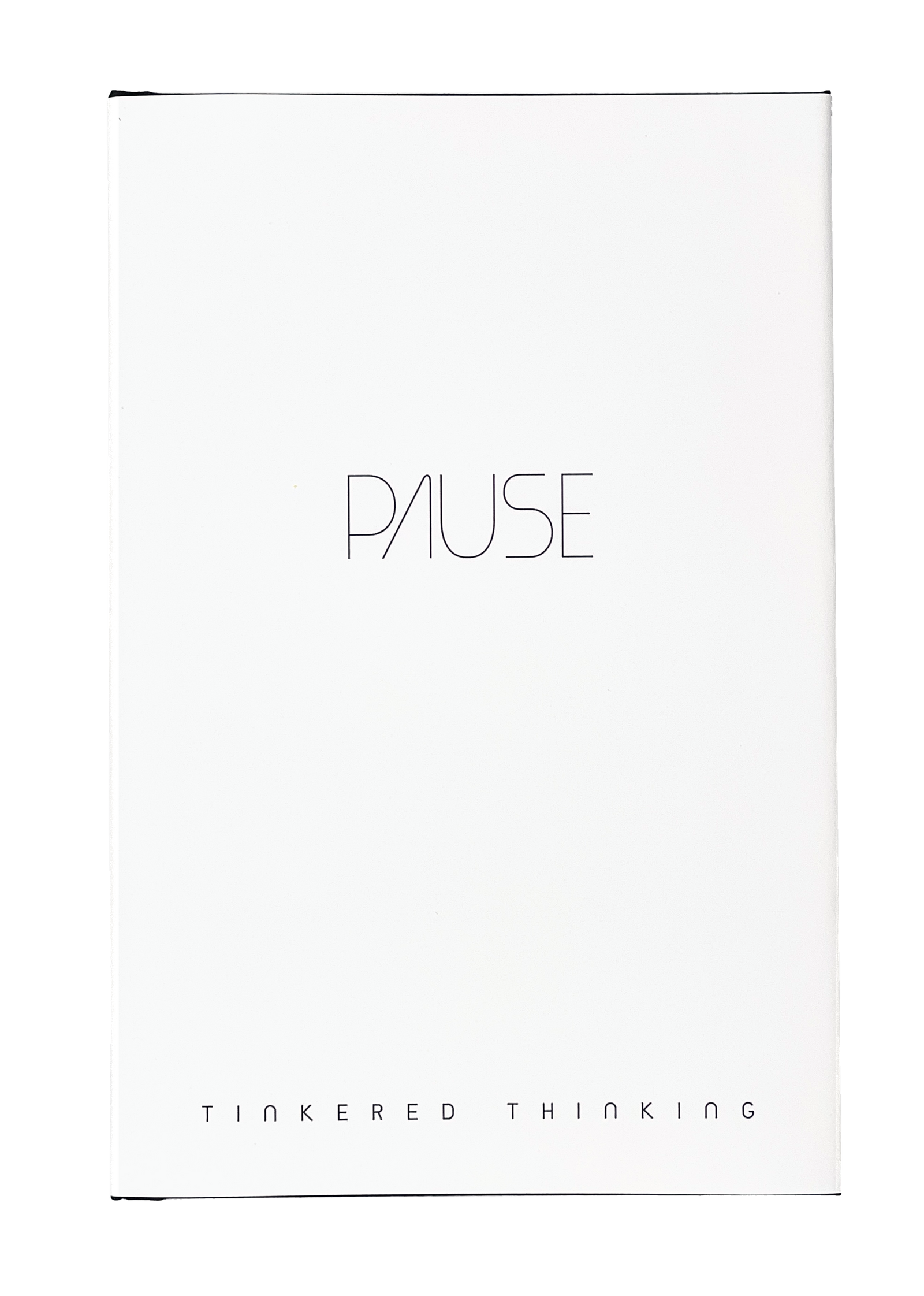
The first non-fiction book from Tinkered Thinking. PAUSE is a short book on meditation. Now available on the Tinkered Thinking Bookstore.
The SECOND illustrated book from Tinkered Thinking is now available!

SPIN CHESS
A Chess app from Tinkered Thinking featuring a variant of chess that bridges all skill levels!

REPAUSE
A meditation app is forthcoming. Stay Tuned.




UNTIL FURTHER NOTICE
August 3rd, 2026
Incentive structure is one of the most useful mental models out there. Many people, professions and areas of study focus on what ought to be, instead of what is. Economists think of consumers as rational agents, and in the old fable the frog believes the scorpion when it says it won't sting him. Asking: what is the incentive? Often strips away the needless debate and hypothesizes about human nature and cuts straight to the cold core of what is driving a particular behavior. That rational agent consumer? Yea, they buy the new big screen TV on loan. Is this a rational idea? Absolutely not. But Sunday's sport-du-jour game will look great on it and our incentive laden consumer wants that experience.I spend a lot of time thinking about how incentives will shift in the coming decades. If AI merged with robotics can automate virtually all sectors of an economy, how do we define an economy?If anti-aging tech reverts everyone's body back to the age of 19, what will that do to things like marriage, and family?
What would you do with infinite time and no obligations?
Personally, I can answer this question. I could answer this question all day long for a few centuries. But that's besides the point. My concern is that most people can't answer this question.
There's a question that I liked asking on first dates. It illuminates a lot about a person, and as far as questions go, it has a high ROI:
If I gave you one billion dollars, what would you do? But here's the catch: You can spend like 50 million on hedonism and travel for a few years - until you get bored of that. But what would you do after? Oh and by the way you can't give any of it away. Not to a charity, not to friends and family or strangers. And you HAVE to DO something with it. You can't just invest it and live off the fat forever. So, what would you . . . build?
The spectrum of answers on this one is kind of insane. Some people have a laundry list of things they'd love to tackle. And each one makes for it's own juicy conversation. Others stumble to answer and end up saying something pretty tepid. The answer shows the scope of thinking. Some people are thinking way beyond the current facts of their life. Others are so bound to them it might be fare to say they are blind.
Let's take the marriage one. If we become biologically immortal, are you going to stay with your person for... ever? I'm sure some people will. But with the hormonal profile that comes with being biologically 19, do you think this is going to be the default for most people?
What if Till death do us part... becomes... forever?
Think about the change in incentive structure. As people get older with a partner, the sunk cost fallacy becomes entrenched, most people interpret themselves as less valuable as a mate because youth is prized in a mate, and then there's the whole issue of "getting back out there". Most people don't have extroversion as a skill that they can just turn back on. Most people are insecure and a bit introverted as a result. They feel bashful and embarrassed, and would rather just stick with what they know.
One thing that I've always struggled with is how people make decisions that affect the rest of their lives. This isn't a jab against commitment. It's more about the calculus that people run in order to initiate a commitment. Some things have incentive structures that stay stable for a long time. Hunger and eating, for example. But others can switch slowly, like a partner's attraction to you. It's multivariate, and you don't necessarily have control over all of those variables. Same goes the other way: one's attraction to one's partner. We like to think that love triumphs over these superficial issues. But an afternoon observing how things go in divorce court will reveal plainly just how impactful superficial things can be. Unfortunately, I think love is a rather fragile thing that needs a particular environment that needs to be constantly maintained, like a garden. If you want a flower to bloom, you need to maintain your garden. And Love is that flower. But instead many people treat it like the foundation of a house. We pile everything on top of it and expect it to support everything. Imagine doing that to a flower. And yet people are surprised when love doesn't prevail. Again, people think about how the world ought to be, instead of facing the world as it really is.
Behavior is predictable along incetnive lines, until further notice. That is, until the incentives change.