-compressed.jpg)


Daily, snackable writings to spur changes in thinking.
Building a blueprint for a better brain by tinkering with the code.
subscribe
rss Feeds
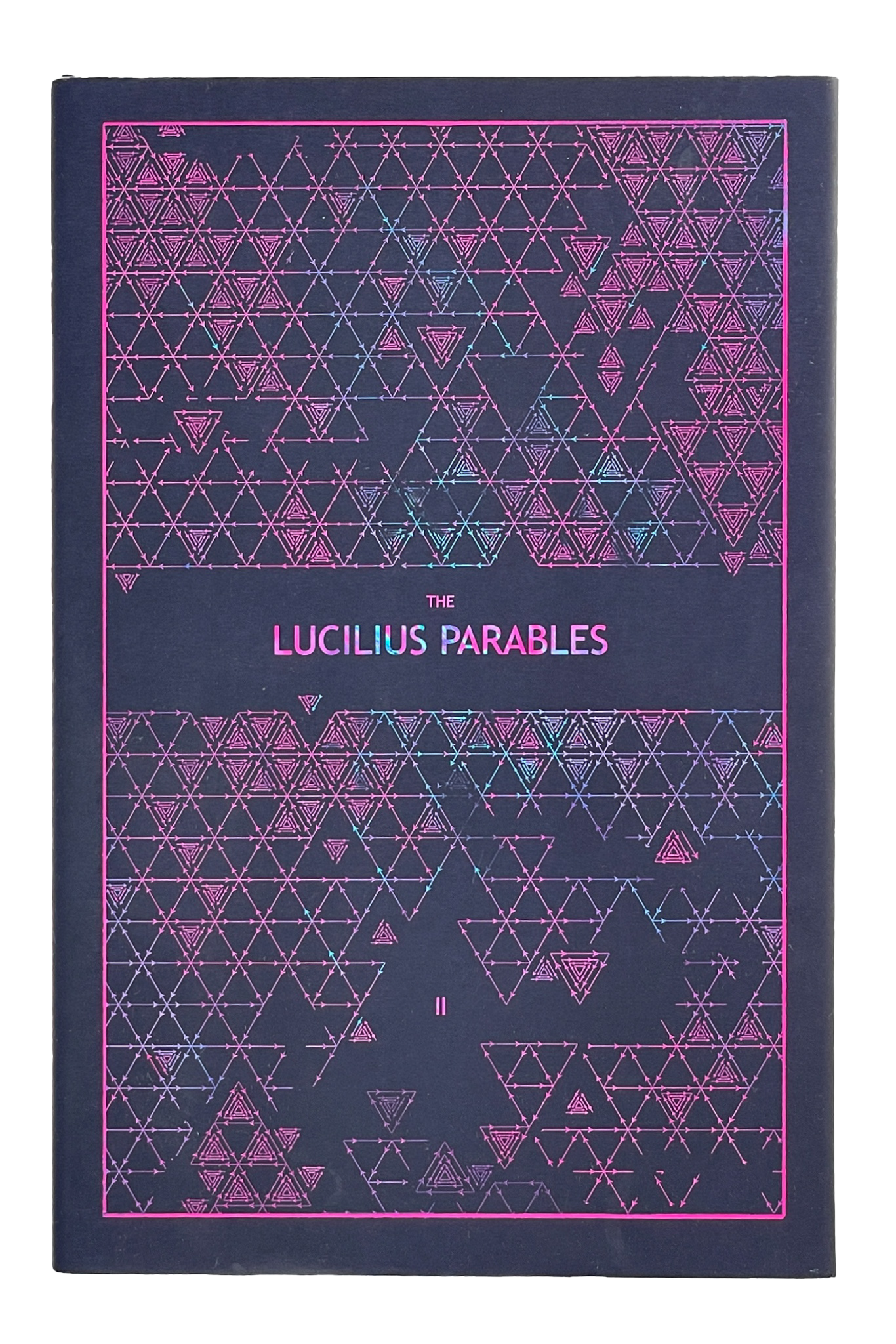
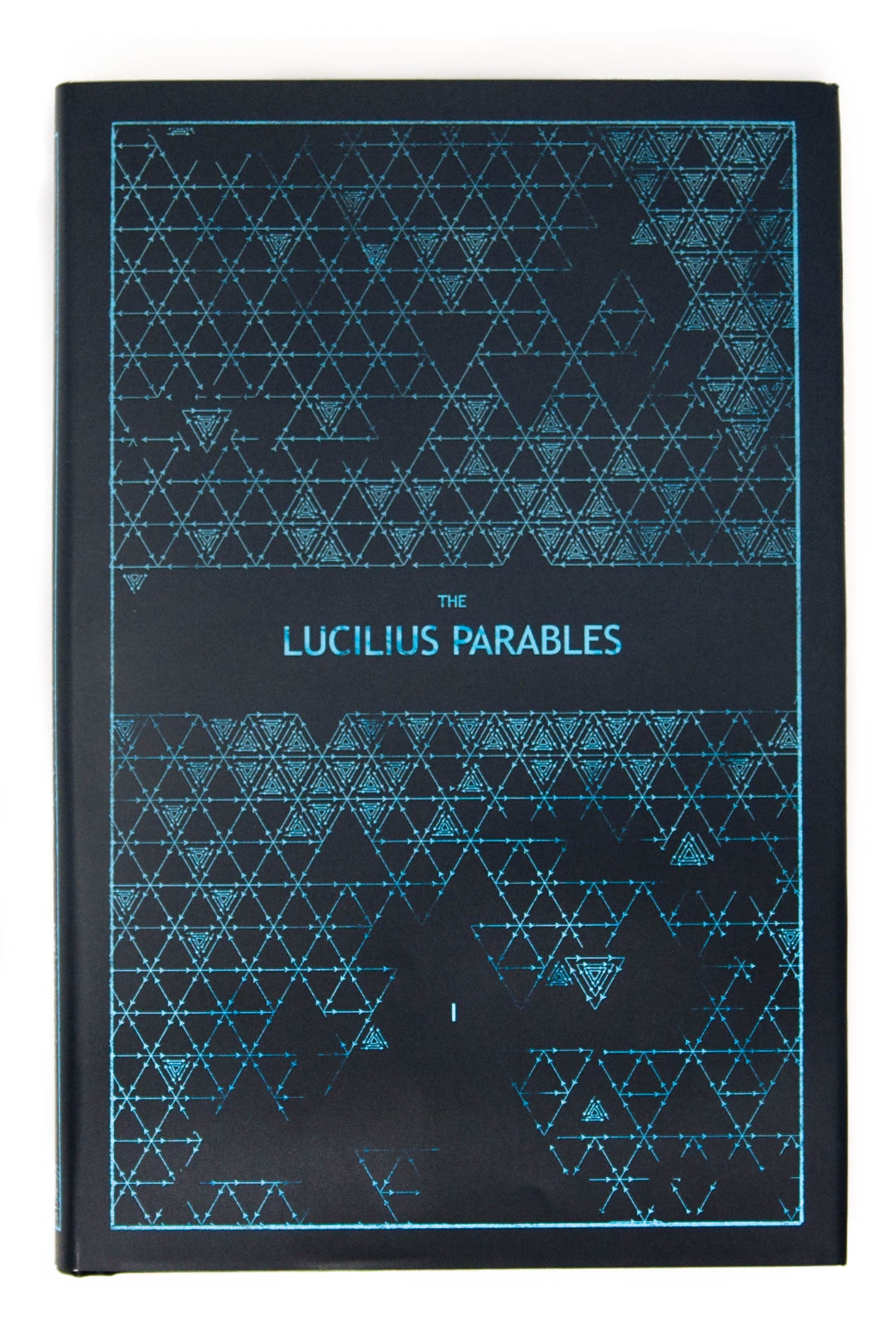
The SECOND illustrated book from Tinkered Thinking is now available!

SPIN CHESS
A Chess app from Tinkered Thinking featuring a variant of chess that bridges all skill levels!

REPAUSE
A meditation app is forthcoming. Stay Tuned.




A LUCILIUS PARABLE: FLEETING OPPORTUNITY
September 13th, 2020
Lucilius woke up on the floor of the command deck, a crushing headache screaming in tune with the ship’s alarms as he stumbled up and pulled himself back into his seat. He looked around at the rest of his crew on the floor, all of them coming to and looking around.
“Engineering, status report.”
The lieutenant was grabbing his head as he looked at the various blank screens and controls.
“Life support nominal, engines coming back online,” the lieutenant called out.
The rest of the bridge was dark, dim with emergency lights. Lucilius rubbed his eyes, trying to figure out what had happened. Lucilius was captain of the Starship Fredinand, now lost somewhere in the deepest reaches of the August Galaxy. His mind ran through familiar protocol as he wondered at the possibility of some sort of electrical storm, trying to guess what might have happened as the ship’s systems rebooted.
“Captain,” called one of Lucilius’ lieutenants. “scanners have picked up a spacial anomaly and a ship, in the forward quadrant, ”
“On screen,” Lucilius commanded.
Before the command crew a blank wall wavered into focus to show a spinning disk of light and hovering before it, a ship, tiny in the distance.
“Navigation, do we have readings yet?” Lucilius queried.
“No sir.”
“Comms?”
“Still down sir.”
“Engineering?”
“Engines nominal, hyperdrive is down, weapon systems down, primary and secondary life-support down, tertiary active.
“Johann,”
“Sir?” Answered the pilot.
“Bring us in closer.”
“Yes, sir, distress protocol?”
“No,” Lucilius said. “Don’t know who’s down there, still don’t know what happened. Fly casual.”
The ship began to approach, and slowly the distant ship began to grow before the enormous disk of light.
“Comms?”
“Still down sir.”
The distant ship continued to grow on screen as they approached, the details still bleary by the distance and the glow of the spatial anomaly. Lucilius squinted at the screen.
“Navigation, magnify.”
“Already at full resolution sir.”
Lucilius stood up, wavering for a moment as the blood rushed from his still pained head. He steadied himself and walked to the front of the bridge to look closer at the wall screen.
“Comms?”
“Working on it sir - the system seems to be locked in a recursive reboot.”
“Nav, we have a location yet?”
“Seem to be having the same problem, systems are displaying old positions with every reboot.”
Lucilius squinted hard at the shape of the ship on the screen. The screen momentarily flickered as the navigation officer rebooted the system. Something about the bleary geometry seemed familiar. He had the eerie sense that he’d seen this ship before. It seemed to be edging closer to the disk of light.
“Nav, what’s going on with this ship?”
“They are approaching the spatial anomaly.”
“Johann, speed it up a bit, I don’t want to lose them.”
“Comms?”
“Status unchanged, reboots are throwing no errors, The Ferdinand is only picking up its own comms systems, it’s reading like there’s nothing else in the area. Still trying to determine what’s wrong.”
“Jammed?” Lucilius asked.
“I don’t think so sir, it’s like we’re alone, jamming would disrupt our own signal which is stable.”
“Do a general broadcast.”
The Comm’s officer nodded to signal Lucilius.
“This is Lucilius of the Starship Ferdinand, identify yourself immediately. Communication jamming is an act of war. If you do not identify yourself we are bound by federation law to engage you as a threat.”
All that followed was silence.
“Sir, the ship is approaching the disk.”
“Johann speed it up, I want eyes on this ship before it passes into the anomaly.”
“Distress protocol?” The pilot queried.
“Engage all tactical measures necessary.”
The glimmer of a smile fluttered momentarily across the pilot’s face as he opened the ship’s throttle, sending them hurtling forward at attack speed. Lucilius took another step closer to the screen.
“Nav, get me geometry read-out on this ship before it vanishes.”
“The spatial anomaly is disrupting scanners, Only partial readouts are coming back.”
“Piece it together!” Lucilius commanded.
“Working on it.”
Lucilius looked back at the pilot “Open it up!”
Johann slammed the throttle all on and the ship lurched forward, but moments later the ship ahead disappeared into the disk of light. The pilot eased up until they slowed to a stop before the disk.
“Sir I have a bogey in rear quadrant.”
“What?”
“Just popped up out of nowhere.”
“What’s it doing?”
“Just sitting there.”
“Nav error?”
The navigation officer looked back at Lucilius with a baffled look about the strangeness of the entire situation. Lucilius nodded.
“Engineering, warp still down?”
“Yes sir.”
“Weapons?”
“Still unresponsive.”
“Nav, where is that bogey, do you have a reading on the ship yet?”
“Hasn’t moved. No resolution, proximity to the anomaly seems to be corrupting our scanners.”
“Engineering, reboot all systems now.” He stepped closer to the engineering consul to watch the screen readouts. The young engineering officer quickly touched a temple, wincing with pain before tapping more initiation commands into the consul.
“Come on my boy,” Lucilius said, “give me my guns.”
The screens read anew and turned up the same readout. Only primary engines and tertiary life-support systems were active.
Lucilius spun around, “Nav, where are they?”
“Approaching.”
“Speed.”
“Cruising.”
“Comms?” Lucilius called out.
But before the officer could respond, the bridge boomed.
“This is Lucilius of the Starship Ferdinand, identify yourself immediately. Communication jamming is an act of war. If you do not identify yourself we are bound by federation law to engage you as a threat.”
Lucilius grabbed his own forehead. “Comms, reboot your systems now. Nav give me 10 second updates on position, if speed changes give me a weapons distance countdown.”
“Engineering, warp status.”
“Still down.”
“Can anyone give me information on this thing in front of us?”
The bridge was silent. Spatial anomalies were extremely rare but Lucilius had come across one or two. He knew their instruments wouldn’t be able to penetrate the details of its mystery. He knew his crew would have no answers. The question was designed not for an answer but as a proposal to his officers, illuminating the few options they now faced in the event of assuming the worst.
“Move us closer.” Lucilius said. Johann looked back at his captain and Lucilius nodded. The ship broke its stationary position and began to approach the turning undulations of light.
“Sir, the ship is accelerating.”
“Comms?”
“Unchanged.”
“Jammed?”
“I don’t know, could be the anomaly.”
The Navigation officer spoke, “The ship has entered weapons distance and is still accelerating.”
Lucilius looked back at his pilot “keep us out of range!”
They all knew their only option now in the face of an approaching enemy within weapons distance. The anomaly was an existential gamble, perhaps more fraught than destruction by an enemy, but all of them were bound by the simple tenets of their profession to endure and explore at the cost of potential destruction. Fate at the hands of an approaching enemy was a two headed possibility at best, but a spatial anomaly contained possibilities that could not even be calculated. All of them knew that without their proper systems, their only choice was to follow the chased ship into the portal. Perhaps that ship had ventured into the unknown knowing where they were headed…
“Weapons distance, 10 seconds!” The navigation officer called out.
“Johann?”
“5 seconds to impact.”
“Comms?”
“No change,” the officer called out.
“4 seconds to impact.”
“Engineering?!” Lucilius barked.
“Warp down, weapons down.”
“Nav?”
“5 seconds weapons distance.”
“3 seconds to impact,” Johann called out. “2 seconds.”
“Brace for impact,” Lucilius shouted, and just as the ship closed in on the blinding anomaly Lucilius noticed one of the unnoticed screens to the side of the navigation officer. The ship’s computers had patched together data on the ship they had chased before it had disappeared into the anomaly and was now displaying the image on one of the navigation screens. As they passed into the anomaly Lucilius finally realized why the ship had seemed so familiar even in its blurriness. On the screen glowed the sheer and sleek lines of The Ferdinand.
THE NARRATIVES OF OTHERS
September 12th, 2020
If you woke up and found yourself in a completely different reality governed by beings you could not even see nor hear nor even conceive and they asked you to describe your world, how would you do it? Would you start talking about how unfair the current leaders of your tribe are, and perhaps name people who are popular today and perhaps the ways we all sort of intermingle with one another despite the resistance we have toward one another. Or, would you start by describing general things like a force that sticks you to the ground, and an invisible substance that you suck into your body during every other moment of your life and the heat and light that comes from a lofty celestial source that rises and falls and lapses into darkness once a day?
This later one could just as easily sound like an archaic religious system as it is a quasi description of physics as we experience it. It’s clear the first description regarding mostly people and the ways we interact requires a much larger context in order to understand. And of course one description is quite dependant on the other. The celestial bodies would still turn and hurtle through space without humans to witness it, but humans would be unable to evolve and witness anything without the turn and hurtle of celestial bodies.
Notice how staggeringly incomplete it is to describe reality through the lens of personal identity. Take for instance political affiliation as a subfield of personal identity: is a thorough summary of the current warring political parties a good measure of the constituents of reality? How does such a description fair in comparison to something politically charged like changes in atmospheric composition, which would, should, or could veer away from reality as understood through personal identity..
A full description would inevitably include both as they are both aspects of the reality we experience. The importance of juxtaposing them, however, is to examine the disproportionate way such views of reality actually occupy our view of reality.
We are, on the whole, far more consumed with a description and view of reality as filtered through the lens of personal identity. Other considerations like atmospheric conditions or the actual statistics of a given controversial event are often one step removed since the cultural component of these topics is primary. The “facts” of a situation often don’t even make it into the conversation because we are too busy painting and repainting our own narrative of the world with attempts to repaint the narratives of others who are likewise trying to do the same to “us”.
There exists a simple explanation why we have such a difficult time focusing our collective conversation on a cold and sober exploration of facts, and it’s best introduced by a quote attributed to a dictator who was responsible for an extraordinary amount of death.
Joseph Stalin is popularly attributed with saying:
The death of one man is a tragedy. The death of millions is a statistic.*
Sad, no doubt, but perhaps true. The human mind just can’t relate to the concept of a million. And what exactly does it mean to relate to a concept? The tragedy of a single person is relatable primarily, and perhaps exclusively because it evokes a strong emotional reaction. Statistics, on the other hands rarely, if ever evoke an emotional reaction. Strangely, it requires a a good deal of cognitive horsepower to really grasp the meaning of important statistics in a way that can have an emotional impact. On the other hand, most of our emotional reactions, as we might have by witnessing the death of a single person, are automatic reactions. These are built in responses that don’t require any work to have. Whereas the cognitive effort required to understand a statistic on an emotional level is far greater.
This is why our narrative about reality is most often fuelled and filtered through a lens of personal identity. If personal identity in current times can be summed up as anything, it’s probably fair to say it’s a collection of those things that are most likely to make us emotional.
How many people consider the laws of gravity as part of their personal identity? Very few indeed, despite the fact that gravity is vital for our daily functioning. But of course this is because gravity isn’t something that we can easily get emotional about. Just imagine that: an impassioned and raging debate full of emotional hysterics regarding gravity. This perhaps happens in certain scientific laboratories and perhaps at a physics convention here and there, but if this somewhat hilarious event made it on to mainstream media, most people would barely even blink at it. Now flip the narrative and think about all the impassioned hysterics that fill our view of the world. How much of it is fleeting, and how much of it is based in facts that actually reflect the wider status of reality? If we weren’t so easily triggered by such topics, how might our actions regarding such topics be different? Would our choices be… wiser?
Much growth and learning is simply the ability to properly regulate one’s emotions. Learning, for example, can be boiled down to the way a person deals with the experience of confusion. If the default reaction to confusion is frustration and impatience, chances are learning is going to be slow with a high likelihood of stopping altogether. If, on the other hand an individual reacts to a confusing subject with curiosity, the chances that person makes headway is much higher.
We might reframe this topic of emotional regulation in the context of personal identity and how that becomes our filtered narrative of reality. It’s plainly obvious that little if any emotions regarding our most triggering issues are being well regulated if regulated at all.
We hinder ourselves in the absence of such regulation. The clearest and most effective path only becomes visible and apparent when we are calm, passive and at peace. Strangely, our impassioned emotional reaction is a self-defeating response - it is more likely to hinder our ability to make things better and resolve the issue that is causing such strong emotions.
So often, in this wide rambling game of human discourse, the issue that triggers us the most and to the greatest degree is, oddly and simply, the narratives of others.
*The sentiment behind the quote most often attributed to Stalin was most likely the creation of a Geman Journalist named Kurt Tucholsky.
DUMB QUESTION
September 11th, 2020
The cliche is that there’s no such thing as a dumb question. The intent behind this is rather wholesome and even cute: it’s to encourage people (generally young students who have somehow lost their childhood superpower of asking a constant stream of questions) to pipe up when they don’t understand something. The tribalistic tendencies of of the human mind in a group clearly exert a new force with the onset of puberty, and likely much earlier.
Think back to one of these instances, when a teacher or professor has made some point and you feel clueless and look around wondering if everyone else understood what went straight over your head. There has often been that outlier who doesn’t give a hoot about shame or embarrassment and raises a hand to ask what feels like a dumb question, and of course it turns out that everyone had the same dumb question on their mind because no one understood what the teacher was saying. How grateful are we when that individual, devoid of fear asks a question we ourselves have?
It seems that the only thing more unsettling than being confused is being visibly confused in front of other people. It’s an experience of being an outcast, but in the worst possible way, because you also don’t understand what’s going on. Being an outcast with a mission can be fun because you become a rebel with a cause, convinced that everyone else has the wrong perspective. But the experience of confusion is an instance of no perspective. Quite literally. When we don’t understand a subject, it’s as though it’s invisible. We can’t see how the pieces go together. We don’t just lack perspective, it feels as if there isn’t a perspective at all.
The flip side of course is to take the dumb question to an even greater extreme: to ask a question that is even more open ended and “dumb” than you feel inclined to ask. Not only is it possible you’ll have the silent gratitude of someone also listening, but it opens up the person who attempts to answer the question to speak more broadly about the topic which opens up the serendipitous opportunity they may mention a detail that augments what you actually do understand in an important way. And on top of this, it broadens the field for more specific, future questions.
The descriptor ‘dumb’ for a question is really an indication of where people think group knowledge is on a given topic. But of course this is always relative. We don’t, or shouldn’t think of a child’s question as dumb because a child is far, far less likely to have had experience of previous understanding. And yet we hold ourselves and often other people to far higher standards despite the same circumstance of having little to no pervious experience or understanding.
The lesson of the dumb question isn’t that there are no dumb questions but that questions communicate implicitly differing levels of understanding, and both as the person asking or answering questions, we can manipulate the portrayal of these levels to other people to great benefit, either to gain greater understanding or to reorient the playing field so that everyone is on the same page.
FLEXBILITY FUNCTION
September 10th, 2020
It certainly seems that people become set in their ways as they get older. That old aphorism comes to mind: you can’t teach an old dog new tricks. And then of course there is the stray anecdote here and there of some old dog actually picking up a new trick - we hear about a 60 some-odd year old picking up a guitar and discovering the long forgotten unpleasantness of being a newb before finally getting the hang of it. It’s certainly more than possible, it’s just less probable with time. But when this sort of anecdote happens upon us - for a moment, reassurance rushes us, there’s nothing to fear and all is right with the world, despite the obvious delusion.
It’s a bit reminiscent of the game Tetris. We all have a limited amount of time to get our mind shaped and pointed in a direction before it gets somewhat frozen in place. For many, the stagnation of flexibility results in a perspective that easily and quickly becomes at odds with others, and this is of course typified by the stereotypical grumpy old man. It’s interesting to wonder if those hallowed ‘good old days’ are reminiscent - not of some actual edenic time, but merely of a time when a person’s present perspective felt more in tune and in step with reality.
Running with this idea for a moment, we might try to flip it inside out and say that it’s possible to bring back the good old days by simply changing with the times. But of course, the ability to change is the thing that escapes us as we get older. Or is it? Can we make a habit of flexibility?
There are some people in their 90’s who are astonishingly good dancers and gymnasts. There’s a few videos of such nonagenarians floating around the internet and the first thought is always: there’s no way these people are in their 90’s.
And it’s not like these agile oldies can only do one dance or one acrobatic routine, in the same way a grumpy old man would spout the same broken record rhetoric. Such nonagenarians have accomplished the incredible feat of maintaining their flexibility.
The physical correlate of flexibility and how to maintain it is pretty straightforward. Daily practice and training of the body with stretching and exercise, and chances are higher that such physical flexibility will endure.
But what about something like perspective? How does an individual’s perspective stay flexible, and what would the daily training for such a thing look like? We might default to something like reading every day. This would most certainly be a help, but it’s a bit like the old boxing trainer who has a good eye and can give good direction but can no longer get into the ring.
We might tack on writing to this daily training and surely we are getting closer. But like the grumpy old man who won’t shut his trap about the same issue and the same take on that issue, even writing can become a self-reinforcing habit that merely works to entrench an individual’s perspective. This is certainly evident in the late works of a lot of non-fiction writers whose seminal work is long behind them.
There is one piece of linguistic legerdemain that weaves its way through all three of these, through talking, reading, and writing. And this unique facet of language doesn’t just stretch the mind in the way our nonagenarian moves their arms and legs through daily stretches. This tool also provokes creativity, like a dancer or musician who is skilled enough to go off script while staying on beat. This twist of language is the question.
We have to wonder what happens to a human mind that has become very good at generating and exploring interesting, incisive and well-honed questions?
We need only ask, if someone well-skilled in the art of the question more or less likely to maintain a flexibility of thought and mind?
FLOW OF THOUGHT
September 9th, 2020
The question has been posed before: can you predict your next thought? No, of course not, because to predict that thought is to actually have it. Any attempt is a self-fulfilling paradox that simultaneously answers the question and discounts the answer as a valid prediction.
While this is an interesting question which poses an interesting exercise within the debate surrounding free will, it is perhaps not a terribly productive question. Its exploration is merely fascinating, it does not really unlock nor hint at the expansion of our agency or some good we might be able to develop or acquire. But related questions around this one-way street of thought can yield areas of exploration that aren’t just fascinating, but productive.
Instead of drawing concern to the direction of thought, as with trying to figure out where a train of thought is going to go, we can instead wonder about the speed of thought. Does thought have a flow that is unstoppable, or does it drip like a leaky faucet?
Consider the speed of thought in two different situations: When you are bored, and again when you feel inspired while being highly productive.
In the first thought can be like a slow experience, like watching honey slowly ooze toward the bottom of the bottle.
Whereas in the second, thought is like a machine gun firing bullets of gold. Every thought feels relevant and perfectly on time and just on the heels of the last with a new one on its tail.
Then of course we can have the same rapid-fire experience in a far less enjoyable way: when that inner voice is inspired to berate our performance and who we find ourselves to be. The deluge of negativity can be overwhelming, and we yearn for the thought to stop, for the flow to ratchet down to nothing if only to have some rest from ourselves.
While direction of thought is a different topic requiring it’s own set of kid-gloves, the speed or flow of thought is something that we can develop a control over, given some practice. This is perhaps one of the aims within mindfulness meditation: to be able to notice thoughts in such a way that slows down the whole process, and with practice, it can seem as though the mind is brought to a stand still when compared to the frenetic mental experience of everyday life.
Flow of thought is something that can be toggled, with practice and training. And usually this means pumping the brakes and slowing down.
But perhaps even more interesting is the question of how we can ramp up our thinking, and rev it in good directions?