-compressed.jpg)
Daily, snackable writings to spur changes in thinking.
Building a blueprint for a better brain by tinkering with the code.
subscribe
rss Feeds
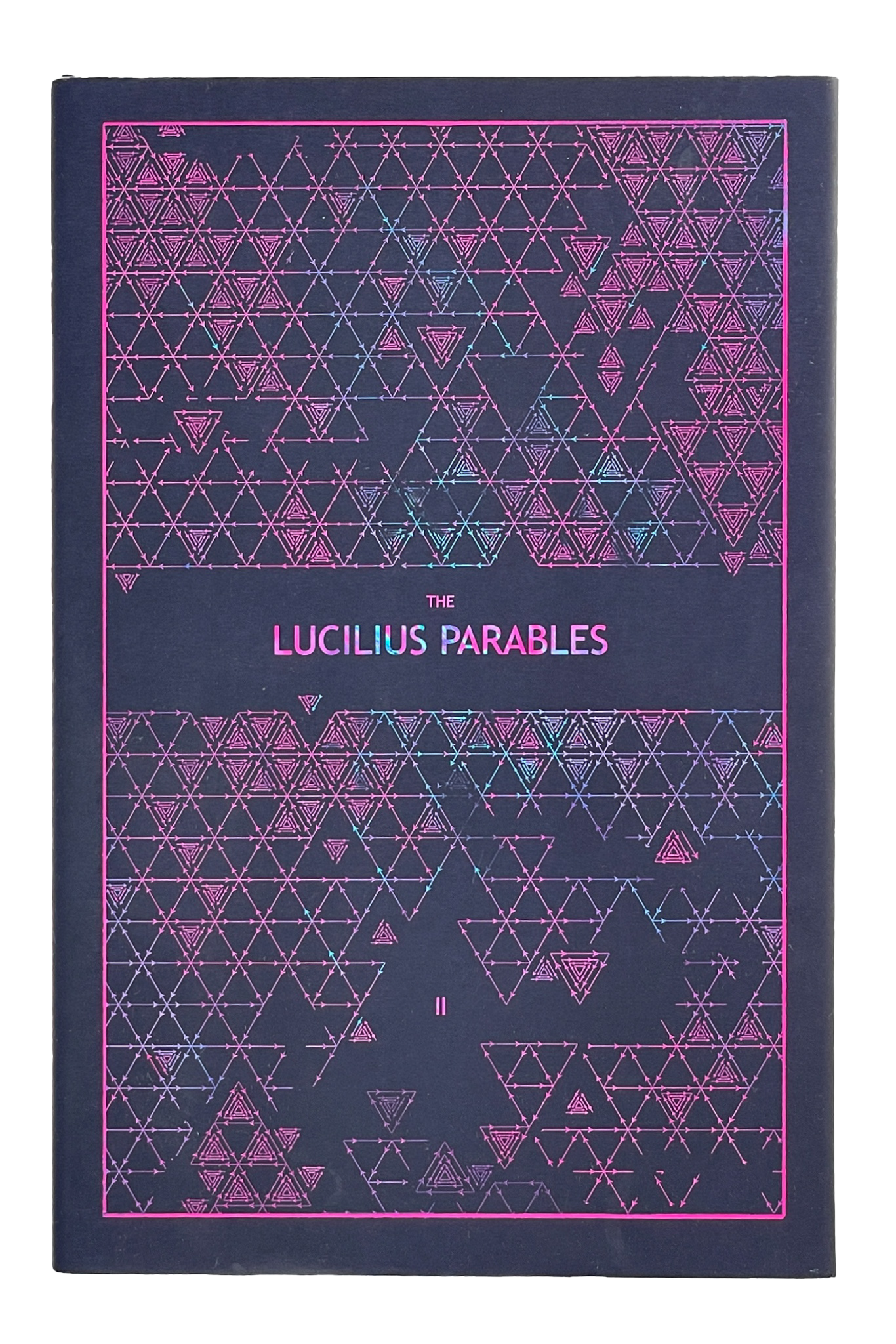
The SECOND illustrated book from Tinkered Thinking is now available!

SPIN CHESS
A Chess app from Tinkered Thinking featuring a variant of chess that bridges all skill levels!

REPAUSE
A meditation app is forthcoming. Stay Tuned.




DECEPTIVE OPTIONALITY
September 18th, 2020
Much of what we seek boils down to optionality. We stock the fridge with more food than we’ll eat so we can have options. We stay single longer in order to peruse options through time. We buy larger houses so we have the option of being in the den or the downstairs living room, or the patio, or the other house on the island. We are drawn more and more to shop with Amazon because the options continue to grow and grow and grow.
Leveraging a situation for an outcome that is focused on optionality is almost always the best course of action. But as with anything, when taken to an extreme, the benefits can grow toxic. Take for instance the young and wayward spirit who can’t commit to developing a single skill because the entire set of possible career options is both incredible and overwhelming. The perennial dater may also run into a similar issue as life moves on and the enormous amount of time and effort required for a family gets kicked down the road. Optionality can, in some cases become no option, and this is a subtle point wholly based on exactly which circumstance we are focusing on.
For example, money creates optionality. In fact, the fungible nature of money creates optionality in its most form, both practical and conceptual. A surfeit of money unlocks optionality in most other fields within a human network, aside from, perhaps, love - but even that is certainly up for debate and scrutiny as few, if any people would object to a spouse that was instantly wealthier. Optionality for one usually means optionality for the other, particularly if love is genuine.
When optionality is a function of time, however, it runs like a fuse. It’s a grave mistake to spend too much of one’s life trying to figure out a path to try because time and life runs out and we can find ourselves with the best years behind us without ever taking a solid swing with any one path. While money is fungible, time is not. The illusion of course is that time seems fungible. You can wake up tomorrow and do something totally different than anything you’ve ever done. It’s possible to radically change direction and the potential and possibility teased by the concept of tomorrow feels consistently reassuring. But how often do we actually take up the tease on its dare? How few people, it seems, have the guts to take hold of their life and wrench it in a totally new direction. Such drastic action is certainly the exception, not the rule, though the promise of tomorrow makes it feel like a steady rule.
Optionality tied to time dwindles like sand in an hourglass, each grain a different day, a different chance when our possible path might have struck out in a new direction, falling through the pinch of the present, forever lost to the impenetrable vault of yesterday.
The lesson of course which we must anticipate before learning too late is to get busy living, or waste it all waiting for something that may never show.
THE SOCIAL IMPULSE - PART II
September 17th, 2020
Part I of this two part series can be found here.
In the Bible, Adam is given one simple task: to give everything a name. Now, what exactly is a name? What is it for, and most importantly, what does a name mean in relation to other things with names? The act of giving something a name is the instance of creating a category, which is -in relation to other things- a division.
Adam’s task wasn’t just an odd naming exercise, it was in fact the invention of language altogether, which perhaps lends a new lens to the idea of the word being so important in such religious traditions. It’s of further interest to note that such religious and spiritual traditions exist primarily through the medium of language. If for example language didn’t exist at all, how else would you be aware of such religious traditions? From a secular point of view, it’s not much of a stretch to see religion as a reverent nod first and foremost to the invention of language, and the way it has pervaded and guided us. Because language does guide us, far more than we have the ability to guide it. This can be a deeply unsettling revelation.
We need only ask: can you have a thought that exists outside of your language’s ability to describe it?
Part I of this two part series on The Social Impulse ended with an examination of the divisions that exist between people and how we seem to be hardwired to resist groups that are not our own. To phrase the issue more simply, we might notice that:
100% of human problems boil down to the fact that we have natural systems of thinking that are in accord with just two words: us & them
The word ‘them’ represents perhaps the most insidious and potentially destructive concept we’ve ever invented. This vague category shifts and slips between different levels constantly. A country can become united against a common enemy, against them, but in the absence of a common enemy, we are primed to try and find a new group to call them, as can be seen with a civil war within a single country. This tendency to subdivide further in the absence of a clear and obvious other can go all the way down. It can even go straight down to the individual level where a person feels divided and starts hating themselves due to the illusion of this new division, at which point suicidal ideation can arise, and of course: suicide, when the illusion of division finally collapses in on itself.
This fragmentation is always occurring. It is the growth and operation of language itself, which is why it’s so important to monitor the way we use language. To do so is in fact to monitor the way language is using us…
Language is a double-edged sword. It allows us to cleave the universe into modules that we can conceptually manipulate and in so doing discover more about how the universe works, but it can also be a tool turned against ourselves - one that can quite literally lead to the cleaving of heads from bodies.
Our hardwired social impulse is to belong to a group, and woven in with that urge is a natural tendency to identify who is part of the others, part of them.
While this default programming most definitely served a survival function in the past, it has quickly outgrown its utility, especially in modern times. If we don’t start thinking about the entire planet as THE in-group, and the only group, we risk a communal suicide as the capability of such wide-spread destruction becomes more and more available. Simply put, we need to get rid of them - not the people we might temporarily plaster the word with, but the actual word itself.
What’s perhaps even more curious is that if the word them suddenly vanished as a concept from the minds of all people, the word us becomes pleasantly meaningless.
THE SOCIAL IMPULSE - PART I
September 16th, 2020
Chances are you’ve had the strange experience of unintentionally eavesdropping on a conversation between two people at a coffeeshop or a restaurant and realizing after a number of minutes with strange astonishment that neither person has actually said anything despite a constant exchange of words. And yet both parties are animated and engaged with the interaction. What exactly is going on during this absurd phenomenon?
The answer lies in conjunction with a common aphorism:
It’s not what you say, but how you say it.
Most communication is not an exchange of information, it is dance of emotional alignment. We need only approach the situation through the other end of the metaphor: when two people are dancing together in a synchronous and unified way and it’s clear that both people are having fun, what exactly is the meaning of the dance?
This is of course, a nonsensical question: a dance doesn’t necessarily mean anything. Sure we might be able to awkwardly paste some sort of interpretation on it, or swap in tangential facts about exercise, but at the end of the day, we dance mostly because it’s fun. Plain and simple. We understand this intuitively and no one watches a dance in utter confusion because there doesn’t seem to be any useful information that’s being transmitted between people.
But talking is different, right? Words mean things, and when we string them together, we do so for the sake of creating and transmitting meaning. Right?
The fact is, this is what language is used for sometimes.
Language is a multifaceted tool, just as the body is. We can use the body to dance and have fun, but then we can turn around and do something with the body that is purely utilitarian, like pick up the toys and put them in the toy box so no one steps on them, or so we can clear the floor for dancing.
Language, likewise is most often used for a form of dance between minds. In debate we might think of it as a volley of combating ideas, like, say, tennis, but when it comes to a couple of friends having a whole lot of fun talking an incredible amount of nothing, we’re best to think of it as an emotional dance through the medium of words.
This desire and pleasure of emotional alignment is at the heart of the social impulse we all have. It’s perhaps at the core of why we have such tribalistic tendencies. Simply put, there is a pleasure reward for being emotionally aligned with a group that you feel kinship with, and resisting a rival tribe only amplifies this emotional reward as delivered by your in-group.
This is most certainly an evolutionary adaptation. Well-formed groups stood a much higher chance of surviving, particularly groups that developed a hardwired assumption that other groups are most likely bad. This is perhaps best evidenced by the lack of speciation around humans despite archeological evidence that many existed, the most commonly discussed example being neanderthals who were wiped out along with a dozen or so other human-like relatives.
In the absence of a commonly perceived enemy, however, we turn on each other and our own internal subdivisions become the new boundaries of conflict.
This is a shared cognitive program that is doomed to self-immolate. Even if one group were to somehow achieve the tragic goal of wiping out all humans who are somehow not like their group, the demarcation of differences would simply collapse again to a lower level, and subgroups within this surviving group would again start becoming rivals until a new internal conflict adopts the same extreme measures. All because our need to belong is so deep and our pleasure of feeling like we belong promises to be so great, just so we can merely sit and talk pleasantly with each other about absolutely nothing.
DOWNGRADE TO UPGRADE
September 15th, 2020
The most crucial aspect of intelligence today and in years to come is the ability for us to recognize aspects of psychology that do not benefit our aims and consciously suppress our automatic reactions. The most prevalent example of hardwired psychology gone stale and awry in modern times is the fight-or-flight response. We are predisposed to outrage and attack in situations when everyone would benefit far more from a mindful and conscientious response that is initiated with a calm and thoughtful pause. Another piece of psychology that has outlived its utility is our attraction to shiny things.
This tendency to upgrade to the fancier, glitzier version is everywhere and is often the result of comparative happiness, or what’s more colloquially referred to as keeping-up-with-the-Joneses. Tech start ups with a huge infusion of investor money pour it into fancy offices with smoothie stations and ridiculous art. Authors cashing in on their first bestseller fawn over the delivery of their new oak writing desk. First time movie stars buy that sexy sports car to spin around in. But after some time, there is often a conflict between actual utility, or how effective something is, and the purported image that an upgrade has actually occurred.
A rather fanciful example that elicits the issue comes from Philip Pullman’s His Dark Materials series. In this fantasy series, there is, among other unrealistic things, a talking bear that goes into battle with the king of his tribe. The king wears guided armor, beautifully inlaid and decked out with fancy ornamentation. Meanwhile, the character we root for as readers wears the plainest armor imaginable, composed of simple sheets of thick metal. It doesn’t take much guessing to figure out who wins the battle. The fancy ornamentation cluttering the king’s armor gets in his way and limits his movements, meanwhile, the fighter with the simpler cheaper option is far more capable and wins.
This fanciful anecdote works as a good parable and metaphor when mapped onto real life examples. The new accommodations for the tech start up deactivate the lean drive of employees that made the endeavour a success, all the while the spent money ends up looking squandered when an unforeseen obstacle makes revenues crash and suddenly the whole venture is in jeopardy. Another real-life example is contained in an anecdote from the writer Stephen King who apparently did have a big and beautiful oak desk that he purchased to write novels. Turns out the only thing he could manage to do while sitting at that big expensive oak desk was get drunk. And there’s at least been one star who couldn’t afford the car insurance for the fancy new car after that first breakout roll (Jamie Foxx? Google failed me on this attempt to place the distant memory.)
Strangely, we become intoxicated by a structure of value unrelated to the mechanics of our success and abandon what works with the logic that something fancier will work better.
Paradoxically, we need to downgrade in order to achieve the upgrade we thought we’d get via the boons of success.
But can this inefficiency be extrapolated even further to greater benefit?
What can be downgraded before the foolish upgrade to achieve better results?
An exercise from stoic philosophy illuminates this possibility. Seneca who was a fabulously wealthy philosopher in ancient Rome would often spend a few days enduring the simplest existence possible: eating plain rice, sleeping on a stone floor, wearing the garments of a beggar.
Why did he do this and suggest others to do the same? Seneca realized that if his fortunes of his situation suddenly disappeared due to the vagrancies and randomness of life and he were left to endure the most meagre existence…. He would be ready for it. The regular exposure to such a situation brings - not just a familiarity - but even a comfort. The secondary benefit is that such a varied perspective allows a person to appreciate what they actually do have. Most people undergo hedonic adaptation, which is the phenomenon of getting so used to the good life that it’s no longer good and feels entirely underwhelming. Seneca’s exercise is a way of re-priming the system to crack perspective against the good fortune of life so that each day can be filled with gratitude.
We might wonder: what else can I cut out of my life to achieve better results? What else can I consciously downgrade in order to achieve an upgrade?
PLANNING THE ITERATIVE BUILD
September 14th, 2020
The perfect plan is a mirage, but not one that keeps us moving forward; it is a mirage that merely perpetuates our thinking and imaginative striving toward that perfect plan. There is an attempt to deconstruct completely the goal and reverse engineer its constituents until it unravels to our present circumstance. This is simply impossible, and so we try try the reverse: we try to see as many steps ahead as possible with the expectation that we’ll be able to imagine footsteps leading all the way to the imagined promised land of achievement. This too isn’t possible, but we can imagine such a plan existing, and this ability to hold a pair of ideals in our mind paralyzes the body from taking any action.
Not even nature can see across this gulf between present situation and goal. Nature iterates through generations and through branching species, always building with nuance and tinkering with different qualities. This is iterative building. If natural selection hadn’t been able to tweak changes through successive generations, we wouldn’t be here. Our very minds are the result of this iterative building, and it’s still unclear where this process of iteration is leading, even to us.
There are many instances that seem like something has a perfect plan. The development of an embryo to a fully formed human infant for example. The process is miraculous in its ability and it seems as though there is a perfect plan set out for this growth. But the word ‘plan’ isn’t exactly valid in the sense that we use a plan to aim our actions at a desired goal. The miraculous growth of all living creatures from a single cell is the result of something more akin to a recipe. DNA forms a set of instructions, like a recipe which is perhaps unique, but the uniqueness of each strand of DNA is more akin to the fact that no two loaves of banana bread turn out exactly the same, no matter how rigorously one attempts to follow the recipe perfectly. Such recipes and instructions are always written after something is built, and so it is with our DNA - the instructions of our growth: they exist because they have worked before, and these plans have grown as a result of tinkering with smaller versions that worked well enough to replicate in some way. We can imagine a primordial world where the first nucleotide formed, and then a second, and the two joined to form the first polynucleotide, which began laying the way for the gargantuan strands of DNA that exist in all of our cells. Every single piece of us could, in theory, be traced back to a step in this iterative process.
So when it comes to forming a plan to achieve some goal, why do we fool ourselves into thinking that we might be able to visualize every step of a path that we’ve never stepped foot on?
The plan of the iterative build is to start with just the first step: one that ideally moves in the direction of a goal, and ideally, even this first step will yield feedback divulging whether or not we’re headed in the right direction.