-compressed.jpg)
Daily, snackable writings to spur changes in thinking.
Building a blueprint for a better brain by tinkering with the code.
subscribe
rss Feeds
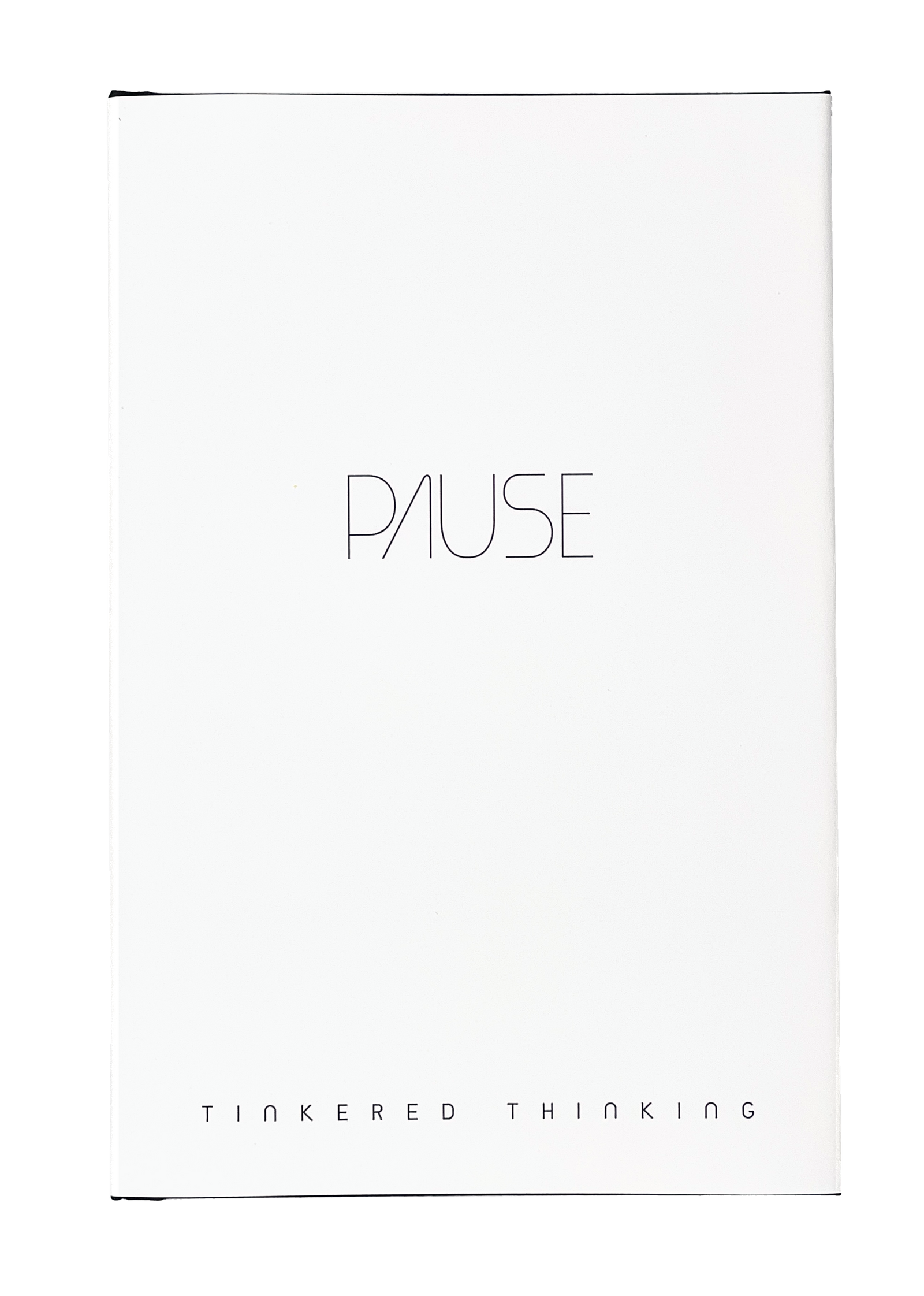
The first non-fiction book from Tinkered Thinking. PAUSE is a short book on meditation. Now available on the Tinkered Thinking Bookstore.
The SECOND illustrated book from Tinkered Thinking is now available!

SPIN CHESS
A Chess app from Tinkered Thinking featuring a variant of chess that bridges all skill levels!
REPAUSE
A meditation app is forthcoming. Stay Tuned.




A LUCILIUS PARABLE: EDIT THE GAME
January 30th, 2022
From the dusty mist a figure emerged. The blocky pieces of plated armor clashed with the soft patina of filmy air as he moved. Out into the clear air he moved, until there was a clear view of the desert basin.
The evening sun was crimping the far horizon and the figure sat. Lucilius threaded a thumb beneath the edge of the cylindrical helmet and lifted till the shell was aloft and he breathed the fresh air. Straggled hair matted his forehead, and he twisted his head, stretching his neck, the bones clicking from their cramp.
From a compartment of armor on his leg he dislodged a flask. The tiny cap split and unravelled by it’s mechanical apparatus to unveil an opening. Lucilius drank long and deep the searing liquid, and then he breathed deep and sighed from a long day of work. He glanced to his side, where lay the clothed bounty of his day’s work, soaking through the fibre.
He smiled softly at the sunset before the pleasant sense of a day’s work soured as he registered the particular sound of space splitting, spreading and forming a portal.
Lucilius closed his eyes, disagreeing to the flood of memory filling his mind. His long meditation practice, kept up even in this universe held them at bay before embracing them, allowing old times to flood over him like a neutral stream, neither hot nor cold.
He looked toward the sound of the split space, the portal. Swirling in suspended air was a whirlpool of shimmer, now bigger than the width of his two hands, and before it, a tiny critter, gazing up at him with large eyes.
“What.” Lucilius demanded.
“Your majesty, your opinion is greatly desired.”
“How long’s it been?”
The little critter - somewhere between a rabbit and a tiny dog, it’s garish talking jaws awkward below it’s pendulous blinking orb eyes - seemed to huddle into itself as though it had made an offense.
“Your majesty, our readings indicate you have been a resident of this world for nearly two centuries!”
“No.” Lucilius stated. “How long has it been? Not in this reality, but ours?”
The little creature’s eyes fell lower and seemed to search the stone ground for some kind of answer besides the one it held. It mumbled something.
“What.” Lucilius stated.
The tiny creature looked up again. “Forty-five.”
“Forty-five what? Hours?”
The tiny creature cast it’s eyes down again. “….seconds.” it stated quietly.
“Forty-five seconds? You can’t handle things for forty-five seconds while I have a little fun playing a video game?”
“You excellencey. The galaxy is most anxious at your decision to abandon reality.”
“Abandon? Are you kidding? I’m away for 8 hours while I sleep, and people are complaining about forty-five seconds. It takes longer to go to the bathroom for Zeus’s sake. Give it up Hermel. What’s the real issue here?”
The little critter looked even more uneasy. “Sire, it’s more the principle behind the matter that people have been bothered with.”
“Hermel,” Lucilius said. “If a group of people can’t order and regulate themselves then democracy is null and void. A supreme chancellor is of little point if the point is to be a despot. It might seem like a silly issue of semantics but the practical ramifications of one role and definition as opposed to the other will rattle to the cold edge of the universe. I will be no parent to the whining throngs of people, and they must learn to govern without me - by trial of fire if it need be.”
The tiny creature looked askance with a sad and nervous seriousness that almost made Lucilius feel guilty.
“Hermel,” Lucilius said, “Old friend.”
The little critter looked at him. “They will be just fine, I promise. I prepared them.”
The little critter looked unsure.
“Hermel.”
“Yes sire?” The critter said looking up at Lucilius.
“Stay with me a while. There’s fun to be had in this wonderful universe.” He motioned with his hand at the wide horizon, the shades of azure, maroon, and violet cascading up to endless stars.
“Sire, I could never, I have responsibilities!”
“And so do I Hermel, and how long have I been gone again?”
“Forty-five seconds.”
“Well that’s been about two centuries of adventure for me, Hermel. So stay with me, Twenty seconds at least. We’ll have a grand old time ricocheting across these endless systems. You won’t be gone more than an eye blink, and in that time I’ll tell you how to run that old universe. Your wife won’t miss you a second.”
The tiny critter’s face was cramped with uncertainty. “Sire, it’s very forward.”
“Oh shush Hermel,” Lucilius said, standing. The critter gazed up at the gleaming maze of armor his master wore. Lucilius pointed at his helmet, and the tiny critter scurried toward it, as though it might somehow raise it to the tall being. But as Hermel came close to the helmet, Lucilius bent and scooped up his advisor with the helmet and launched him up to his shoulder. The nervous little critter shrieked as it landed and scrambled for a hold a top the shoulder plate cascading from Lucilius’ neck.
Lucilius laughed. “You’re going to love it Hermel.” The little critter looked back at the portal. Lucilius raised his spread palm and clenched the wide set fingers into a fist, and the portal blinked out of existence.
“How!…. how did you do that?” Hermel shrieked.
“You don’t spend centuries here without learning how to edit the game.”
Hermel’s nervousness rose till his tiny body quaked.
“This was always my plan Hermel.”
“What do you mean Sire?”
Lucilius turned to look at the small critter on his shoulder. “To bring you here. This is your training Hermel. You will be the new chancellor. This is how it’s been done for thousands of years, and now it’s your turn.”
The critter’s eyes grew wider and wider. “But sire! Sire! I can’t possibly, I am but a mere aide!”
Lucilius laughed, and laughed as he walked forward, descending the rocky terrain toward a starship in the valley below.
“Oh Hermel, you think of yourself like everyone else does: a mere aide, a servant to me to do my bidding.”
“Yes! Yes!” Hermel exclaimed. “That’s what I’ve always meant to be.”
Lucilius continued to laugh. As he hopped down from rocky ledge to ledge. He slid the helmet back over his head and the laugh grew muffled and deep. The critter clung more frantically to the shoulder plate.
“Hermel,” The echoed voice of the helmet grated. “My servant, shall be a servant no longer. You shall have to become more than you want.”
Lucilius stopped and turned to look at the big disbelieving eyes crouched on his shoulder. “The moment you walked through that portal to visit me, to plead for my return on some tiny, insignificant matter of state, you bound yourself to a century of training. Fifteen or twenty seconds will pass, but here, we will grow closer than ever before, and if we survive, and if I can fulfill my most important function, you will return the chancellor of the galaxy.”
The tiny critter’s eyes grew widest, as its tiny jaw chattered.
A metallic laugh echoed out from the helmet.
“Oh Hermel. Relax. We’re going to have quite a bit of fun…”
BLIND FUTURE
January 29th, 2022
The experience is deceptively brief, subtle and profound. This is something we’ve all experienced, either by duress or curiosity: toiling away at some inscrutable problem, trying this and that, furious with confusion, calmed with determination. And then all of a sudden, the issue vanishes. Something clicks, something connects, something slides into place and instantly the world is different. The anxious guess of trying is now a certainty.
All too often we just move on, simply and quickly. Well, that’s done, what’s next? The magnitude of such moments is very important for two reasons: one is simply the fact that it’s so brief that we don’t internalize how profound the shift is - no matter how mundane the task. The second is that some people - many people are working on problems and technologies that when solved will change everyone’s life in drastic ways.
It requires a lot of free time and a lot of curiosity to have even a small mental cache as to what these problems and technologies are. So the vast majority of too-busy, exhausted, in-need-of-entertainment people are simply oblivious to the determined minds dragging innovation forward. Most assume the future will be pretty much like yesterday or last week, with perhaps a few new emoji’s. It’s the 2020’s now, and where are our flying cars? That’s the eye-rolled criticism so often lobbed at futurists and technologists. But the haste of such a criticism is further evidence of our total obliviousness to the profound change that occurs when we finally figure something out. It’s just too brief, and the wayward journey to get to the point of revelation collapses afterwards into a kind of blurry snapshot that we toss to the side. After something is solved, it’s easy - natural even - to completely forget just how much effort it took to achieve. Inverting this fact upon problems yet to be solved, it then seems natural that not-soon-enough arguments would proliferate.
Opinion is not just fickle, but momentary, and constantly transiting based on the morph of circumstance. Insight can also be momentary. The same realization can come about more than once, and the restitution is often needed to truly integrate it. Our own experience with figuring out things is a perfect case. No matter how many thousands of things we’ve figured out since we first rolled over and set a mind to figuring out how to crawl, we still grope and groan when faced with a puzzle to solve.
Our eyes are some how wide and clamped shut as we swim through the present, oblivious to the lessons of the past that hint at a profoundly different future.
CULTURAL AUTOIMMUNITY
January 28th, 2022
Cancel culture is cyclical. It ain’t new at all. But luckily, the most recent incarnation of it is quite feeble in comparison to some of the old instances. This might seem strange, until it’s pointed out that things like the Holocaust, and the Spanish Inquisition, and the Salem Witch Trials were instances of Cancel Culture.
When a foreign enemy enters the body, the dazzlingly complex immune system has a rather intense set of checks and balances to ensure it doesn’t harm the body by accident. It harms the body any way, particularly with inflammation, but in this sense the poison is really in the dose. Initial inflammation is an immune response designed to lazily swing at an enemy. Good healthy tissue gets hit in the process, but as long as inflammation isn’t chronic, this really isn’t big deal, because the body has time to repair the damage it’s done to itself.
Autoimmune diseases occur when the checks on the immune system are flawed or broken and the immune system keeps mistaking healthy tissues for enemies: the body attacks itself.
As a culture, we do the same. We are always attempting to self-regulate, just like the biological systems of the body. But in the hunt for one or a couple of genuinely bad actors we will then go into a tribal mode and start labelling anyone as enemies who has any kind of similarity to the bad actor, regardless of whether the similarities are meaningful or not when it comes to what makes someone a genuinely bad actor.
Normally the law takes care of this job. The law (for the most part) doesn’t get tribally oriented in the way a mass of people can. The law won’t start labelling everyone who has a harmless attribute as guilty. That is, unless culture infects the law and truly alters its own system as can be easily seen in past incarnations of cancel culture. German law was changed to systematically discriminate against people based on truly arbitrary metrics. The Spanish Inquisition was no different except that there was even less separations between law and culture, making the process more fluid, making the body of people at that time less protected from itself.
Our most recent instance of Cancel Culture seems to be waning, luckily. The fickle tenants of this instance of cancel culture certainly wiggled its way into some institutions like companies - think of the petition by Apple Employees. But luckily it never made its way into the deepest institution which controls violence: the law. When that happens, well, we’ve seen that before, and it’s not pretty.
This connection with the immune system is of course just an analogy. We might wonder if we are permanently plagued with a cultural autoimmunity and whether the cyclical nature of cancel culture is punctuated by remission, or if it’s possible for culture to cure itself. As much grief as people justifiably give social media, it has been the vehicle of the latest flare up of cancel culture, and perhaps this most recent stint has been far tamer and more manageable because it’s been cloistered in this technological ghost trap. Who’s to say. Perhaps this instance is also somehow more visible, and hopefully because of that we can have a sharper memory for it the next time it flares up.
BOREDOM'S JUGGERNAUT
January 27th, 2022
A great project or stint of productivity can have awesome momentum. Eyes snap open in the morning and the mind is already filled with the next step in the hop-scotch puzzle piecing process that marches toward a goal.
Boredom, strangely, can have a similar momentum. A state of doing little to nothing gains a hold like an addictive project. It’s perhaps a tribute to just how habitual our primate beings can be.
I’m reminded of the fact that friction has two different coefficients, one for static friction and one for kinetic friction. The whole point is that if something isn’t moving, it’s harder to get it started moving than it is to keep it moving. In technical terms, the coefficient of static friction is much higher than the coefficient of kinetic friction. But just as something moving with great inertia seems to be devoid of the friction it’s clearly overpowering, the extra ‘stickiness’ something at rest has is a bit like it’s own inertia or momentum, as if stationary objects have their own built-in stubbornness about staying put.
Strange that human psychology can follow such a similar principle. A normally very productive person can take some time off, and then decide to get back to work, write up a list for the next day, and end up getting pretty much nothing done.
I’m definitely talking about myself here. Last year was a freight train of productivity, and with the new year, I needed to take a little time off and breathe. But now I’ve found I’ve had enough of it, and I’m looking at a juicy list of things I’d like to get done. And yet this list has remained the same with nothing ticked off for a disconcerting number of days.
The temptation is strong to think the right way is to never take a break. I remember years ago I rode a bicycle across a continent and noticed that if I took a day off to rest, the very next day of riding was far more difficult. Half way across the continent I decided to stop taking rest days and went the rest of the way non-stop. Fasting is similar. Getting through the first day or two is always the hardest. But once past that, it’s pretty easy to go a week or two.
The switch between being stationary and moving is a curious one - enigmatic in almost all circumstances. Even just moving your own hand. If you look at it and think about when it’s going to move, and what the difference in thought and sensation is between the times you actually decide to move it and simply think about moving it, are eerie in that there doesn’t really seem to be much difference. It can even become unsettling: am I actually deciding the moment when my hand moves, or am I simply witnessing it? Whatever it is, the difference is small, and the kernel of change to shift between stationary and movement is tiny, but must grow very quickly.
Getting started, or restarted is like starting habit. Perhaps everything we do is simply a habit in some stage of decay, growth or maintenance. Regardless, getting started is tricky because even if not much effort is required, like sitting to meditate for a mere 10 minutes a day, the consistency of such effort has to be quite strong.
The juggernaut of boredom isn’t undone all at once, but with a tiny effort, simply repeated, compounded and grown and then before long, a new juggernaut has taken shape.
THE SHAPESHIFTER
January 26th, 2022
Can you consciously imagine a thought you’ve never thought before? It’s a feat easily achieved by reading an excellent book. But in solitude, with no stimulation: can you consciously imagine a thought you’ve never thought before?
A new thought or idea feels a bit different from the same old humdrum that seems to fill the mind’s walls. It’s a bit like a surprise, like an unexpected gift from a friend. Where did come from? What was the purpose, the origin, the occasion? Why? Is an overwhelming reaction if the event is given any thought.
But usually the experience of a new thought is too engrossing to be bothered with any kind of meta analysis about the moment. Consciousness has taken a different shape, and there’s often pleasure in the novelty.
The state of our mind has a composition. How to describe this composition is the aim and practice of many arts. Composition of consciousness can be visual and auditory, it can be in language or feeling, which the arts try to capture and recreate in others. The myriad and subtle sensations that form the kaleidoscopic shape of consciousness eventually reshape to form patterns. It’s a shapeshifter with a heartbeat, and often we are just going through the motions, literally, and figuratively.
An experience like one created by a strong psychedelic takes that routine shapeshifter and bends and contorts it all out of the usual forms. But wonder: can’t the same be achieved my merely reading someone’s first hand account of such an experience?
The answer is most certainly no. An approximation can certainly be constructed by reading such accounts, but the mental approximation and the actual experience, or we might say: the shape our consciousness takes in response to reading a description, and the shape our consciousness takes during the actual experience of such an event are radically different.
Pushing the shape of consciousness beyond the bounds of its routine configurations often requires something outside of consciousness to radically impact the shape. The boredom of our routine and patterned shape shifting has us constantly on the lazy prowl for something that might do this - but not too much. The methods for extreme shifting of consciousnesses shape are all too obvious and known. And such a statement does not merely apply to something as radical as psychedelics. The same can be said for learning something completely new and very difficult. The experience is profound in similar ways: much of it can be unpleasant, but the capacity and variety of shape of one’s consciousness is forever altered.
Excellent entertainment seeks a kind of lukewarm contradiction: just titillating enough to distract from the moment’s boredom, not enough to radically disturb someone.
And what might be said of very good art? In this context it might be an accurate and successful attempt to capture the shape of an artist’s consciousness. Or perhaps it goes beyond this and it’s the artist’s attempt to change the shape of the viewer’s consciousness.
Compare the shape shifting here of art, entertainment and psychedelics with that of spending time with little children. The experience is likely to be a challenge, one where much falls outside the realm of logic or common sense, often resulting in frustration, and even anger. And yet spending time with energetic small children is always punctuated with moments of extreme preciousness, that leave the mind reeling that frustration and anger ever could have come about during such an experience. That is, of course, until the next rather insane choice of behavior takes ahold of such a child.
With all the clatter, noice of the world, it’s strange that we don’t crave and rejoice in silence and stillness. Certainly many say they crave such things, but solitary confinement is also our most severe punishment next to the death penalty, and most people, if given absolutely no stimulation would likely be very uncomfortable. We crave a certain medium frequency when it comes to the changing shape of our consciousness. Like Goldilocks and her three bears: not too rambunctious or weird, not too quiet and slow, but somewhere in the middle is just right. But even there, satisfaction is rarely found, and dreams of extremes form at the edges of consciousness. It as though fear, like a thick sheet, presses the the shape of our consciousness back into it’ usual forms while courage stretches out against it, always trying to pierce that rival, yearning for what shape it might take beyond the restraint.