-compressed.jpg)


Daily, snackable writings to spur changes in thinking.
Building a blueprint for a better brain by tinkering with the code.
subscribe
rss Feeds
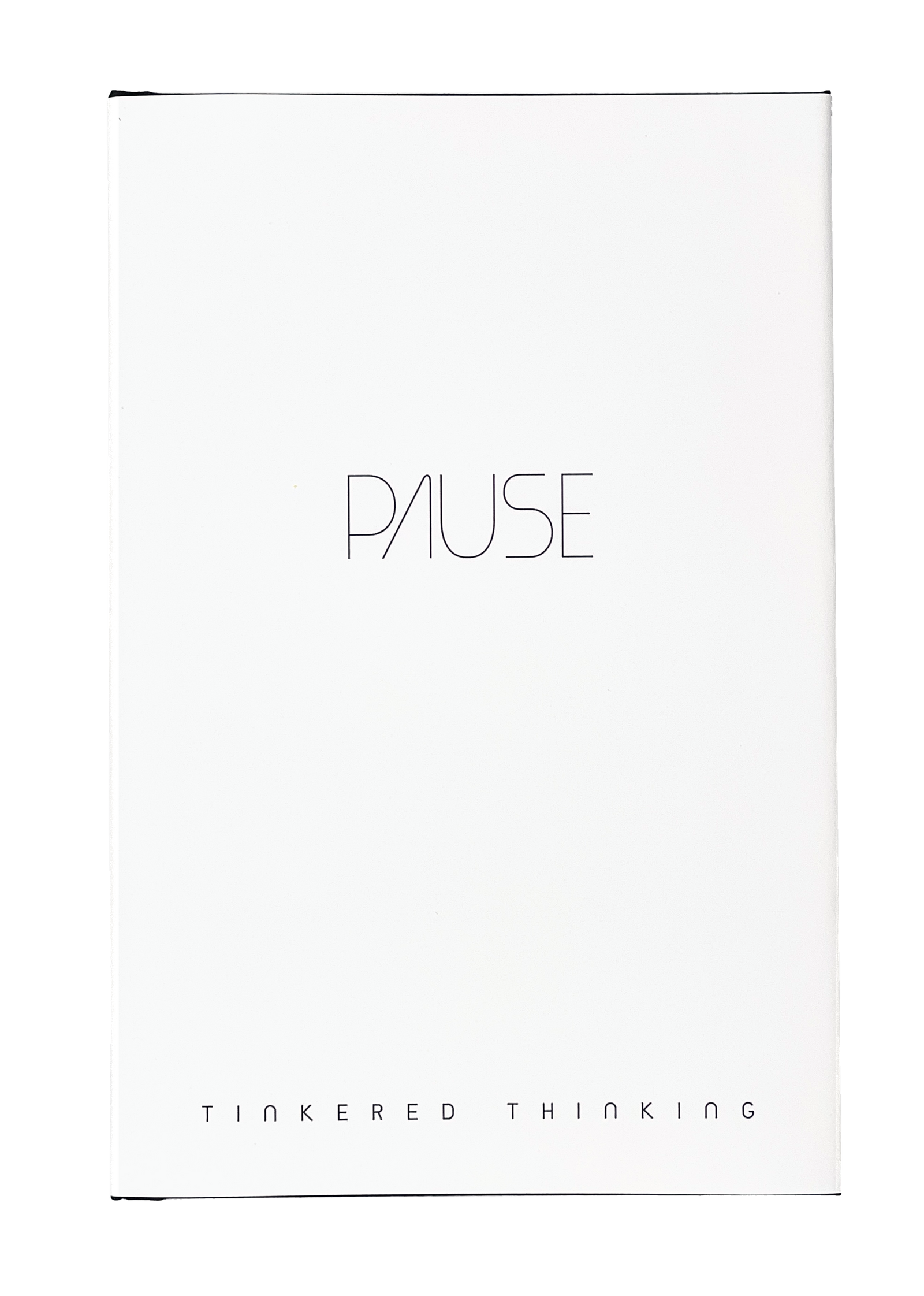
The first non-fiction book from Tinkered Thinking. PAUSE is a short book on meditation. Now available on the Tinkered Thinking Bookstore.


The SECOND illustrated book from Tinkered Thinking is now available!

SPIN CHESS
A Chess app from Tinkered Thinking featuring a variant of chess that bridges all skill levels!

REPAUSE
A meditation app is forthcoming. Stay Tuned.




THE WAVE OF YESTERDAY
February 4th, 2022
If today were your first day, what would you do? This hypothetical requires a little fantasy of course. Let’s say you’re at your current age, you have all your current skills - unlike a new born, - but like new born, say you have not a single shred of your past. All grief and loss and trauma, hardship and heartache is erased. With it all goes all the good times, but this isn’t an issue - you can’t miss what never occurred, and this premise simply plops you into your current existence without any of the bitter nor the sweet of yesterday.
Would you be more or less held back? Would you be able to do more? And if so, what would it be? There are plenty of culture pointers in this direction, phrased as quaint aphorisms:
This is the first day of the rest of your life.
Dance like no one is watching.
The first asks you to march forward without the shackles of yesterday. The second isn’t really talking about the gaze of others, but how you gaze at yourself. Self-consciousness, one developed from a past filled with embarrassments that lock you into constrained behaviors.
The wave of yesterday is our biggest constraint: outlining the program of our own behavior, heaping on the baggage, and dragging the mind away from the moment to dwell again on things that will remain unchanged.
The relationship we have with the past might be the single biggest defining factor in how we go about our present day. Does the past linger and overwhelm when sleep finally removes it’s veil, letting the day flood in as we slowly remember who we are and where we are? Or do we wake up remembering forward? Do we wake up looking forward to what we have planned for the day?
A plan is a strange concept - it allows us to remember something that hasn’t yet happened. It’s a proposal of play for the future, making it both a piece of the past and the future at once. (Unless of course we are in the midst of forming the plan)
A plan is a sort of dream. And while usually such things are rendered as boring and trivial as to-do lists, like chores, such plans and to-do’s are the best way to escape a past that still has the teeth of it’s trap lodged in an ankle. Making a plan for tomorrow is a subversive way of injecting our hopes and dreams into the past - by planning them, writing them down, and waking up to them, we wake up with a yesterday that has a gem embedded in it.

IMPRESS ME
February 3rd, 2022
We’ve all been guilty or privy to the very human impulse to show off, or attempt to impress someone with our deeds or qualities. Unless the items on the docket are far above our sense of ordinary, such antics are met with a private eyeball. There is something incredibly unimpressive about someone trying to impress. But why? And more importantly, if it’s often so ineffective, why do we do it?
Nearly everyone is guilty of lauding over their own accomplishments or traits in this way, though it usually feels a bit embarrassing to think about such instances and focus deeply on where the impulse came from. There seems to be two core reasons that we impress upon others in this way.
One reason is that we try to impress other in an attempt to see how convincing or persuasive our endeavor is. If others are ‘wowed’ by what we are doing, then it’s reassuring that it’s a good path to continue following. And of course, we are almost always enamored of such a path so the desire to convince or impress it upon others is all the greater. We have a confirmation bias which is fairly easy to reflect through other people with a little pushiness and seductive wording.
The other reason is to try and impress ourselves. The thing about accomplishment, especially something that seemed large, complex and very difficult is that after it’s been done, all the magic is gone. Before the task is begun, there is so much mystery and unknown surrounding the dream. It has a majesty and exoticism that is completely dispelled by it’s actual accomplishment. After all is said and done, anyone could imaginably query you about any given challenge that arose and there would be a very straight forward answer about how that particular twist or turn in the path toward accomplishment was navigated. This leaves the hero of the accomplishment’s story at a bit of an underwhelming loss when all has come to pass. The hunt for this magic is perhaps part of what drives the creator and entrepreneur, but it’s never truly found for anything pulled off is done so with steps that are ultimately pragmatic. This is the bittersweet edge of the pathetic attempt to impress others. It’s an attempt to impress one’s self. Though the magic be gone, there’s hope that others will revive the awe once felt since they don’t know the simple steps within the mountain of effort that lead to such an impressive outcome.
CHEAT CODE
February 2nd, 2022
Anyone who claims that they are completely self made and that all their success is attributable only to their own effort is in denial. Not only is a tremendous amount of luck involved in any person’s success, but we are a cooperative species and virtually no success is possible without the fact that there are other people playing this game with us. These two external aspects of success: luck and other people can combine in some truly fortunate ways. Some people can be so fundamental to our development and achievement that they are like cheat codes.
Nearly everyone is connected to a plethora of talent and goodwill. But most of the time, a lot of that talent isn’t flowing through our network. Often all it takes is to ask for help, which is a very humbling task and quite contrary to the ethos of the self-made individual. Somehow, asking for help only feels like a power move if it can be paid for - and that is pretty much what commerce is: people paying for help, to obtain a particular object or have a particular service rendered.
For the most part, though, we pay strangers. Certainly friends can do business, but real friendships often transcend the fenced logic of finances. Asking a friend for help might be humbling, but it’s also an opportunity for the friendship to flourish.
First you have to get lucky enough to have a few great friendships. And then if you’re lucky enough for those people to be talented in all sorts of ways, you have to get lucky a third time: to have the humility to ask for some help.
FALSE WISH
February 1st, 2022
If you want it bad enough, it’ll come true. This is a fairly ubiquitous and insidious tenet of current culture. Insidious because it implies that wanting is all that’s required. The more wishy washy aspects of culture have come up with other ways of invoking the same kind of spell, like manifest. But both wanting something enough, and manifesting are just forms of wishful thinking. They are hope incarnate.
And many who don’t prescribe to these kind of wishy washy ideas will not think the same thing about good old fashioned hope. But this concept is no different. It’s just a more wholesome flavor, underpinned by a longer history of use.
It’s not too difficult to see how wishful thinking can get in the way of execution. If we spend all our time and energy simply wishing for something to happen, then we have less time and energy to actually look at reality and try to figure out what puzzle-pieced set of actions might reconfigure reality into the one we’d like to see. Not only this, wishing, wanting, manifesting, and hope can leave someone feeling confident that the fantasy future is a sealed deal and that there’s no real reason to take any action.
Without these concepts and urges, it’s still possible to recognize that a different reality would be better. This is just a more sober phrasing of: wanting things to be different. But the sobriety of rephrasing helps to highlight the doorway to progress. Reality becomes a puzzle as opposed to the mysterious froth in a witch’s cauldron.
Instead of I really hope this happens! It becomes: what can I do to help reality change and move in a better direction - toward the one I can imagine?
In such a light, optimism and pessimism lose a bit of their sting and use.
Is it possible to be neither an optimist or a pessimist?
Certainly. But what exactly does that person look like?
We love to think in binary ways. You’re either an optimist or a pessimist. You’re either with me or against me. You either agree or disagree.
We even think about the option of binary in a binary way. You either think everything is binary, or binary doesn’t exist and it’s all a gradient spectrum! The irony is lovely.
So to remove the binary of optimism and pessimism might at first inspire the idea of a spectrum between effulgent positivity about the future and pure cynicism.
But what if we do away with that spectrum altogether. What if we boil things down to simply the actions that people take. This isn’t to evoke another binary, one of action vs inaction. But simply actions in general. Even people who ‘don’t take action’ are still living and breathing. Their actions are just far less grand than the ambitious person we often vaunt.
We boil it down to just people doing things. Wishful thinking and ‘manifesting’ and hope are a kind of fantasy, a dreaming, a mental intoxication - a sort of navel gazing. And all of it can be classified as a kind of action: it’s taking up time and imaginably some small iota of energy.
We need ask: is there a more effective set of actions that such a person could take to make reality reconfigure so that the present evolves into a better future?
Certainly. Wishful thinking will work every once in a while, just by dint of coincidence, but this is pure correlation, and not reliable causation.
All optimism and pessimism aside, all hope and wishing aside, we need only ask at any given time: is this the most effective action I can be engaging in to bring about a better version of reality tomorrow, next week, next month, and next year?
THE THOUGHTS OF OTHERS
January 31st, 2022
When we speak with someone about a contentious topic, there’s a single metric to gauge our own disadvantage: If you cannot anticipate the next thought and point of logic that your partner in dialogue will provide, then you fail to understand their point of view.
This might seem pedantic in the sense that one could - if given the time - come up with all reasonable manner of logic and argument for the other side. But this is also unrealistic.
Instead, think of how incredible but ordinary it is for two close people to finish each other’s sentences. Here it makes sense. When two people spend enough time together it’s not unlikely for their minds to undergo a strange meld, where even from across a room, thoughts seem to be startlingly in sync.
Imagine having this kind of connection with the person whom you disagree with the most. This isn’t to say your agree with that person, but simply that you are so in tune with the method flow and content of their thought that you can intuit and anticipate their logic and argument with a startlingly high degree of accuracy.
Now, this is virtually unheard of in the real world. It’s only with intimate partners - or close partners of any kind that we grow to develop this kind of intuition. But, this is sort of where it’s needed the least.
It’s with the enemies across the isle, across the battlefield that we need it the most. Imagine being a general of an army and understanding your opposing general so intimately that you could anticipate their next move. It would enable you to win the war.
Intimacy is not a capacity that is or should be relegated to positive relationships. Like the nemesis characters of comic books or the villains of deep tragedies, these are characters deserving of intimacy - if not for the humble value of exploring the humanity incased in such being, but for the benefits accrued to our ability to navigate reality with them.
Understanding an enemy is a risky game. It requires a venture away from our regularly scheduled programing to try and attempt to understand programming far different from ourselves and maybe our culture. There is the risk of becoming convinced of such programming, and the true hero is one who can straddle both of these worlds without being intoxicated by either - the one who can venture into the darkness to become a part of it and return with whatever jewels the darkness hides.
The thoughts of others are what we fear the most, but also what we understand the least. To understand the thoughts of others is to dissipate that fear by embracing it, and by so doing understand whomever we deem an other.