-compressed.jpg)
Daily, snackable writings to spur changes in thinking.
Building a blueprint for a better brain by tinkering with the code.
subscribe
rss Feeds
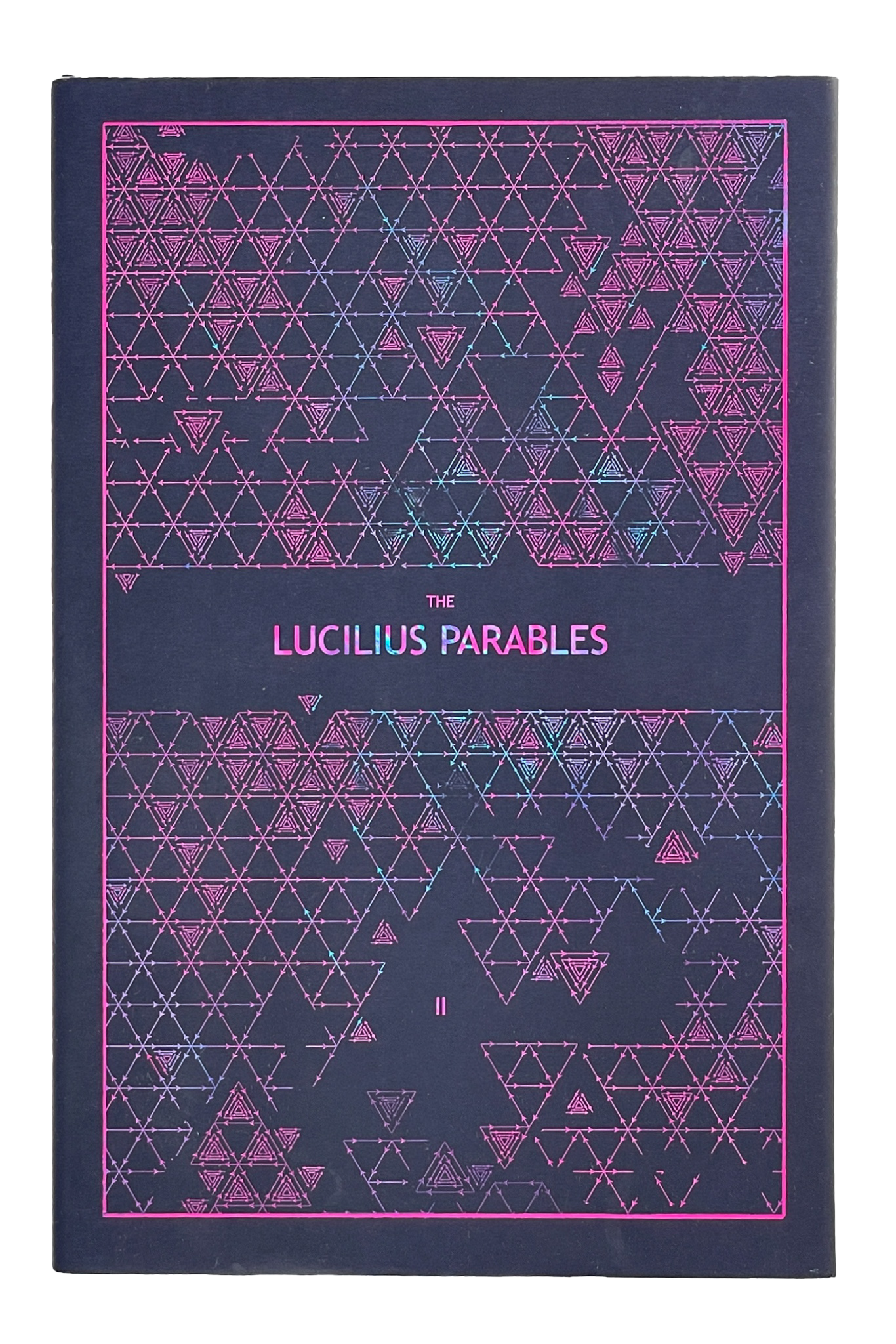
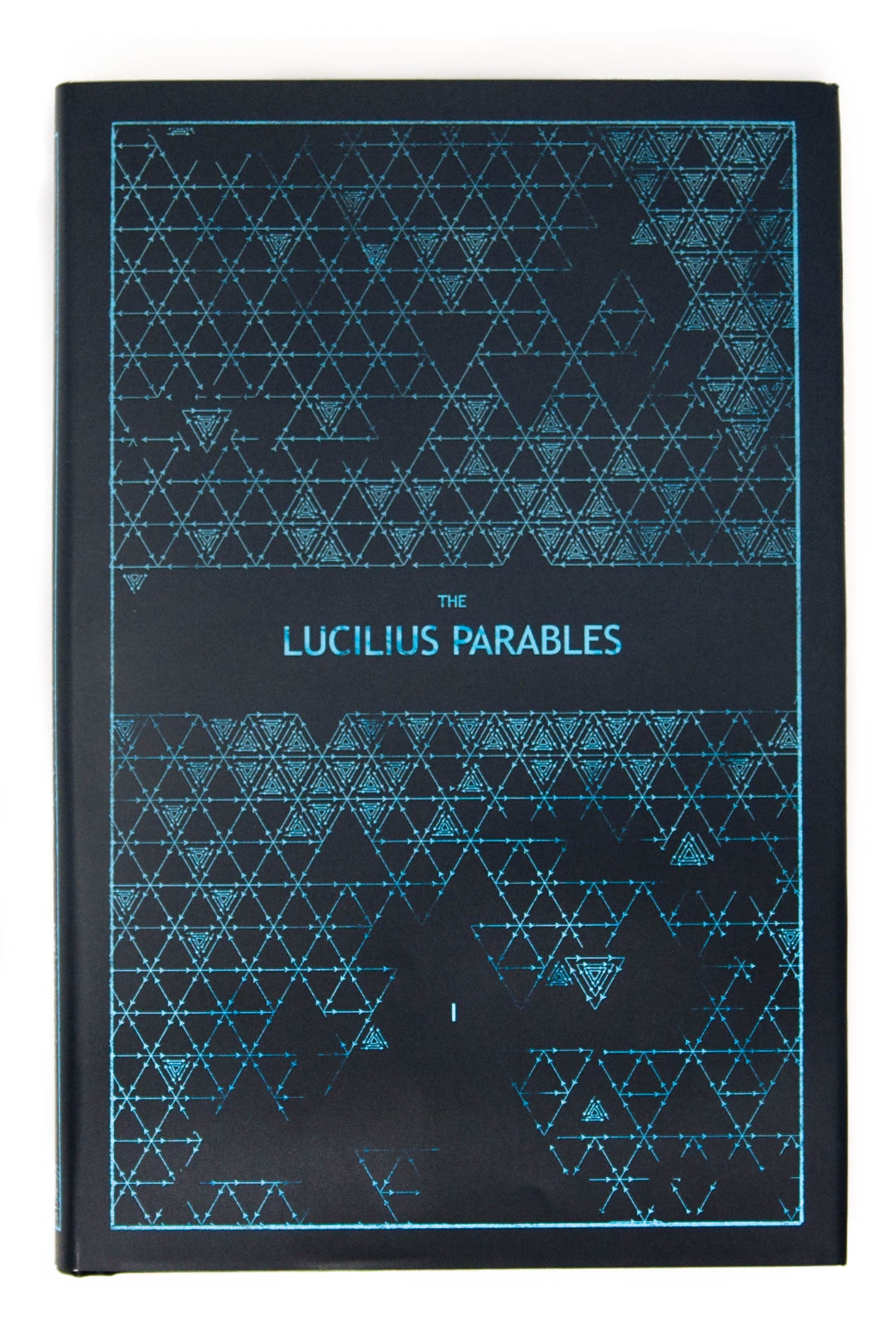
The SECOND illustrated book from Tinkered Thinking is now available!

SPIN CHESS
A Chess app from Tinkered Thinking featuring a variant of chess that bridges all skill levels!
REPAUSE
A meditation app is forthcoming. Stay Tuned.




ANTIHABIT
September 3rd, 2020
There’s good habits, bad habits and then there are anti-habits. Bad habits are easy to develop. They are seductive and generally pleasurable in some sort of way that is easy and desirable to repeat tomorrow… like buy another bottle of wine, or a six-pack of beer. Good habits are usually the exact opposite in terms of ease of development. That first month usually requires a substantial dedication and discipline to get that new behaviour through the hoops of 3 and 5 and 7 consecutive days in a row.
The antihabit describes a combination of both. It’s the seductive ease of the bad habit and the unravelling of the good habit rolled into one.
Let’s say you have a solid meditation practice of a couple years. It feels as though there is a substantial momentum and inertia that will carry you forever into the future.
The antihabit starts slow, but easy. It’s when you have that stray day that is characterized by an unusual schedule, and it slips by without meditating. The next morning perhaps there’s the realization - whoops, that didn’t happen yesterday! That’s a key moment to make sure that one day missed doesn’t grow into two, because two slides into three missed days far easier.
This is the development of the antihabit, which is the unravelling of the good habits we have. Just as habits have thresholds of development - generally attributed to 3 days, 5 days, 7 days, 21 days, and so on and so forth, the unravelling of a good habit seems to accord to the same stretches of time. Miss three days and the likelihood you miss 5 is substantially greater. Miss 5 days in a row and it becomes far more certain that 7 days will pass without the good habit happening.
Antihabits are bad habits taking root in the guise of the ghost of a dying good habit.
Being mindful of their pernicious development is perhaps more important than stopping other bad habits or starting even more good habits. Preventing the antihabit is a defence of all that we’ve worked for up until this point.
FALSE GLOW
September 2nd, 2020
This episode is dedicated to Barbra who has been kindly beta testing "Brutal Honesty" mode in a new App from Tinkered Thinking and found herself face to face with a very interesting question. You can connect with her on twitter with the handle @_brbaramrtns.
Despite our modern obsession with happiness, we understand it quite poorly. And beyond this, our discourse surrounding happiness is terribly unorganized, vague and shifting. This is a bit odd considering western culture’s obsession with categorization and taxonomy. English in particular has a gargantuan vocabulary. English is quite a bit larger than most other languages you can name because English has cannibalized those languages and cannibalized even itself in a growing mission to fulfill that biblical profession of pointing at things and having a name ready for it. Despite this sprawling and voracious effort on the part of english, when we each point at happiness and say the word, we don’t all seem to be on the same page.
Some people think happiness is about peak experiences - that is when joy and pleasure seem to get together in the core of our experience and get busy. It doesn’t take much reflection to realize that living with an experience of a perpetual peak experience isn’t just impossible but it would be paradoxically awful. First off, everyone would probably think there was something terribly wrong with you. Aside from this, it’s difficult to imagine anyone getting anything done if they were constantly in a state of peak pleasure and joy.
Well of course you can’t be deliriously happy all the time, that’s ridiculous! So what do most people mean when they speak of happiness? Could the very concept of happiness be doing us some harm? Imagine for a moment if the concept of happiness just didn’t exist. By talking about happiness it’s easy to come to the conclusion that perhaps you’re missing out on something. Everyone seems to be talking about something that you don’t seem to be experiencing. Perhaps the follow up question that we forget to ask is: What if no one is actually experiencing this happiness thing in the way it seems everyone is describing it?
Humans certainly aren’t strangers to the idea of pontificating about experiences, realities and laws that actually don’t exist. There are a few other words that fall into this devious category: hope, and passion, to name just two. All of these words form an imaginary inner sanctum of experience, which functions primarily to alienate us from ourselves. The human imagination has vast powers and with these sorts of words, the power of the imagination is turned against the individual who imagines. If you imagine a perfect ideal, than real life is always going to be a bit of a disappointment because that object of the imagination sets up an expectation that never materializes.
We constantly jump to grasp the peak experience only to grasp at something that isn’t there and leave ourselves to fall lower than we were before. The subtle lesson of a mindfulness practice, or stoicism or even potentially a steady creative practice is that everything is actually quite nice as it is. It’s these hazy concepts that we use to inadvertently gaslight ourselves, and by doing so we miss out on how lovely the simplicity of any given moment is. No matter where you are, whether it be waiting for hours in line at the bank, or slogging it through a day at work, it is possible to take a conscious breath and look around with gratitude and amazement at the fact that you are alive. This is possible even when burdened with terrible sadness and even pain. But it is a bit of a skill, and the development of this skill requires a bit of skepticism for some of the concepts we already operate on. It requires questions that feel odd in the mind and on the tips of our lips:
What if hope is a damaging concept?
What if happiness is a mirage that makes us miserable?
What if they are best regarded as NULL concepts?
What if the present moment is actually quite lovely and...
What if it’s the mind that bars our ability to see it?
Our sense of experience is overwhelmingly dictated by our ability to make sense of it. We have to ask: what exactly is the software we have running that is allowing us to make sense of it in the way we do? What if there’s some insidious code running, camouflaged as our favourite feature? Should it be any surprise that buried within the box of Pandora with all the other ills of the world that were unleashed when opened was hope?
If happiness is something that can be achieved for moments longer than peak experiences, then it most likely begins to look, sound and feel a lot like another concept:
peace.
Do we achieve peace by adding more things? Or do we all have a subtle intuition grown from our total immersion in consumerist culture that adding one more thing probably isn’t going to make us happy. But what if we do the opposite?
What if peace is a subtractive process?
CROSSROADS
September 1st, 2020
Though our lives are changing with each passing moment, there are times when it feels like this flow of time hits a fork replete with detours, side quests and adventures of all new kinds. We all seem to have a built in mechanism of boredom that blossoms a couple years into any new project, job or relationship. The association with boredom is generally negative, and that antsy desire to jettison one’s self from a certain course of life can easily be seen as a weakness as though we lack the strength to persist and endure. While the potential roots of such persnickety cultural views are beyond the scope of this topic, it’s certainly fair to say that everything has a place and time, and when such crossroads occur in life it’s fascinating to reflect on the utility of boredom.
We may in fact have this function built in as a feature to help stir up life into a more interesting forms.
What’s perhaps strange is that we can often take so long to actually get bored enough to actually pull the plug, firebomb life and jettison our consciousness into a new and fascinating direction.
We seem to sense crossroads only when they are super obvious. When a project is done, when a lover gets a new job or needs to move, when a promotion doesn’t happen. We wait for an obvious set of signs that feel like a stop sign in the middle of nowhere, the blinking red light warning us of continuing, the empty stretch of road to the left and to the right, each with their own new horizon.
This is an illusion of the metaphor though. A moment of reflection dissolves the very road itself, revealing that there is in fact no set path that we’ve been following, but only an imagined one. The fork in the road exists at all times, in all places of our life. To torture the metaphor with the heat of a little more accuracy would place life directly in the intersection with an infinite variety of choices and paths swivelling before us in a kaleidoscope of perpetual possibility.
It’s a trick of the mind that keeps us on the straight and narrow of this profession, that living situation, that relationship, that hobby, activity and way of thinking. And as useful and practical as this trick of the mind can be, for it really does enable us to make progress with a dedicated and disciplined consistent effort, so many people lose out on a universe of opportunity hidden just outside the purview of our thinking.
Life does not need kid gloves. Life is a sculpture of infinite shapes that can and sometimes should be molded with a reckless and rough abandon.
The small iteration - that carefully planned step is touted as a kind of ultimate tool in modern times, but it can pale in comparison to the fearless leap of faith, founded in your ability to land on your feet, or if need be, build the rocket ship as you fall. Let that last little step, that small iteration be the final glance at the ground rushing up to destroy you, as you press the ignition button.
PATTERNED RANDOMNESS
August 31st, 2020
A pattern can only be recognized if it has repeatable and reproducible parts. The main magic of a song is the fact that it’s so repetitive. Not just the beat is occurring at regular intervals, but whole melodic patterns are repeated: hence the ‘chorus’ of a song. It’s no surprise that the chorus of a song is generally the most pleasing and liked part. Interestingly, the more repetition we have, the less information is actually present. Think about a song which is simply the chorus played four times. If the same song were to be rewritten to only have the chorus played twice with two unique verses, does it become more interesting? More pleasurable?
Hard to say for sure, but it’s certainly fair to say that the version with two unique verses conveys more than the version with just a chorus repeated over and over.
The way we garner meaning and make sense of the world has to do with this strange tension between randomness and repetition. We are pattern recognition machines. Perhaps more so than any other creature that has ever existed. We aren’t just Pavlovian in our ability to sense a pattern, we are driven, curious detectives when it comes to the matter. But of course, too much pattern and suddenly we can begin to lose interest. The same exact groundhog day occurring over and over with no variance is bound to drive anyone mad. It’s the variance we inject into the regular and the routine that isn’t just interesting, it stresses patterns into new, more complex shapes.
In an abstract way, this is a description of learning. Our brains are highly repetitive machines. Neurons all fire based on input of other neurons. From a bird’s eye view, this is simply a vast game of telephone with neurons talking to one another. Of course there is the varied input we get from the senses to stir up these firing patterns, and of course we might wonder about whether or not the brain can actually generate its own randomness, but more interesting is to think about the experience of learning.
Learning is a conscious and willful disruption of previous ways of thinking. We quite literally have to rip apart our repetitive thinking and reorganize it into a new pattern that is consistent with the subject we are trying to understand. We continue this somewhat painful reorganization until we hit upon a pattern that is in accord with the subject.
This subtle tension between pattern and randomness is what drives us. We experience it as the tension between the boredom of repetition and the pain of confusion. We don’t enjoy either and often settle for one in order to avoid the other. But of course, diving head first into the experience of confusion is the only thing that is going to really alleviate boredom. Neither are ideal, but the combination of both keeps us moving forward.
A LUCILIUS PARABLE: FLYWHEEL
August 30th, 2020
Lucilius was walking along a wooded path, accompanied by a young boy who had taken to him in recent months. Lucilius smiled as the two walked peacefully, reflecting on how such connections arise, how we all seek out people to be our parents and brothers, our sisters and children regardless of how plump or scant our own real families be.
Birdsong moved between and around them, creating a chorus of melody within the forest. The dirt path crunched softly as they took each step, each on ground of tattered light, filtered from the high canopy.
Lucilius realized he and the boy had not spoken in some time. Though it was pleasant, and important to enjoy silence in company, Lucilius also knew how much it had meant to him when he’d once been a boy and an elder had asked him what his thoughts were. That someone would wonder, let alone care enough to ask had always stayed with Lucilius.
And so he asked, “What you thinking?”
The boy grew suddenly conscious, clearly having been lost in thought and reverie. He was looking out at the trees, and slowly he smiled.
“I was wondering if the trees are really alive.”
“What makes you think they might not be?” Lucilius asked.
“Well, they don’t move, and without their leaves, in the winter, you can’t tell if a tree is dead or not.”
“A fair observation. So is it the leaves that reveal their life?”
“I don’t know,” said the boy. “That’s what I was wondering about when you asked. But I guess so. The fact that they grow.”
“What about rivers?”
The boy wasn’t sure what Lucilius meant. He gave him a funny look.
“Rivers are constantly changing. Sometimes they start off small, and then they grow and grow, and they can even move around and change course, and a river certainly moves a lot more than a tree does. So in some sense it seems that a river is more alive than a tree. At least in the way you’ve phrased it.”
The boy nodded a little, looking back at the trees. “But you can kill a tree,” he said.
“You can’t kill a river?” Lucilius asked.
“How would you do that?” Asked the boy.
“Well you could build a dam, and that is certainly quite a lot harder than killing a tree. Does that mean it’s harder to kill a river? And if it’s harder to kill, does that say something about it being alive?”
The boy pondered a moment. “But a river is just water falling down along the ground, like down a mountain, the water doesn’t really have a choice to go downhill.”
Lucilius smiled and then slowed his pace and then took a step off the path and then crouched down before a new sapling that had recently emerged from the ground, its first leaves spread wide to catch what little light there was on the forest floor. The boy drew to Lucilius’ side and hunched down also.
“Let me ask you,” Lucilius said. “Did this little tree have any choice about the water that activated its seed? The seed would have stayed dormant, and for all purposes, unliving, had it not been for a little water and some heat in the ground and in the air. So does the seed choose to become a tree? To split and reach upward?”
The boy pondered this last point more deeply. “That’s a good question, he said: is a seed alive before it sprouts?”
“What about you?” Lucilius asked. “Did you have a choice to be born? Did you have any influence over where you were born, and to which parents?”
“No..” The boy said, and he looked away for a moment, suddenly concerned. “Wait, does that mean I might not be alive?”
Lucilius smiled widely. “Well if you’re not alive, then I don’t think I could in good conscience say that anything is alive.”
“But where does it end and where does the living begin?” The boy asked.
“Hard to say,” Lucilius said, “but it’s clear that once we get going, we seem to become something entirely different. It’s as though we are, each and all of us, given this good first push into the river of time, and once we get moving, it seems like we gain this ability to decide how we get pushed by time, we get some little bit of influence over which direction we get pushed. Perhaps that’s what living is.”
“But…” the boys thoughts trailed off. “Last week you asked me if I could predict or decide what my next thought would be and I still can’t do it. It’s like I don’t really get to choose, it just seems like it.”
“Fair point,” Lucilius said.
“So if it’s not choice that makes us living, and the fact that we move around is like the river, then are we really any different than anything else, like rocks and air and stars and stuff?”
Lucilius smiled. “That’s a good question.”