-compressed.jpg)

Daily, snackable writings to spur changes in thinking.
Building a blueprint for a better brain by tinkering with the code.
subscribe
rss Feeds
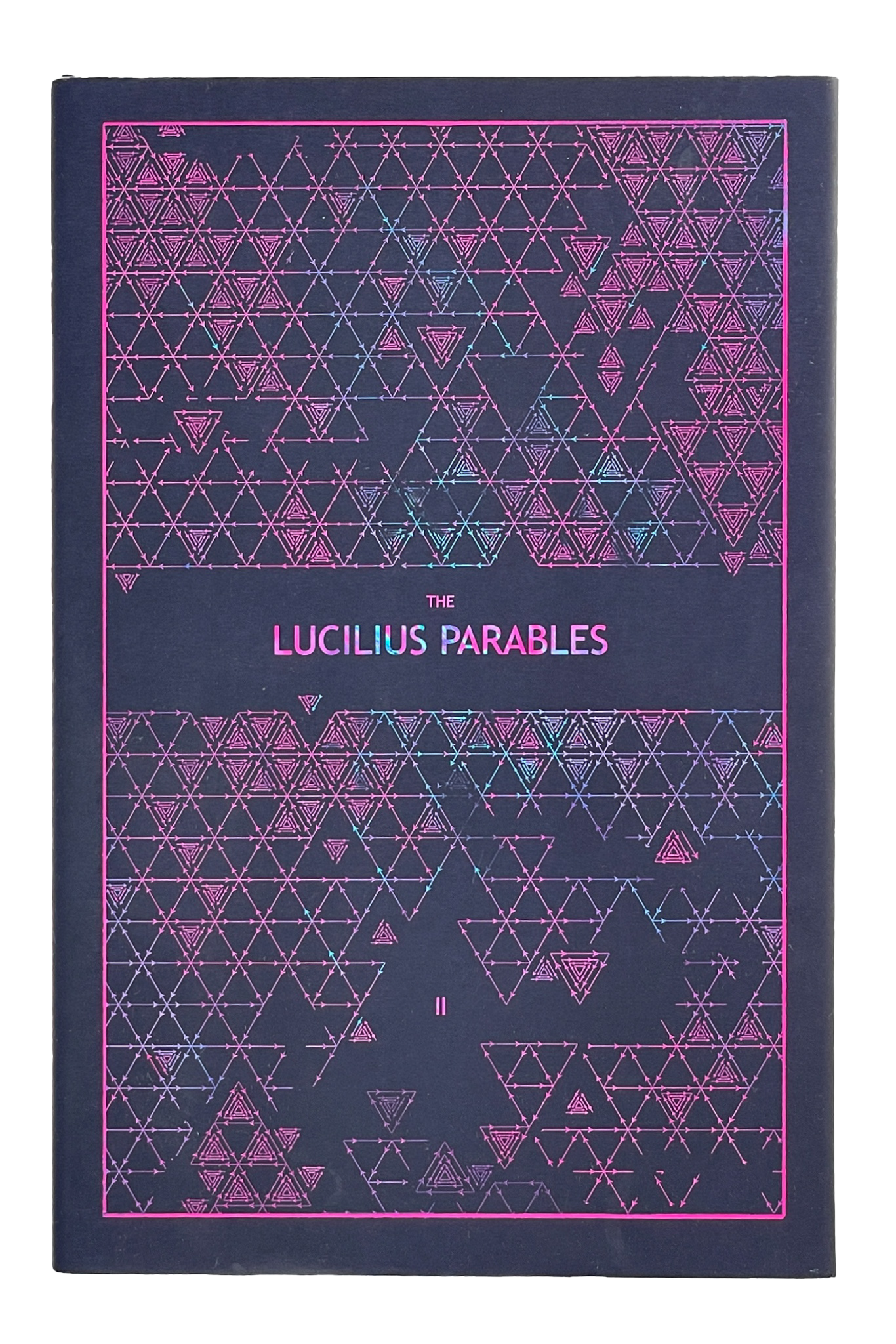
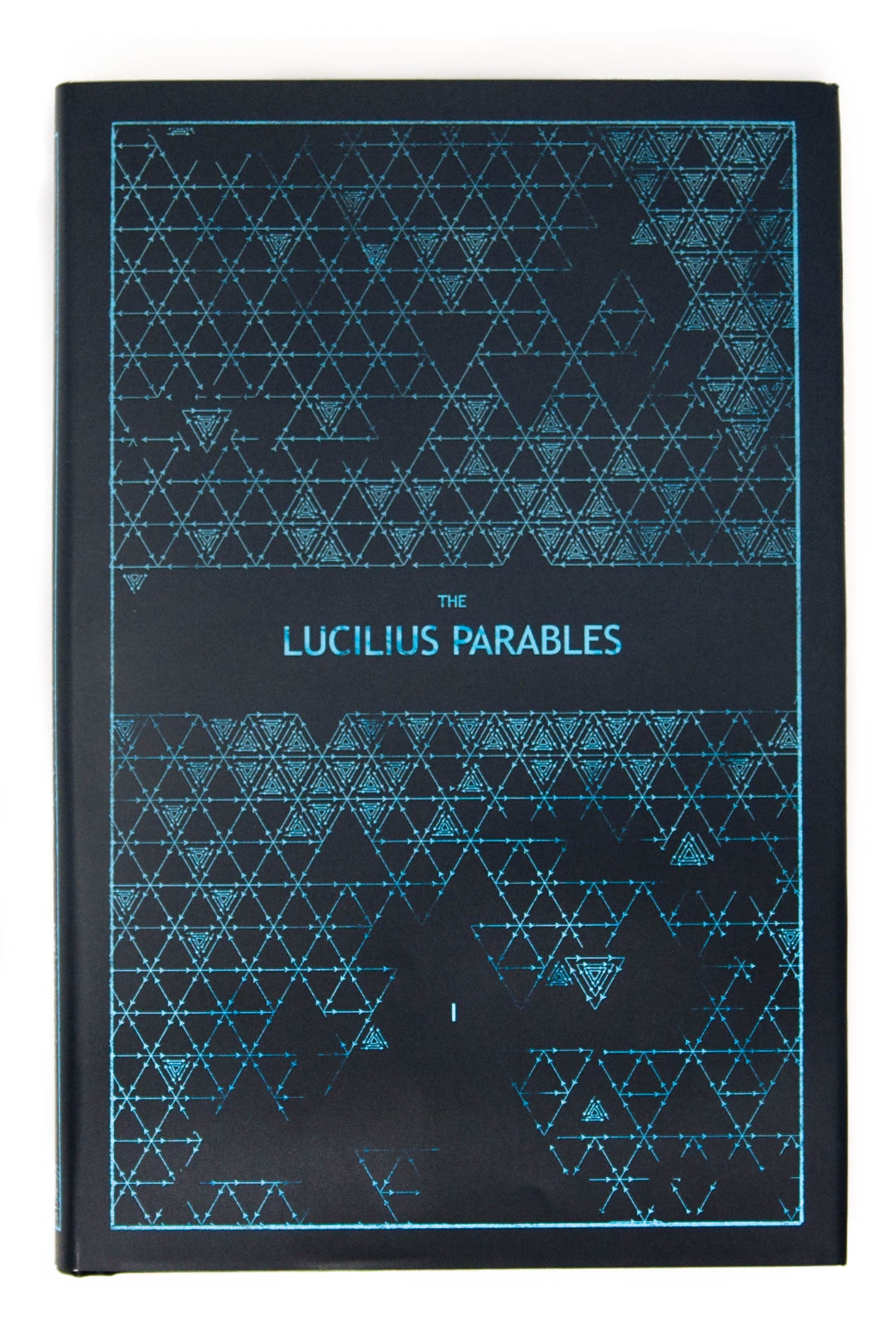
The SECOND illustrated book from Tinkered Thinking is now available!

SPIN CHESS
A Chess app from Tinkered Thinking featuring a variant of chess that bridges all skill levels!

REPAUSE
A meditation app is forthcoming. Stay Tuned.




SILENT VICTORY
October 13th, 2020
The moment arrives, the fact of achievement crystallizes, the possibility is now a reality and so the instance becomes good news. What is our first impulse in this situation? As clear as we are a talking, socializing animal, our first impulse is to share the news.
Look what I did!
Guess what happened!
I have to tell you something!
It’s a completely natural impulse to do this, but how many people slow down and think about whether or not it’s actually satisfying to share such good news? This may seem a bit odd and antisocial, but entertain the idea for a moment. How often does the sharing of good news lead to re-sharing it almost immediately because the reaction we hoped to get didn’t arrive and it seems like the audience simply hasn’t grasped the magnitude of amazement and joy that is supposed to accompany this new development? Is this not almost always the case? There are unfortunately very few people who know us well enough and feel for our circumstance deeply enough and a similar enough way to have precisely the sort of reaction we imagine when we think of sharing the good news.
Fact is: there’s only one person who can understand our reaction as deeply as we imagine, and that person is of course, our own self. That reaction is so often muted by the superficial or mindless reaction of others. This might seem pessimistic - it’s not, and it’s only to set up curiosity for an experiment:
The next time an achievement is fully grasped, the next time a hopeful possibility becomes a reality, the next time there’s cause to celebrate, just take a bit of time alone before letting anyone know: let yourself simmer in fact and enjoy it unblemished by anything else.
Then maybe tell someone else.
ATTENTIONAL FORTRESS
October 12th, 2020
Pay attention!
That’s the command. But is it a directive or is it something that gets our attention? It’s both of course, but if anything, when the teacher or spouse or friend says this, it’s in order to distract our attention from whatever it’s focused on, so that we may, in turn, refocus on the correct subject at hand.
Though the word is used often, the concept of attention is a bit slippery. Is attention something we generate and project? Or is attention something that generates in order to project toward us?
Does attention grab our focus, or does focus aim our attention?
One way to begin making some sense of all these questions, each which seek to define attention in some way, is to look at the concept of sources of attention, and how this phrase is used. We do not, for example say that the source of attention was in our mind, and from that source we become able to focus on the subject at hand. It is, in fact, the opposite. When the phrase is used, it’s always referring to something outside of ourselves. It’s effortless to try and imagine the news anchor saying it:
The White House became a source of attention today when it was announced….
Language has some contradictory habits in this area. It’s the source of attention that gets our attention to focus on that source. The odd part of that idea is in the word ‘source’, which usually denoted the place where something comes from, and in reference to attention, it would seem to make sense that our mind is the source of attention we have to grant to different things in our day.
Another phrase that pins attention down a bit better is when someone does something for attention.
She’s wearing that just to get attention.
‘She’ becomes the source of attention, or rather the source which gathers and directs attention. These two phrases encasing attention in meaning work well together to tease apart where exactly attention exists.
Ponder for a moment just what an astonishing source of attention the phone is. The phone lights up, it dings, it rings, it vibrates, and for what? Each accords to a sense that we have. (Indeed it’s imaginable that if we could easily replicate pheromones, the creators of smart phones would make those phones release smells so that we could be come even more attracted to using our phones.). That’s precisely what a ‘source of attention’ is - it attracts attention.
The sound explodes from the phone in a tiny blast, shooting out, riding the vibrating air, slipping into your brain and sliding along that short well-oiled tracks to the dopamine center where it lands its barb and then tugs you in the direction of your phone, like a whale harpooned and dragged back to the ship for slaughter.
In the age of superphones and social media, sources of attention abound, and they have grown to be very very efficient with the task of grabbing our attention and sewing it into their frameworks and business models. It’s perhaps not hyperbolic to say that our limited attention is under assault and siege - the image which gives rise to the idea of defence. Other than the belittling implications of the modern school system regarding discipline, there is no formal teaching regarding the nature of focus and how we might shepherd our precious attention in ways that will benefit ourselves first and foremost.
This is a big reason why Tinkered Thinking is in the process of developing a meditation app. Yes, there are plenty out there, but there still seems to be an opportunity specifically designed for beginners and skeptics. (Follow @thetinkeredmind on Twitter for updates.)
A big aspect of meditation is simply being able to notice what is happening with one’s own attention. Simply noticing not only empowers an individual to redirect attention, but the whole process becomes a fortress for attention against the deluge of distraction that many companies are trying to flood our skulls with.
Do you have the ability to sit without reaching for the phone contently and calmly? Or is the antsyness unstoppable? What does it say if we don’t really seem to have the ability to choose what we want to pay attention to?
A LUCILIUS PARABLE: LITTLE DOMINO
October 11th, 2020
This episode is dedicated to Sam McRoberts, a specialist in SEO who regularly posts on Twitter about simulation theory. Connect with him as Sam_Antics
Lucilius bore a proud and content smile as he hunched over the computer screen, watching with rapt attention. He’d accidentally discovered the most intoxicating form of entertainment conceivable to man. He got up from his computer and walked the short few steps to the galley, as he liked to refer to it, an idiosyncrasy of his days at sea when he would get up early to help the cook. The bunker was a tight space, but arranged quite nicely so that Lucilius never felt cramped. He’d built the bunker years and years ago during an overly paranoid time in his life when he was beset with a drive to be abundantly cautious. Later he found it to be quite a lovely place when he wanted solitude, and it had served him very well when he’d gotten into crypto mining. That was one hobby that had worked out particularly well for Lucilius and was what now allowed him to spend the last few years tapping away at his computer, running his experiment, getting weekly automated deliveries of food and whatever other knickknack caught his eye during the week.
He pasted the two pieces of bread together, the diced pickle and mayo, cold bacon and tomato melding together and took an oversized bite. He was already leaning forward as he sat down again at his desk.
On the screen was the image of a man with a rapt tension in his eyes as he too stared at his computer, and within that screen, both Lucilius and he watched on that computer the image of a third man who was in a laboratory in the final stages of concocting a new type of organism.
After Lucilius had cashed in his crypto efforts and diversified some of its fungibility, he’d built a new set up and had plied efforts to the whim of his curiosity that had since been bent upon the idea of making a simulation. He’d succeeded and had sped up the simulation until humans had evolved and one day while perusing the vast world that he’d created, he found someone within the simulation who had done the exact same thing. It was this second, nested simulation that they were both watching, the middle man, of course oblivious to the fact that he himself was being watched and had a companion in his own audience.
The man who was watching along with Lucilius got up and stepped away from the frame for a moment and returned with a sandwich and the two chomped away as the scientist on the smaller screen grew very still as the final part of his experiment came to fruition. With a sudden burst the man stood back, a contorted piece of laughter and disbelief erupting from him.
Yes!, He yelled, raising his fists to the sky.
Then he tapped the enter key on his computer and a short distance away an advanced 3D printer sprang to life. The scientist scurried over to it and hunched over, and before he’d even settled to watch the printer was done. The scientist stood back up, suddenly confused.
Hm, I thought… he said out-loud. I thought I set it to a magnified size…
The scientist leaned in and looked at the spot where the printer had touched the printing plate and touched it himself. He looked at his finger to see if there was anything there. Confused further he went back to his computer. He stared at the data on the screen for a moment and then leaned back, his confusion growing with connection, his expression becoming troubled.
No… he said softly. Then as though suddenly sensing something he looked around, frantically, then down at his hand which he held up before his own face.
Oh no… no no! He yelled. Lucilius and his voyeur companion leaned in to see what was going on. The scientist was looking at the finger that he’d used to touch the printing plate. The tip of the finger was beginning to disappear, and where one might imagine blood and bone and muscle the scientists was gazing into a a void like a prism, as though light were degenerating along the lines of replicating mirrors.
As he brought the dissolving finger closer to his face the scientist muttered in horror: What the..
But he brought the growing opening too close to his face, and screamed. The prismatic opening had touched his face and had now begun to grow there too, and the man was disappearing faster and faster at each moment. Both Lucilius and his counterpart sat wide-eyed, in disbelief, their mindless chewing of sandwiches growing rapid with the unfolding drama.
The strange shades of collapsing light spread to the table and floor and then it began seemed to crawl upon the other side of the screen just before it went dark.
Lucilius’ counterpart watching the drama leaned back.
What the… he spoke lightly as he pressed a combination shortcut on his keyboard to revive his computer. But before he could try his computer again, his attention was suddenly drawn to a corner of the room where a 3D printer had suddenly stirred to action.
Lucilius watched the man in the screen look bewildered, and as if having just forgotten everything he’d just seen he walked over to the printer which had already finished it’s operation. Lucilius saw the man lean in close and after a few quiet moments the man sprang back, screaming watching the side of his hand crumble to the prismatic opening. The man stumbled around, screaming, bumping into his desk and falling against the wall and at each touch, the deformation of space and light stuck and spread. Within moments Lucilius’ screen had gone dark, and he leaned back in wide-eyes wonder. He took the last bite of his sandwich and chewed slowly as he reflected of the experiment of years, now come to such an unexpected and abrupt end. He smiled with a quiet and muffled chuckle. It was such a strange world - a set of worlds really, that he’d been so invested in for years. He’d tinker with the computer tomorrow to figure out how it had crashed and get it running again. He yawned, suddenly realizing how tired he was, wondering how long he’d been awake, and just as the comfortable breath was leaving him with a cozy sense of the evening now spent, the sound of electric motors and precision wheels on articulating tracks sprang to life. A cold slithering dread slipped through Lucilius’ warm sense of comfort as he slowly turned to look at the printer in the corner of his bunker, suddenly operational.
EFFORTFUL FULFILLMENT
October 10th, 2020
Some times every stepping stone is an obstacle. Each one reveals the next and the opportunity is ripe for frustration, even anger, and of course, just giving up. Everyone knows what it’s like to finally get to the end of that string of problems and finally declare victory.
But where is real victory? Simply being ‘done’ after a big painful slog may be our first experience of victory, but in the long run this isn’t sustainable from an emotional standpoint. If every task and goal we undertake is pure misery and frustration for 99% of the going, is that last moment of achievement really worth it? And if not, does that make it less likely we’ll take on grander schemes in the future?
A sustainable fulfillment isn’t in that single final moment when it’s over and the champagne gets popped. The best living requires building the skills that allow an individual to come up against obstacles and surmount them with an emotional smoothness. Frustration is an abrupt, extreme and exhausting experience. If the emotional gunshot of frustration can be sidestepped, not only do we make headway on the next obstacle without the huff & puff delay of frustration, but we do so more efficiently, with an even tempered perspective.
The real victory is when our process takes on the character of a sustained and even effort, like the inertia of a slowly moving freight train - a force that is in no rush but which cannot be stopped. Juxtapose this with the usual experience of frustration slamming our progress to a stop, the time spent standing still to regain composure, the confusion that ensues and then that tiresome prospect of restarting our effort.
While stopping to take a break is surely necessary, at the very least for sleep, it’s important to break things off at a high note, not when faced with a fresh obstacle. The two often coincide: breakthroughs are met with the next problem, and it’s for this reason it’s good to plan out possible stopping points of success instead of conceding to obstacles.
The way through is best carved with a consistent force.
BLATANT DISHONESTY
October 9th, 2020
Moods and trends come and go within culture. Periods of hysteria appear to be cyclic across generations. In the late 40’s and 50’s the United States was engulfed by a zeal known as McCarthyism to root out communists, and today supporters of communist thinking are some of the biggest proponents of cancel culture - a modern incarnation of a similar hysteria. And 300 years before that the Salem Witch trials occurred due to a hysteria over people who were thought to be witches.
It’s clear the human mind, especially within a group can be host to some bizarre and nonsensical processes of thought. Concepts can begin to seem like their opposite. In a world of greed, corruption can begin to seem like a virtue, because it’s the way to move up in the world.
In a period of culture when concepts are turns upside down and sewn to their opposites, authenticity begins to shine among the inauthentic - which is to say, we start accepting contradictions as a way to view reality. When this happens, we become vulnerable in ways that are completely at the whim and will of those who foster no qualms about using the channels of those contractions.
One example is when an individual is upfront and honest about how dishonest they can be. While this is not and should not be respectable, the admission gains respect because it masquerades as a form of authenticity. It’s a persona that say, don’t trust me, I’ll turn on you, but when it’s conveyed with confidence and self-assuredness, it becomes intoxicating - not because of the facts at hand and their real world consequences, but simply because confidence and shows of self-assuredness are intoxicating. It’s as if you hand a child who has just learned to read the most beautiful chocolate cake you could ever imagine with icing on top arranged in an exquisite script that says ‘poison’.
A strong and confident public commitment to dishonesty is a bit like email spam. Those emails are written poorly -by design- in order to filter out those who aren’t gullible and filter towards the most vulnerable, who can then be taken advantage of with efficient ease. The strategy works, there are people, indeed perhaps sadly most, who don’t pause to think through the components of a situation, but simply follow blindly the whimsical direction of the emotions they feel.
It’s a mindful act of rebellion to question one’s own feelings on a subject, to challenge them and question deeply whether those feelings are helpful, meaningful, useful, and ultimately, valid.
Is it then any surprise that dishonesty can run so rampant and in the open during a time when every last feeling is prized, coveted and upheld like some sort of divine message?
The better angels of our nature show up, not when we are somehow in tune with the world, but when we constantly challenge the tune of our own hearts, tuning our own being with the tension between feeling and thoughtful consideration.