-compressed.jpg)

Daily, snackable writings to spur changes in thinking.
Building a blueprint for a better brain by tinkering with the code.
subscribe
rss Feeds
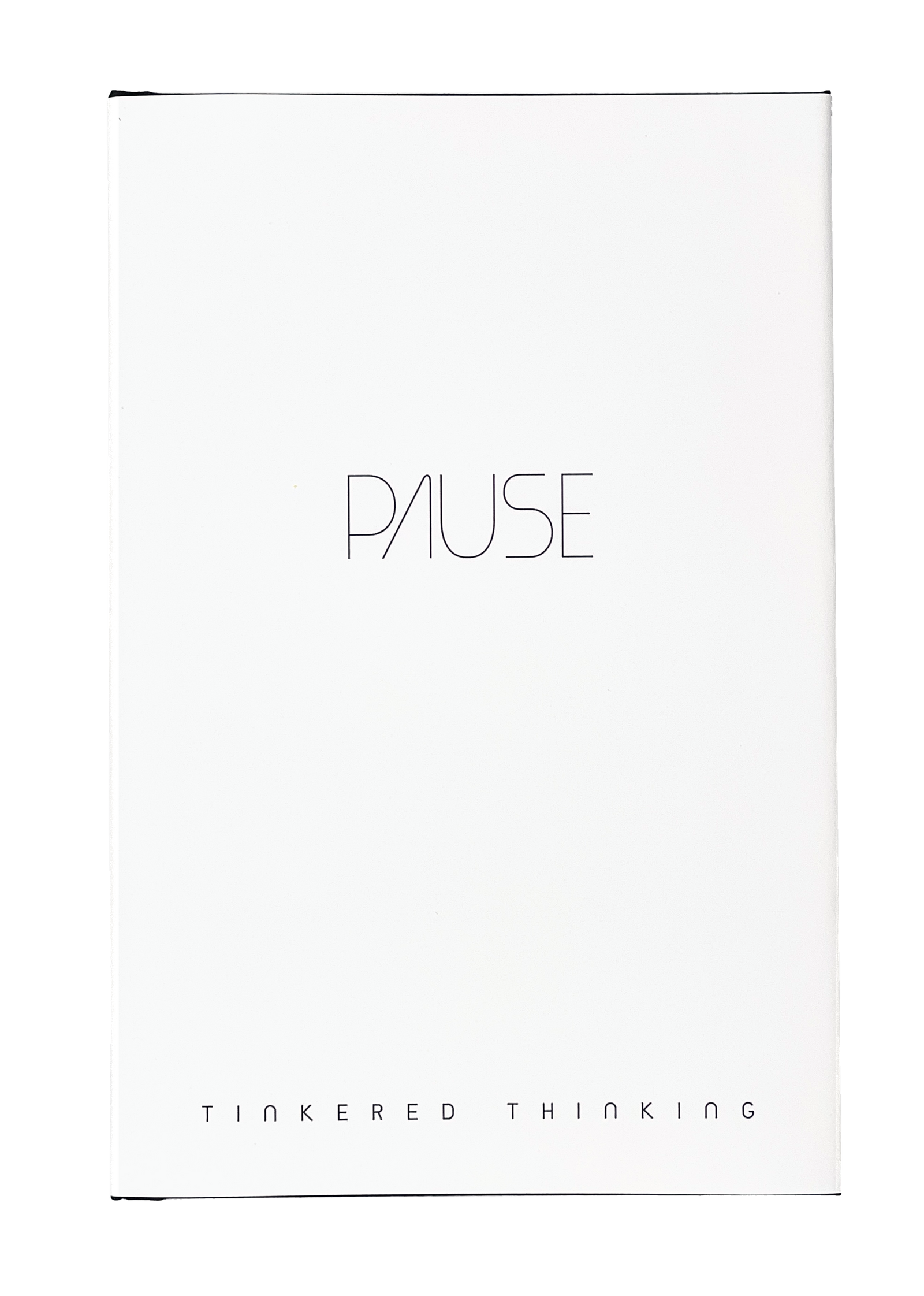
The first non-fiction book from Tinkered Thinking. PAUSE is a short book on meditation. Now available on the Tinkered Thinking Bookstore.
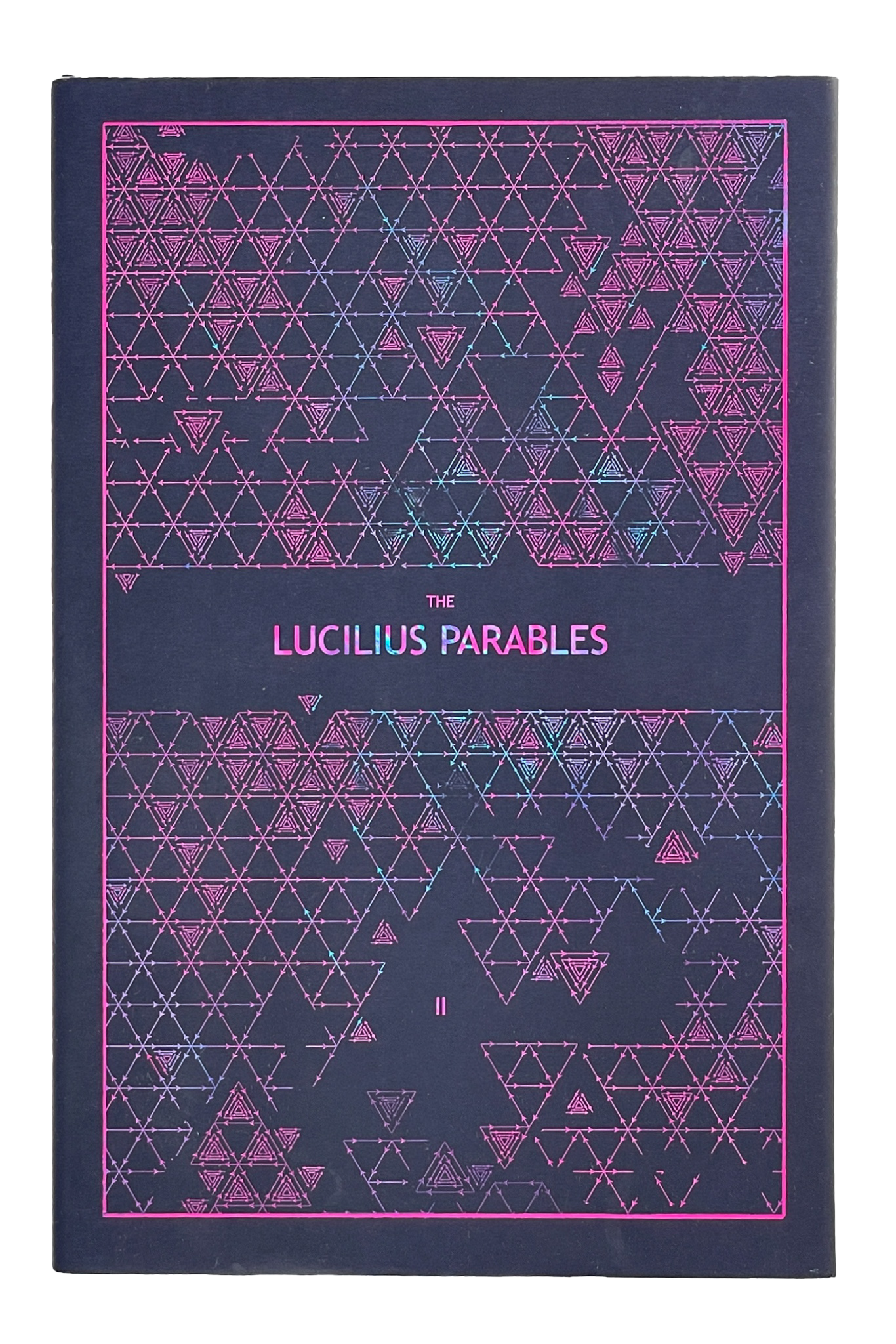
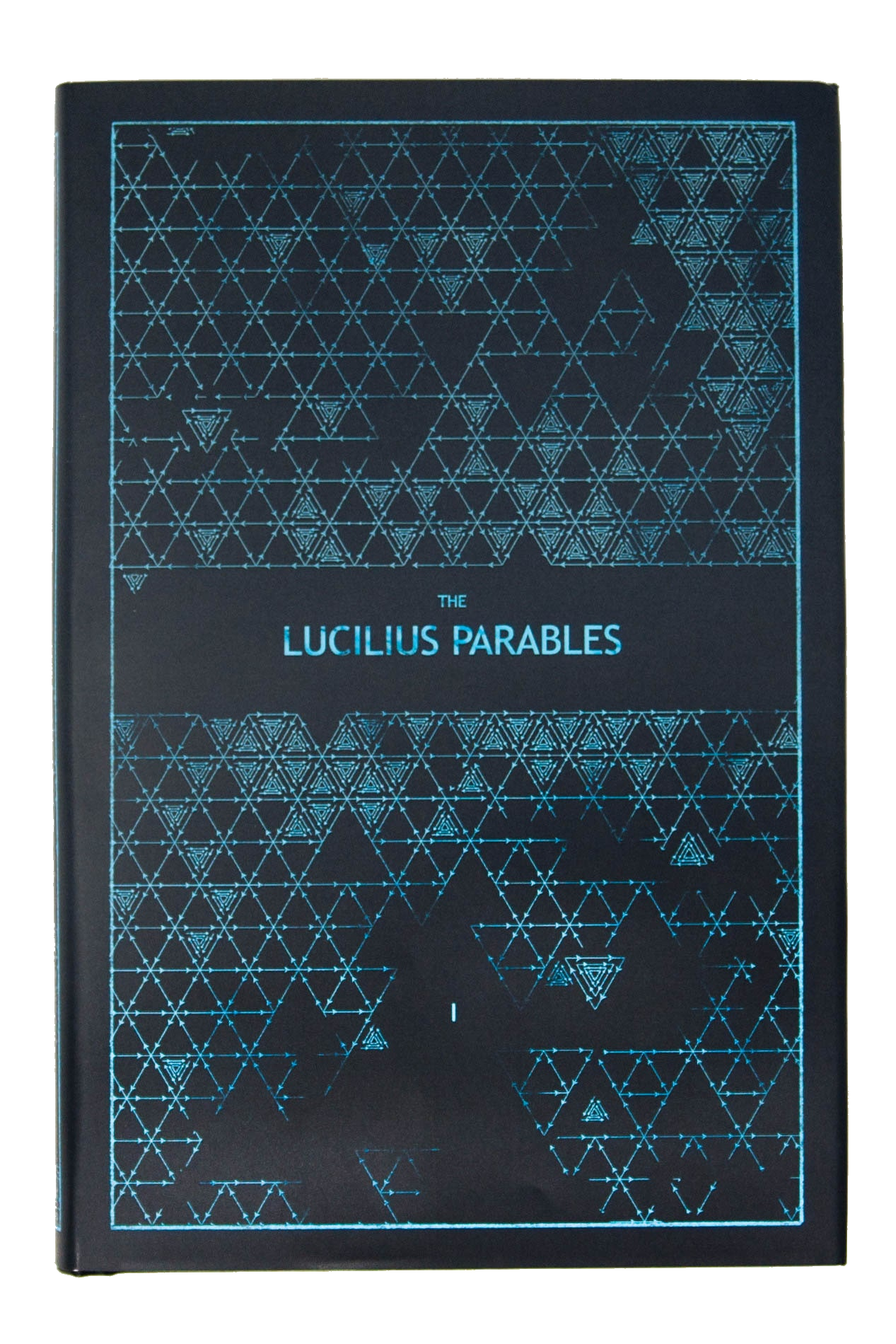
The SECOND illustrated book from Tinkered Thinking is now available!

SPIN CHESS
A Chess app from Tinkered Thinking featuring a variant of chess that bridges all skill levels!

REPAUSE
A meditation app is forthcoming. Stay Tuned.




THE GEOGRAPHY OF PROGRESS
June 3rd, 2021
Evolution is often visualized as a slow but constant change. There are countless computer generated simulations of the morphing ape face into a human one. This is also how we like to think work happens: you show up to a job and start working and you don’t stop until it’s time to go home. For some forms of work, particularly manual labor, this might be the case, but if the work is creative of any kind, this sort of consistency is a fantasy, just like our visualizations of evolution. The process of both is one of fits and starts, sprints and potentially long plateaus where nothing much happens.
If a particular species is perfectly adapted to it’s environment, then there is virtually no evolutionary pressure on that species to change. It’s only when circumstances shift, when it gets colder, or hotter, or a new predatory or food source turns up that evolutionary process kicks into action. Given the distribution of genetic mutations, there is a chance that an off spring of the current generation is slightly better equipped to handle the new environmental circumstance. Perhaps the genetic mutation creates a thicker coat of fur and the colder environment is no problem. Or perhaps it’s less fur in a hotter circumstance. Or this one can run faster and avoid the new predator or has a different shaped set of teeth to dig into a new food source. This match up of genetic mutation and environmental change is a lot like luck. That one individual gets lucky because they have an advantage compared to the rest of their population. This advantage generally enables the individual to have more offspring and eventually, if the mutation and the environment change both stick around for long enough, this new branch of the species will grow and displace all the other individuals in the population that lack the genetic mutation. But again, this shift in population morphology requires a change in the environment. So what happens to species morphology if there’s no change in the environment? For the most part, nothing. Sharks, for example, are older than trees and while they’ve changed shape and size over the eons, they haven’t actually changed that much. Whales on the other hand are the ancestors of a small land animal that walked on four legs.
The creative work process is an evolutionary one. It hinges on discovery, which is akin to the randomness of genetic mutation and the unpredictability of environmental changes, which means it’s also, very inconsistent. Or rather discovery and creativity can be very inconsistent. The writer who can’t seem to start the next book for years and years is a good example of the stagnancy that can occur in the creative process which is similar to the shark’s complete lack of pressure to evolve.
The geography of progress is an evolutionary process. It is not linear and it’s only as consistent as the pressures that are applied to it. Creativity and innovation needs push and drive in order to occur, otherwise, like that blocked writer, or that shark, things stay the same, and that can go on for a very long time.
HUNTING THE DEVIL
June 2nd, 2021
When the devil is in the details, it generally means that you’ve missed something, something crucial that has wide ramifications. It’s an understandable obstacle. We are incredibly limited on the amount of information that we can discover, consume and integrate into our plans and idea of how things work. Usually the devil pops up to thwart our plans when everything we thought necessary has already been put together, rending much effort useless. It’s obvious that figuring out these details ahead of time is crucial. But how do you hunt for the devil? And what happens if you find him?
What happens to the discovery of a crucial piece of information before it’s effects jeopardize our efforts? Suddenly the devil in the details becomes inverted. That crucial killer piece of information becomes a tool which can be used to tinker with plans in order to effortlessly incorporate it. It’s the difference between the discovery you’ve lost the ten dollars you had in your pocket right when you’re trying to pay for something and discovering an unexpected ten dollars when you don’t actually need it yet. The point is that you will use the surprise ten dollars.
The devil in the details is more like a nugget of gold if found early. At the very least, even if the detail means that a goal or a plan absolutely cannot succeed with total certainty, the good in this is that it saves all resources that would have been spent before the fateful and unfortunate discovery of that devil in the details.
Hunting the devil requires somber and sober mix of optimism and pessimism. Optimism is too often an unbridled enthusiasm that things will work out. This simplistic perspective is out of touch with reality. As depressing as it might be, the pessimist is usually correct. But pessimists rarely accomplish much. It’s the optimists who can harness the powers of the pessimists that manage to get new things accomplished. Hunting the devil requires the pessimistic powers to imagine that he’s there, hiding somewhere, in the details of your future plans, waiting to trip you up. The pure pessimist just stops all effort at this point, and this is where a tempered optimism is crucial. The pessimist oddly has the more useful imagination initially with obstacles, but it’s the optimist’s imagination that is far better equipped to incorporate that devilish detail and find a way that it can potentially become an asset.
For an optimist to harness the power of the pessimist, it’s absolutely crucial that the optimist recognizes and acknowledges that the end goal in mind, just might not be possible. Strangely, this makes it more likely that the end goal will eventually emerge successfully, in some form or another.
QUALITY OF DISTRACTION
June 1st, 2021
Any meaningful reprieve from the normal mental humdrum of living to reflect on the larger picture opens up a host of mostly unanswerable questions. The so called ‘big topics’ come to mind, but they can leave a person feeling rather powerless because the practicalities of one’s life and situation and obligations is often very far removed from anything that looks like a direct impact on such big issues. Be it something like climate change or feeding the hungry or somehow contributing to world peace in some kind of way. These are so far removed from the issue of picking up kids, making appointments, getting to work on time and making sure the bills are paid. The visit to the mental realm of larger issues is often brief in order to escape back to the safety of the humdrum.
All of it, no matter how large or small, meaningful or frivolous is a form of distraction. Whether we stress over the results of child’s test score or the reality of world hunger, or even veg out to some new comedy special, all of it is a form of disengagement from the moment as it exists. This isn’t a terrible thing, as long as we can manage to let all that distraction go from time to time and connect with the here and now as it exists without being lost in thought nor emotion.
But it’s equally detrimental to seek this state with the aim of making it permanent. The distractions we litter our mind with do have important meaning, and some are far more important than others.
How we choose to be distracted when we aren’t intimately connected to the moment becomes the stuff and story or our lives. Distraction almost wholesale regarded as negative. If you’re distracted when what exactly should you be paying attention to? The answer is just another distraction that’s somehow deemed to be more important. So, it’s worthy to wonder: how good are your distractions?
SPECIAL ANIMAL
May 31st, 2021
Is humanity special among all the creatures and organisms that we share this planet with and which have come before us? Some would say yes, and others would hatefully disagree. But even for those that would disagree, what can’t be denied is that we’ve achieved a range of accomplishments and abilities that far outstrip other animals, even those species that have specially evolved for one particular ability.
Take for instance a cormorant. The cormorant is a neat little bird. It can fly, albeit not too well, it can walk of course, and it’s an excellent swimmer. It seems to have the best of all worlds. But as mentioned, it can’t fly very well, very high or very far for that matter. It’s swimming abilities are a bit more impressive, but other than that, even though it exists in a the center of a Venn diagram of abilities, the cross section it has is still quite small.
We can compare it’s flying abilities to an eagle or a falcon which is far more capable in the air. Or we can go even further and compare the cormorant to the now extinct Quetzalcoatlus, which was the size of a Cessna aircraft and could presumably fly at altitudes of 15,000 feet for 7 to 10 days and cross more than half the globe. Very impressive.
But now enters humanity. We have figured out how to dive to the bottom of the deepest ocean canyon on the planet and we don’t just soar higher, faster, father… we have gone to the moon, and we have imminent plans to go to Mars. The Venn diagram of our accumulated abilities is a set of completely overlapping circles that each represents the extreme capability of any creature that has ever existed.
It’s been examined previously on Tinkered Thinking that perhaps the key element that really separates humans from other species is our ability to plan long-term. One cannot simply go to Mars. Such a project and such capability requires a vast network of billions if not trillions of tiny plans that are all formed and undertaken with a much larger long term goal in mind. No animal seems mot be able to plan in such a diverse and imaginative way, and especially not in terms of several years, or decades.
For those who think we are making a mess of the planet, it’s good to remember that cleaning up a mess often requires an initial stage of making more of a mess.
Any successful species is defined by it’s inevitable decline as engineered by it’s success. We can see this in a simply experiment. If we put yeast in a pristine environment of sugar water, the yeast will thrive, multiply, and expand. This is what all organisms do. But as is natural, resources become exhausted, population growth hits a wall and then falls disastrously. Many believe that we are headed for the exact same fate. But there is one crucial fact that separates this familiar instance from all the rest, and it’s best captured by a question:
For all the species that have run this course of boom and bust, were any of them aware of the process? Could any of them see what was going to happen based on the observation of the same phenomenon in other species?
The answer could perhaps be yes, but in all likelihood it’s no. We certainly don’t have any evidence of a species noticing it’s own impending doom, whereas if humanity messes up this one chance, some Alien civilization could find the remnants of our civilization in the future, decode our language and discover that yes, we were in fact painfully aware of what was probably about to happen.
Of course we squabble over this issue, but it’s highly doubtful that flocks of Quetzalcoatlus were debating what latitudes they should fly at based on the idea that an asteroid might hit the planet and cover their main territory in a cloud.
The question isn’t whether humanity is special or different from other animals. It’s a matter of whether we are special enough, or different enough so that we will be able to escape the fate that has befallen every other ‘successful’ species that has come before us.
A LUCILIUS PARABLE: COMPETITOR'S EMBRACE
May 30th, 2021
Lucilius rubbed his temples and sighed deeply. He loosened his tie aggressively, as though he hadn’t fixed it that tight himself. He swivelled around in his chair and looked out at the city scape below, through his office window. He’d just had a very unsuccessful meeting with a competitor and he was at a total loss about how to move forward. He’d yelled all of the lawyers out of his office just so he could be rid of their yammering about legal technicalities. Lucilius didn’t like pedantic solutions. It was fine if a solution was complex and dynamic, but winning by some snivelling pedantic round-about strategy just wasn’t his style. Plus, even if he won this fiscal battle, the competitor would still be there, polluting their realm of business.
His phone buzzed, and he wondered what other bother had just landed on his radar. He enjoyed one last breath while looking at the silent buildings and then reached back and lazily grabbed his phone.
It was a friend’s request to watch their child. An anniversary his buddy had forgotten about, who was scrambling to pull a night out of the hat.
For the briefest of moments, Lucilius was bitter that his friend had failed to remember just how powerful and busy Lucilius had become. But it passed, and Lucilius was filled with gratitude. He was not yet lost to the perilous realms of self-aggrandizement.
“Sure,” he texted back. He got up and went to a full length bureau that was in his office. He changed into some shorts and a tee-shirt, slipped his feet into flip flops and left the whole mess of his suit on a chair. He threw on some aviators and just waved off everyone who tried to lance him with a question when he finally emerged from his office. He said nothing, but just smiled and shook his head, barely holding in a laugh.
The wind whipped through his hair as the light of the sun grew rusty. It was a perfect drive, far south of the city, along a winding road, carved into the coastal cliff.
The look on his buddy’s face was full of tension swirling with relief. It seemed Lucilius’s timing was perfect as his buddy mouthed the words “thank you.”
“He’s a bit of a handful today, but you’ve never shied away from a challenge now have you Lucilius?”
The woman wore a knowing smile as she spoke about her child. The two embraced and kissed each other on the cheek and she quickly whispered “thank you,” concealing the fact that she knew about her husband’s impromptu attempt to throw together a nice evening for the two of them.
Lucilius waved the two off and then retreated to the house. The kid was probably sulking somewhere, and Lucilius knew he’d show up sometime. In the meantime he went to the kitchen and fixed himself a sandwich. It had been such a long, strange day and it was so good to be transported to this different life, one like a mirage, a hiatus inside the lives of his good friends. He set down a perfect triple decker sandwich on the living room table and slouched back on the couch and clicked the T.V. on. He cracked a beer, took a sip and then picked up one monstrous half of the glorious sandwich.
It was at that moment, just as he was taking his first bite that the little boy screamed in the corner of the room and ran at full speed toward Lucilius in a rage, jumping and hurling his whole body at Lucilius, his fists outstretched in sheer anger.
The sandwich flew apart as it summersaulted from Lucilius’ grasp, busy as his hands and arms were to catch the infuriated kid. The young boy flailed his fists at Lucilius landing tiny blows on Lucilius’s shoulders and neck. Lucilius embraced the boy tighter, kindly, trying to calm the boy, saying over and over “Hey kiddo, it’s ok, it’s ok…”
Lucilius knew the boy well and was familiar with how upset he got when his parents left, especially with little for warning. He gently, and warmly shushed the boy, until the boy was exhausted with tears, slumped on Lucilius’ shoulder. After the boy had calmed down, the two ended up having a wonderful evening, playing games and having fun.
The very next day when Lucilius walked into the board room to meet again with his competitor, he was stiff with stress and anxiety about what his next move should be. But when he finally sat down and looked his competitor in the face across the long table, he saw his friend’s son, angry and confused, looking to lash out, and suddenly Lucilius knew what he had to do. He looked at all his lawyers.
“Leave,” he said. They hesitated, looking at each other. “Leave!” Lucilius aid with a big smile.
His competitor’s brow furrowed as he watched Lucilius’ Lawyers leave.
“You can keep yours if you want,” Lucilius said, motioning to his competitor’s team of lawyers, “but I just had an idea that I think will work for both of us.”