
Daily, snackable writings to spur changes in thinking.
Building a blueprint for a better brain by tinkering with the code.
subscribe
rss Feeds
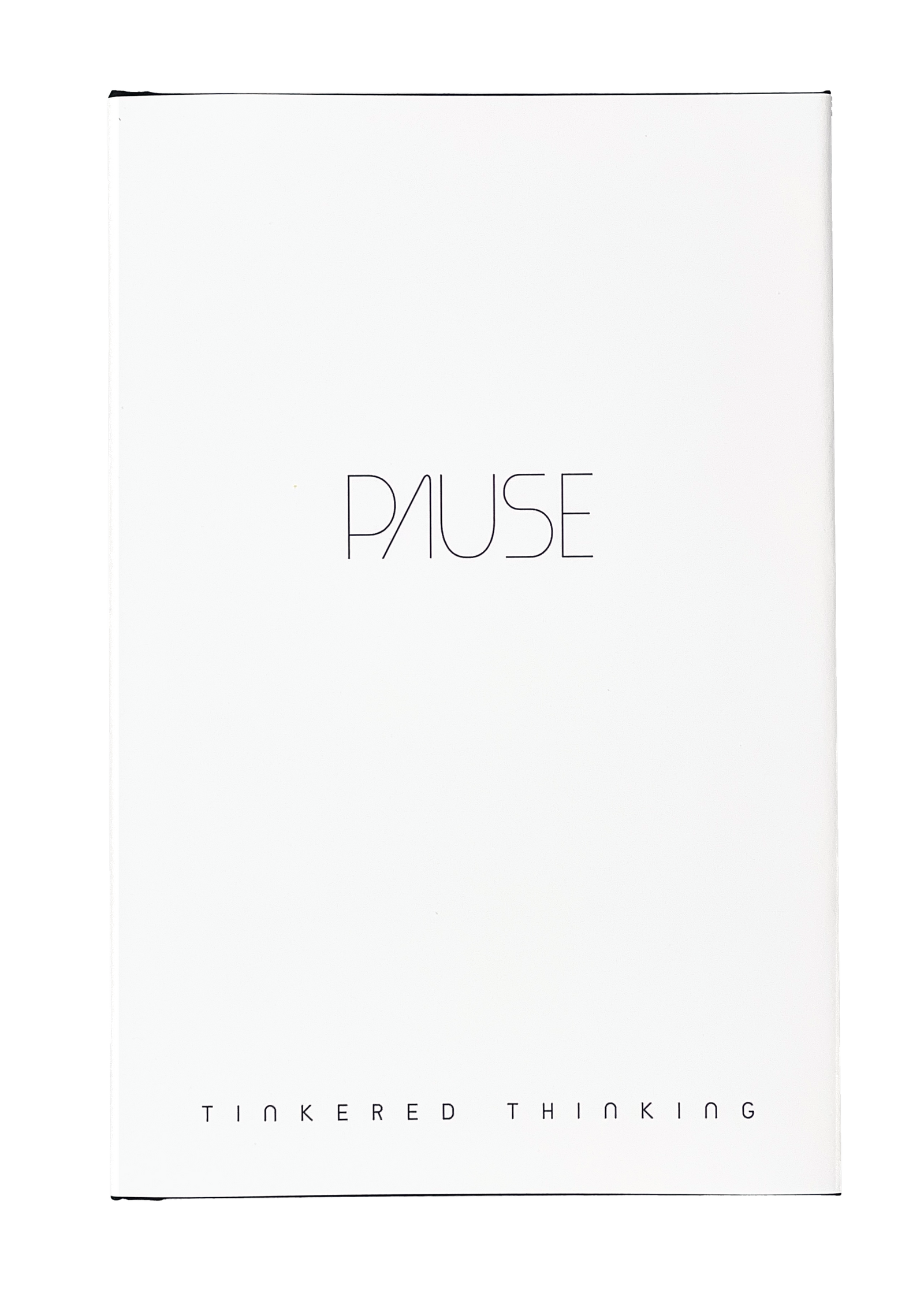
The first non-fiction book from Tinkered Thinking. PAUSE is a short book on meditation. Now available on the Tinkered Thinking Bookstore.
The SECOND illustrated book from Tinkered Thinking is now available!

SPIN CHESS
A Chess app from Tinkered Thinking featuring a variant of chess that bridges all skill levels!

REPAUSE
A meditation app is forthcoming. Stay Tuned.




INCUBATION
April 20th, 2018
A butterfly is not built in a day. A bird’s egg takes time and warmth. And ideas have their own shell. A shell that must be grown to protect, and busted open when that idea has matured.
Substantial changes in personality, mood, conduct, opinion. These never occur instantly. Even on the rare occasions when it seems like they do. (William James has much to say about this sort of instant conversion.)
Changes incubate.
Our brains entertain all sorts of idea-guests. We come across a new concept and the brain recreates the idea, allows it some rental space in the cocoon-cranium, and there it interacts with all the other ideas the brain has recreated from example or created from scratch.
Some are tossed into a sort of prison: a collection of anti-identity: The ideas and things that most define what we are NOT.
Others are readily welcomed into the fold. Usually these ideas and concepts are much like the ideas and concepts already there. Easier to recreate, easier to integrate.
In some sense this sounds like a neighborhood. Or a country with an influx of immigrants.
Some of these foreign ideas can come in like a rock-star and gain an admirable following quite quickly. But rock-stars don’t really change the world as much as they simply entertain.
Within the context of this metaphor, this community of ideas, how IS substantial change achieved?
A surge of motivation for self-change and drive might result in reading all sorts of books. Munching through bestseller lists, and what not. This is a good thing. This is a curious mind searching.
While it is important to never stop searching, it is also important to pause.
When something particularly valuable has been found, it does not mean that it has been totally integrated.
If emotional reactivity is a problem that has plagued us for years, one pass through Seneca isn’t going to do much. Even if every other sentence feels like a light bulb going off. . .
We must find those concepts that will help us and go over them many times until such words and ideas become the root of our works.
Reading something that feels like a refreshing splash of water in the face is simply recognition. We trick ourselves by thinking that such a flash of recognitive pleasure is proof that we have integrated the meaning of the quote, the idea and the way of thinking it advances.
Think of the times we try to retell a joke we have only heard once? More than anything we usually only remember the feeling that it caused and we laugh as we butcher a poor, haphazard version. Ideas we want to integrate require repetition, and saturation, in the same way that a joke must be practiced before it can roll off the tongue smoothly.
Otherwise, we find our actions betraying the notions that we have singled out with awe.
Integrating useful concepts requires an investment of time, effort and patience.
These concepts must be welcomed into the brain regularly. To mix more frequently and more numerously with all those concepts already in our head. After enough time, and enough familiarity, a tipping point will eventually be reached.
Our brain will have recreated for itself these useful concepts so many times, that their occurrence will be more numerous than previous ideas that gave rise to our less-than-ideal behaviors.
After many readings, or many exposures to – whatever the resource or influence may be – after all that consistent regular effort… the petri dish will be overwhelmed by a new culture. A new culture of thought. And from that culture of thought, new actions will rise
Always search and wander. But always return regularly to those seminal influences that definitely point in the direction we wish to progress.
The cranium-cocoon on our shoulders is always incubating. The actions that bust forth always spring from the ideas we have chosen to feed it: those thoughts we allow to repeat and form the regularity of our internal life.
If that internal life is to change: a new, consistent diet of concepts is needed.
Eating healthy once or twice, or even three times does not grant us the gift of health.
Just as reading a book full of wisdom once or twice, or even three times does not make us wise.

CLENCHED FISTS CLIMB NO WALLS
April 19th, 2018
An obstacle shows up in your path. Unexpected, perhaps even planted by someone to hinder you.
How do we react?
We may get upset.
And this is a reasonable –predictable- response to expect from any person.
But is it a reasonable approach to the obstacle?
Does such a response help you see the obstacle like a wall that can be surmounted, or even better, see it in a way that can help you? Who knows what advantage might come with the view from the top of such a wall. A view that might provide insight that never would have been possible had you been moseying along your way with no obstacle to block you.
What is the better response? To care nothing? To be totally unfazed?
This is likewise, uselessly extreme, and like any pendulum, rest only exists in the middle since.
A wall cannot be climbed with clench fists, but limp hands are no good either.
DETERMINED VS. STUBBORN
April 18th, 2018
What is the difference between these two words?
A person who is determined is trying to do something. Trying to make something happen. Trying to make the world be a certain way.
A person who is stubborn is likewise trying to do something. Trying to make something happen. Trying to make the world be a certain way.
Where lies the difference?
Those who we deem ‘determined’?
We approve of their goals.
We want such people to succeed. We want to see the world become their version. We want to see them climb that mountain, start that business, ace that test.
How do we feel about the goals of those we deem ‘stubborn’?
We are generally less enthusiastic. In fact a stubborn person’s goals are antithetical to how we see and understand the world and how we want it to be. We do not approve of these goals.
These two words are describing the same quality but with opposing value judgments. One describes the quality as positive, and one describes the same exact quality as negative.
The difference is inherent in the outside perspective of the stubborn/determined person.
Following this understanding, what does it mean when someone says:
“I’m so stubborn when it comes to… [insert whatever]”
Just like a procrastinating student:
We all know what work we need to do.
BUILT-IN LIFERAFT: THE A.N.S.
April 17th, 2018
ANS stands for Autonomic Nervous System
It’s an ancient system embedded deep in all our brains. Before our species had personalities, we had Autonomic Nervous Systems. Personalities, curiosity, ingenuity… all that stuff came later. The ANS controls all the things that keep us alive that we don’t have to think about: heartbeat, respiratory rate, pupillary response, and that massive winding digestion system.
It keeps you alive while you do other things.
It keeps you alive while shit happens.
No matter the difficulties of life – as long as they are not fatal to the body – The ANS keeps you going, even when you don’t feel like it. Even when you feel down, blue, in the dumps, and even when you feel like dying.
The ANS was rigged up to ignore you and your sometimes counter-productive thoughts. It’s a system with a built-in faith for who you’ll be tomorrow. Faith in what you might do when the storms of emotion pass, when the torrents of feeling are tamed, when calm and clear thinking begins to trickle back into our consciousness.
Through everything, the ANS is there for you. Making sure that the machine keeps working. Even when you don’t feed that body properly, or exercise it, the ANS does the absolute best it can with what it’s got
While old ways of thinking and being slowly fade, as we slowly build a new perspective, the ANS sustains us. So many religious traditions have settled on this idea of the spirit – an eternal essence of a person that transcends the flesh. If anything, it’s the other way around. As we become better, older, wiser versions of our self, the body sustains us through that – often painful – transition.
Life support, until that part of our brain where our personality rises from is ready again for that first breath of fresh air. That glimpse of a better life.
INTRODUCTION
April 16th, 2018
Welcome to Tinkered Thinking.
The focus of these episodes and posts is encapsulated in the title. It’s all about how to tinker with your own thinking. It’s the hypothesis of this platform, that progress is best achieved with a constant, consistent effort, influence and pressure. Think about the effect water has on stone. A consistent drip will eventually drill a hole through that stone if given enough time, whereas a real drill risks cracking the stone in an effort to try and achieve the same.
Regardless of the competing and conflicting studies regarding neuroplasticity, it is clear that people can change. And while there may be outliers who can change overnight, the large majority of us seem better served by a slower, gentler process. A process that can often feel frustratingly slow for those yearning for change.
Tinkered Thinking seeks to serve anyone who has this undertaking. Indeed, it’s the continued hypothesis of this platform that some kind of development continually occurs in all of us regardless of whether it is thoughtfully directed or not. All of us can recognize in others the results of such developmental trends: whether it be an unfortunately bitter person, or someone who has acquired amazing skill from long practice, or even the lines in someone’s face that shows just how much laughter has filled their days, all of us can recognize the results of trends in other people’s thought.
Tinkered Thinking will draw analogies from everywhere in life to try and elicit helpful perspectives and questions to loosen up mindsets and potentially create some wiggle room in order to point in new and better directions.
Everyday, starting today, for a minimum of one year, a podcast will be released with an adjoining post. Both will be nearly identical and the reasoning behind this is simple: Some people like to read, and others like to listen.
Most of these episodes will be quite short, and the philosophy behind this is for everyone listening to have something to turn to, some new thought available every day…. without sacrificing hours of time.
It’s worth remembering that stones become smooth not by floods but by the slow, constant movement of rivers. For at least the year, Tinkered Thinking will seek to be that slow, constant influence for anyone looking for it.
Over two hundred episodes are already written, and ready to go..
So stay tuned if you’re ready to tinker with the way you think.
Remember to visit TinkeredThinking.com and if down the line you find this material valuable, you can always visit our support page and make a one time contribution or signup for a small monthly contribution. Any support is always deeply appreciated, and of course that extends to sharing this content. If you hear or read something on this platform that you think would benefit others or someone in particular, it’s an fantastic show of support just to share it.
Until tomorrow, this is Tinkered Thinking.