-compressed.jpg)
Daily, snackable writings to spur changes in thinking.
Building a blueprint for a better brain by tinkering with the code.
subscribe
rss Feeds
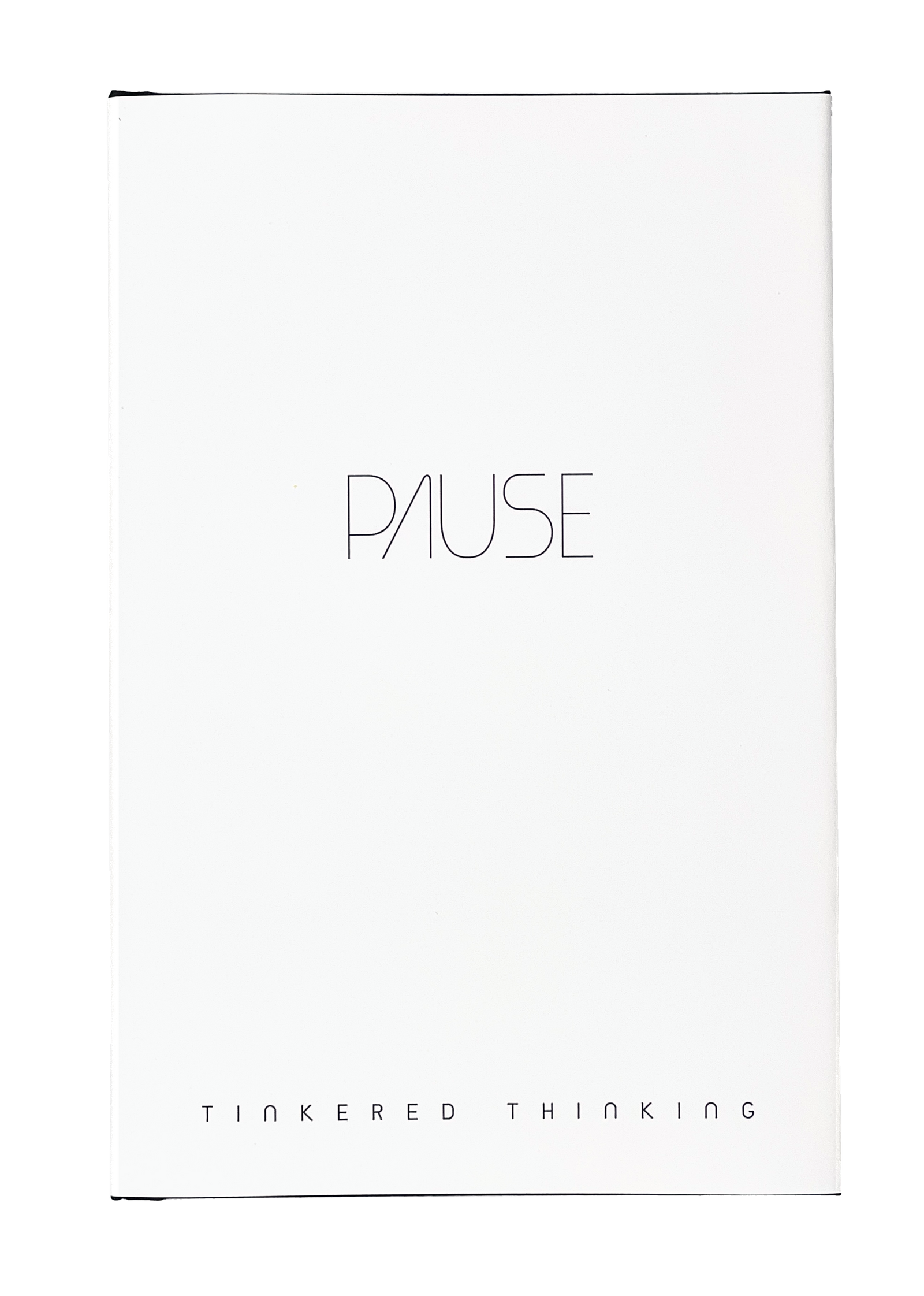
The first non-fiction book from Tinkered Thinking. PAUSE is a short book on meditation. Now available on the Tinkered Thinking Bookstore.
The SECOND illustrated book from Tinkered Thinking is now available!

SPIN CHESS
A Chess app from Tinkered Thinking featuring a variant of chess that bridges all skill levels!

REPAUSE
A meditation app is forthcoming. Stay Tuned.




IDEA VS. EXECUTION
December 6th, 2022
Novel ventures require two things: an idea, and an ability to execute. Much is made about both, but how do they relate?
Does an amazing idea make up for lackluster execution?
Can outstanding execution make a bad idea successful?
Examining these in a lopsided way provides some clues. Zero ability to execute will leave even the most brilliant idea to be a thing of fantasy. The opposite asymmetry points at a crucial aspect of the way they relate. It seems more plausible that outstanding execution could potentially make something actually happen with a bad idea. It might not be ideal - it’s certainly quite far from being ideal, but it’s likely more effective than a great idea that has no execution whatsoever…
Comparing these heavy asymmetries highlights something a few people have already pointed out: being smart or innovative or talented is not nearly as important as simply being hardworking and relentless. Relentless execution simply gets places, whereas ideas are just that - ideas; unless of course they are brought to life with execution.
This dichotomy extends to simple planning. Given any idea good or bad, what is better: having a perfect plan for achieving that idea, or just simply getting started? Again, execution - just doing something proves far more powerful.
Rumination over the perfect plan often holds back many from ever getting started. All the while the magic lies in approaching it in reverse: just get started and the plan will fine tune itself as progress is made.
The obvious ratio seems like it’s a balance: good idea + good execution. But balance is like that perfect plan: it’s a fantasy. Life is often more lopsided, so given the practical urge to simply eschew the ideal, and accept an imbalance, which way should we lean?
Despite how much great ideas are lauded, it seems more and more that leaning on better execution is safer and stronger.
So why do we hold ideas up with such hallowed valor?
It’s simple: it’s easier.
We can’t even really control what ideas we do or don’t have. They just come to us. Much like the next thought we never know we’re about to have. Certainly ideas can be honed and fine-tuned, but at their core ideas just… happen. They require virtually no effort. It’s more like an instance of luck more than anything else. Especially when compared to execution which is everything but easy.
Unpacking why we as a species concentrate on one thing more than another - and often to our own determent- is often a simple equation of incentives: are we incentivized to think the easier answer is the correct answer? Certainly.
It’s just easier!
But our mistake is that we always fail to question whether easier means better. Rarely is it the case.
MEDITATION DRAFT SESSION 3: MOMENTUM SCORE
December 5th, 2022
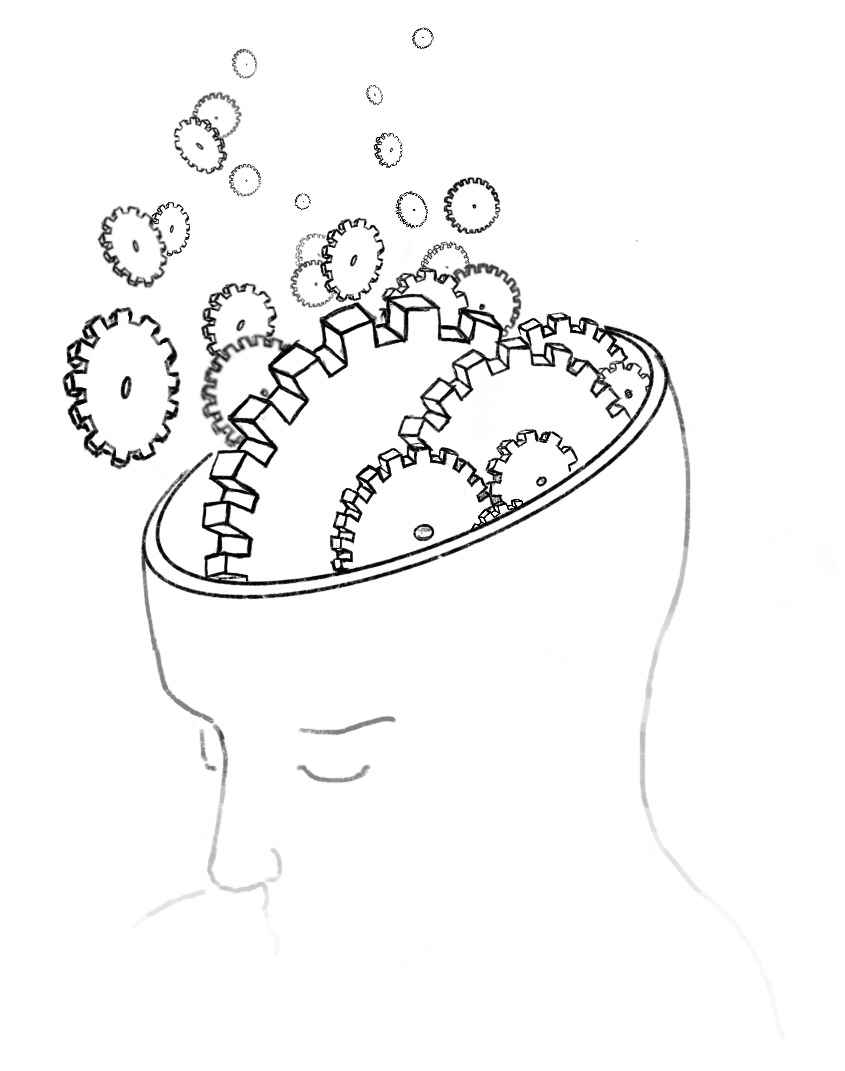
On Monday Tinkered Thinking releases a draft of a lesson from the forthcoming meditation app, currently called The Tinkered Mind (If you can think of a better name, please reach out. I'm not crazy about the current one, but I'll be damned if I let an imperfect name keep me from developing a good idea.) The rationale here is simply to stave off project stagnation by taking a wish to work with words on a daily basis (Tinkered Thinking Posts) and combine it with adjacent projects. This also gives regular readers a chance to get a preview of what I'm cooking up and to get feedback before the app launches, which is a tactic that has proved extremely useful with other projects unrelated to Tinkered Thinking.
One further introductory note: The goal of this meditation app is predominantly aimed at helping individuals build a robust daily habit by breaking that habit down and tackling it's consitituent parts one at a time and aiding the process with a new and innovative way of tracking progress, the likes of which has not been seen in other meditation apps or habit tracking apps.
Again, if you have any feedback, please reach out via Twitter
Session 3: Momentum Score
Take a comfortable seat, and once you’re ready begin breathing with deep exhales as we explored in the last session. The idea is to have a relatively quick inhale and a slow, longer exhale. I’ll count out a few 4 count inhales followed by exhales with a count of 8
Inhale till 4, starting on
1 - 2 - 3 - 4
hold for a moment and then exhale
8 - 7 - 6 - 5 - 4 - 3 - 2 -1
Then..
Inhale again till 4, starting on
1 - 2 - 3 - 4
hold for a moment and then exhale
8 - 7 - 6 - 5 - 4 - 3 - 2 -1
Continue this for a couple more breaths, and feel free to allow the exhales to be as long as you want. And once you are ready let your breathing transition to inhales and exhales of even length - what we refer to as coherence breathing.
Given that this is the third lesson, your momentum score on the progress section of that app should be at least 3. It may be more if you’ve used the silent timer in addition to these guided sessions.
This Momentum Score is one of the key innovative features of the app which has been a huge motivating factor in terms of building this app, producing the content and launching it. There are certainly other meditation apps, and a few that have totally dominated the market, but none of them track progress using behavioral momentum. All of them track user progress via a run streak, but there are significant problems with this metric, and it may even fact undermine a beginner’s ability to build a habit of meditation - as strange as that may sound. But it’s something I’ve seen in my own practice and it’s something I’ve seen with early users of this app that tested it while it was still in beta. An individual would string together a few days of meditation, then miss a day and then completely give up.
Fact is, it’s very demoralizing when a well earned run streak goes to zero. But more importantly is: does that accurately represent the state of someone’s habit?
Think of it this way: say a person has racked up 499 days of back-to-back meditation practice. If they forget on day 500, does a run streak of zero accurately reflect the state of a person’s practice established by those previous 499 days?
No, not at all.
Life is messy, and despite our best efforts it can get in the way of even the most disciplined person. Getting then confronted with the demoralizing apparently loss of progress makes no sense. It’s an issue of unequal magnitudes. How does missing one single day cancel out 499 days of consistent effort? What’s needed is a proportional scoring metric, and the best way to think about it is riding a bike.
If you pedal up to a certain speed and then stop pedaling, does the bike instantly stop?
No, of course not.
The previous effort of peddling has created a momentum that carries you further.
That being said, without more peddling, the bike does slow down and eventually it will drift to a stop. The speed of the bike is proportional to the amount of pedaling that has been done and how long it’s been since that peddling stopped.
This is how the Momentum Score works here on this app. Rack up 7 straight days of meditation and then miss a day? The score doesn’t reset to zero, it just decreases to 6. Miss 2 days and it decreases further. But go a week without meditating and that momentum will be completely lost.
The effect of this subtle shift in behavior tracking is profound. For myself and for early users of the app.
Personally, I decided to A/B test my life with meditation last year in preparation for building out this app and creating the content for it. I wanted to experience the difficulty of being a beginner again, so after half a dozen years of daily meditation, I just stopped. Personally I was also just curious if I’d notice any kind of regression. I wondered if meditation had become a kind of long term placebo. Was a I just fooling myself?
For a few months things seemed just the same, but after about 6 months, subtle negative shifts began to enter my mental life. A variety of thought and emotion which I hadn’t really experienced in years began to creep back into my life. It was unsettling, but also seemed like a powerful indication that my meditation practice was having a continued benefit over the course of years. I decided I’d had enough of this experiment and that I’d turn the meditation practice back on.
But as it turned out, that wasn’t so easy. With all momentum from my old habit lost, it wasn’t as simple as getting back on a bike and going for a ride. As I had years prior, I had to gather momentum into the habit again. But instead I was hitting the demoralizing problem of missing a day and seeing a run streak snap back to zero.
The bulk of the app was built at this point and I was beta testing it with a small handful of people and seeing the same problem with these early testers. It became clear there was something wrong with the way habit growth is tracked in meditation apps in general.
It took about a week of obsessive rumination on the topic, but it finally became obvious: the run streak should decrease in proportion to days missed. It’s almost stupidly simple, and yet there don’t seem to be any meditation programs that track progress in this sort of way.
With the new functionality deployed the results were pretty clear within a couple of weeks. The psychological experience of missing a day and seeing the momentum score fall by a proportional amount is nothing like the demoralizing blow of seeing a run streak crash to zero. If anything it’s the complete opposite. A small loss rejuvenates a sense of motivation in order to keep from losing more ground on the path towards building a robust habit.
The problem early users were having was also my own, and it was an visceral confirmation of the idea to see my own meditation practice immediately grow quite solidly for months after spending nearly half a year failing in fits and starts.
This momentum metric has sense been tested with people brand new to meditation and the results are equally encouraging. A much larger pool of users is needed to really pin down the improvement created by tracking momentum versus the traditional run streak, but if the anecdote of experience so far accrued with this program are any telltale it seems a subtle shift in the way we track our progress can have a profound effect on the future of that progress.
Now, the progress screen does also display one’s best run streak, and in the settings the momentum score can be switched to the traditional run score, if you so desire, but the default is this new Momentum score.
This Momentum score is also expressed in the form of a sort of power gauge on the progress screen, slipped in just above the calendar and below the meditator’s metrics.
It takes 30 days for the power gauge to fill, and a full 90 days for the gauge to completely solidify. The idea behind this is to plug into a meditator’s dopamine system. Fact is Gold Stars from elementary school work, and the aesthetic rewards that are hidden within the progress screen arise in accordance to particularly meaningful milestones on the path to creating a habit. 30 days is one of those milestones, and so is 90. In fact changes in brain structure due to meditation begin to emerge on MRI scans after a meditator has racked up 3 to 4 months of practice.
The calendar below the power gauge is also laid out in accordance to milestones on the path to creating a habit. 1 day, 3 days, 5 days and so on. It’s generally accepted that habits get easier to maintain after these milestones are reached.
The calendar has some special functionality for very large milestones like 6 months and years, but those will become evident in time.
For now what’s important is to build on the small but truly significant momentum we’ve already created with a few days of daily practice.
Yesterday we introduced some practical breathing techniques, and today was all about functionality based on theory. Tomorrow we will move back to the practical realm and explore the purpose of posture during meditation.
But as this session wraps up, allow your even breaths to transition again to the deep exhale method we started with.
Inhale till 4, starting on
1 - 2 - 3 - 4
hold for a moment and then exhale
8 - 7 - 6 - 5 - 4 - 3 - 2 -1
Then..
Inhale again till 4, starting on
1 - 2 - 3 - 4
hold for a moment and then exhale
8 - 7 - 6 - 5 - 4 - 3 - 2 -1
Continue like this for a few more moments while the session ends and think about how these simple breathing techniques are something you can carry with you through out the day - practices you can use whenever you need a sense of clarity and calm.
CONTEXT COLLAPSE
November 28th, 2022
Apparently humans can pay attention to 3 things simultaneously, max. Perhaps some can pay attention to 4 and some can only pay attention to 1 or 2. Whatever the individual differences, it seems common that most people can pay attention to more than one thing. While writing this very sentence I am also aware of the music, and if there was a child bandying about the room, I’d also be semi-aware of that child’s position and movement in space. Any combination of things can fill these separate roles. A sailor can be both aware of the state of their own boat and the state of the other boats on the race course.
These overlapping and subsumed sets of context form our ability for awareness. It’s one thing to have your attention focused on your own actions, it’s quite another to be aware of those actions within a larger context. Many people are not. Angry people, for example. They are so intoxicated by the state of anger that every iota of focus and attention is subsumed within that primary mode of action. The ability to host multiple sets of increasingly sized contexts collapses to a single one, creating a complete inability to self-discriminate on a moment to moment basis.
This is the sort of area where a mindfulness practice can be particularly useful. Mindfulness, in some sense, creates an expansion of context. Where anger collapses all contexts into one unwise perspective, mindfulness exercises the mind’s ability to entertain -simultaneously- the present moment in different contexts of varying sizes and perspectives.
The angry person who can invoke an instance of mindfulness isn’t just angry. They also gain the ability to see themselves as angry. This is incredibly powerful because the lack of immersion creates an ability for self-reference that allows for editing on the fly. The angry person can then have the novel thought of “oh, I’m angry, is anger the best course of action in this instance?” Often the answer is no, and the mindful person can then choose a wiser course of action.
But this subtle shift is dependent on the ability to host multiple contexts of varying sizes and degrees, and often they are larger contexts that subsume the force.
Awareness is really an awareness of the primary context. And greater awareness is the opposite of context-collapse: it’s the ability toe be aware of greater and larger spheres of context.
A LUCILIUS PARABLE: PEBBLE
November 27th, 2022
Lucilius was walking through a foreign town, the dust from the main unpaved boulevard coating his feet in a thin skin of dust. He was tired and hungry, and smiling from his long journey.
He sat himself up against the side wall of a local general store to rest and took pleasure in the sweet air as he breathed it.
The owner of the general store and the man’s daughter walked out onto the front porch of the building with two bowls of food and pannikins of water. The man sat with his back to Lucilius, and the little girl watched him from big brown eyes as she spooned the delicious porridge to herself and sipped the water. But she was full before her father, and after watching Lucilius she asked her father if she could give the rest of her meal and the water to the strange man sitting against their store.
The owner of the store turned to look at Lucilius. Lucilius smiled humbly, averting his eyes, fully aware of the scourge of opinion that was commonly laid upon his sort of person.
The man nodded to his daughter and the little girl hopped down from the porch and approached Lucilius, handing him her bowl of unfinished food and the pannikins of water.
Lucilius nodded deeply accepting the two. It comprised one of the most delicious meals he ever had. Lucilius had dinned in palaces, hosted by kings, and once a kind himself with all manner of luxury available at his beck and call, but none of it stood the trial of comparison agains this simple meal handed to him by the young child, daughter of the owner of the general store in this poor town. Each bite, Lucilius savored, and the water to finish it with tastes like a kind of clean liquid gold. The likes of which Lucilius felt he’d never tasted despite having tasted the world’s best wines.
He nodded to the man and his young daughter and thanked them. The man smiled gravely at Lucilius, and just that moment a neighbor rain up the short stairs of the general store and shared words with the owner. His face grew worried, panicked even.
The owner called to his daughter and commanded her to stay at the store. He needed to leave for a few minutes, and as he swiveled to leave he saw Lucilius once more.
“Watch over my daughter.”
Lucilius nodded and the man ran off with his neighbor toward some worry in the village. Lucilius smiled and rested against the store’s wall.
But as he sat, he noticed more and more of the villagers headed in the same direction the owner had fled. And as they amassed the young girl grew anxious, and her whispers of “Daddy” grew and grew until the girl was and audible mess.
“Come child,” Lucilius said. “We will go see and make sure your father is well.”
He took the young girl’s hand and the two walked calmly in the direction of the rushing villagers.
They found a crowd. A crowd growing and growing angry.
Lucilius slipped left and right through the thing gaps in the crowd, the small child snaking the path behind him, until they arrived at the front of the mess, beside the store owner.
“My sister,” the distressed man barely gasped, barely cognizant of Lucilius standing next to him.
The front ranks of the crowd were incensed, their raging eyes bulging, their voices near a screech, all directed at the sobbing woman on the ground before them. Also of them, of the crowd, this close held stones held high, ready to be thrown.
“My sister…” gasped the crest fallen owner of the store…
Lucilius looked to his left and to his right. The crowd was clearly crazed over something they’d learned, something the young woman had done. And quickly, he took the hand of the small girl and threaded her hand into her father’s and stepped forward before the crowd and approached the young sobbing woman. He kneeled before her, and smiled flatly, humbly before her tear struck face.
“All will be well my dear. Give me a moment with these silly people.”
Then he stood and turned and looked at the crowd and called from within him the strength of a voice deep and loud enough to rattle in around all of them.
“Only those who have never done any wrong may harm this woman and cast the first stone.”
The crowd grew silent, their fists grasping stones still held high.
“I am from a far away land,” Lucilius bellowed. “And I have one gift in life: I can see all that you have done wrong just by staring in your face. I will determine who is worthy to punish this woman before you.”
The crowd grew meek at his words and Lucilius approached them, and carefully, diligently looked into each and every one of their faces, moving full across the entire front line, looking past them at every accuser standing. After some time, after he had looked into each of their faces, Lucilius stood back.
“Only one of you is worthy to punish this woman. The rest of you have committed wrongs equal or greater and you mock yourselves to stand here above this woman, condemning her, for you are no better.”
Some petulant onlooker then shouted “Well who is it? Who is going to punish that wretched woman!”
Lucilius smiled and then kneeled, until he was the same height as the girl who had fed him. The store owner’s daughter. He motioned for her to come closer.
“You my sweet child are the only one who’s wrongs are small enough to punish this woman. I’m sorry but you must choose your weapon.”
The little girl was downcast at the prospect, but she turned and looked at the stones her fellow villagers had set down before themselves. She went to the first, but it was too heavy, and she could not pick it up. And the same with the second - it was too heavy for her to comfortably life. She returned to Lucilius distressed and nervous…
“They are all too heavy, the stones people have brought.”
“My child, the punishment is yours to decide, for you are blameless. Your weapon may be whatever you wish.”
The girl held Lucilius’ gaze steadily, and then she looked down, curious. She knelt down and picked up a tiny pebble.
“This,” she said.
Lucilius nodded, approvingly and he motioned to the store owner’s sister who still cowered on the ground, watching the strange turn of events.
The little girl approached the woman, her family, and smiled before limply tossing the tiny pebble at her. It landed softly against the woman’s garments, and the woman, teared up with her smile and sat up and reached out for the little girl who ran into her embrace. The two beg an to cry at their union and Lucilius turned to face the crowd.
“And what punishment do all of you deserve for your presumption? Your false superiority? Your sense of hollow morality? Would you rather the fates punish you with the gifts of a child or something more equal to the weight of your faults?”
Lucilius surveyed them all, their downcast faces.
“I am but a wandering traveller, guilty like all of you, trapped by the whims of life frozen in a past I can only right by my actions in the present.”
He watched them all, the crowd now bowed to his words.
“You partake in the punishment you deliver. Cast a stone, but only if you expect to be injured yourself. Forgive, and feel the sweet relief of a horrible thing lifted from all of us.”
UNDERDOGGING AND DEFEAT
November 26th, 2022
A crucial setback can make it very tempting to throw up hands and give up. All is lost, it seems. Take for instance a game of chess. Losing a critical piece unexpectedly can easily make it feel like there’s no point continuing with the game. With such a disadvantage, an opponent just needs to trade pieces off the board until the endgame magnifies the advantage, and then it’s just a squeeze of time till the end.
However, giving up misses out on two critical aspects where the underdog can gain enormous benefit.
The first is simply the unexpected turn of events. I played a game of chess this evening, lost a rook early on, figured I was done for, but managed to trap and triple fork a queen and take her. A few dozen moves later, I’d won the game. All after thinking I was guaranteed to lose.
The second, and more important benefit of raging against defeat in disadvantage is the chance to exercise perseverance in precisely the sort of situation when it’s most needed. This is a crucial opportunity: it keeps the door open for all future long shots at turning things around. But it also extends the opportunity to learn. The urge to give up is really just an urge to relax, and stop putting in effort. In some respects we are always gunning for the chance to rest and relax, and the potential of imminent defeat is a great excuse to kick back and relax - why keep up the fight when it’s hopeless? Isn’t it smarter to cut losses and move on? Certainly for some things, yes. But when the risk is minimal and the time investment required is negligible, keeping at it till the bitter end exercises a rare muscle of relentlessness - a muscle that can easily become the most important one in certain dire circumstances. If the default is to always give up the moment things less than excellent, the ability to persevere will be weak when it’s needed.
Impending defeat is simply an idea - never a certainty and it’s an idea of it’s inevitability that we use to fool ourselves.