-compressed.jpg)

Daily, snackable writings to spur changes in thinking.
Building a blueprint for a better brain by tinkering with the code.
subscribe
rss Feeds
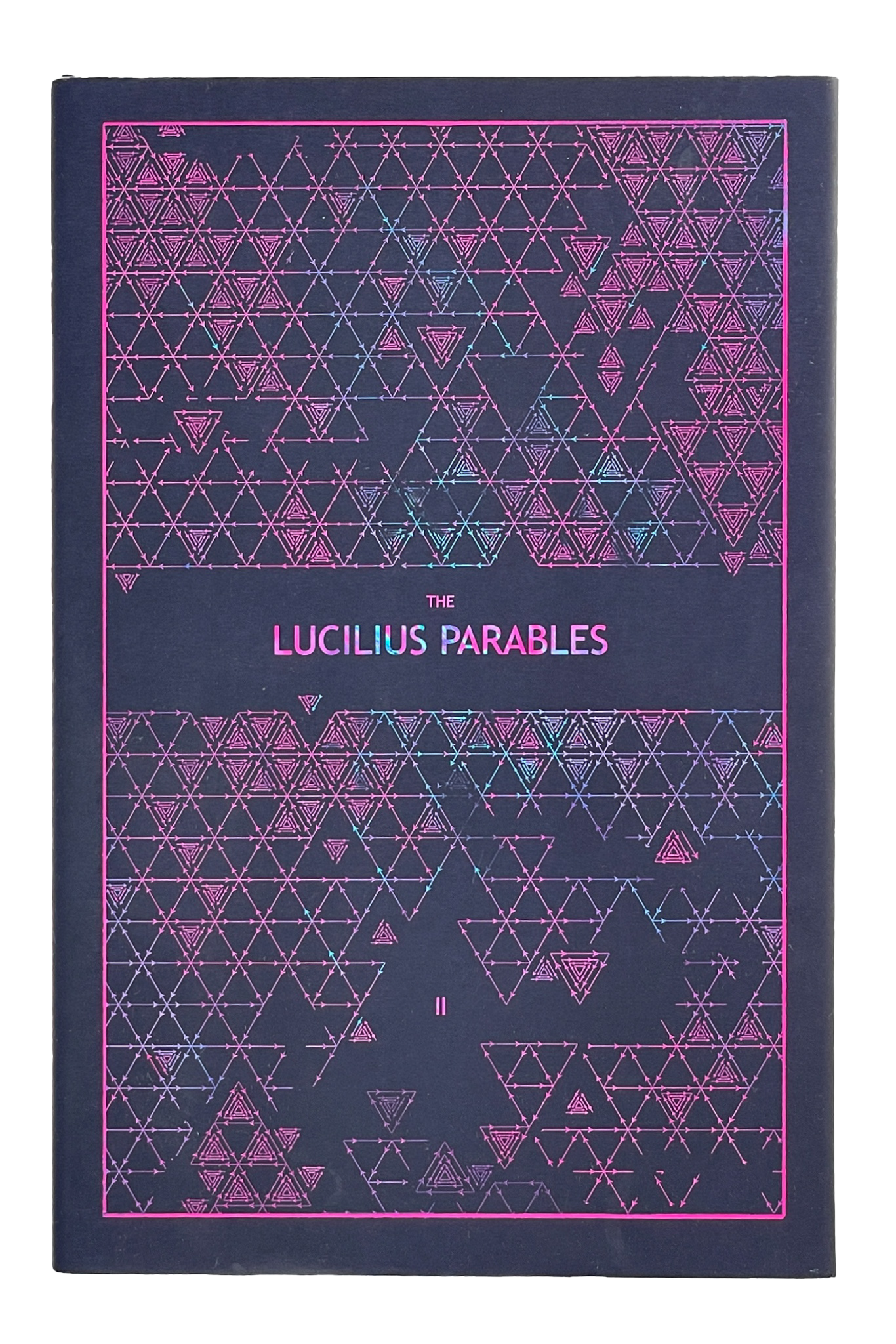
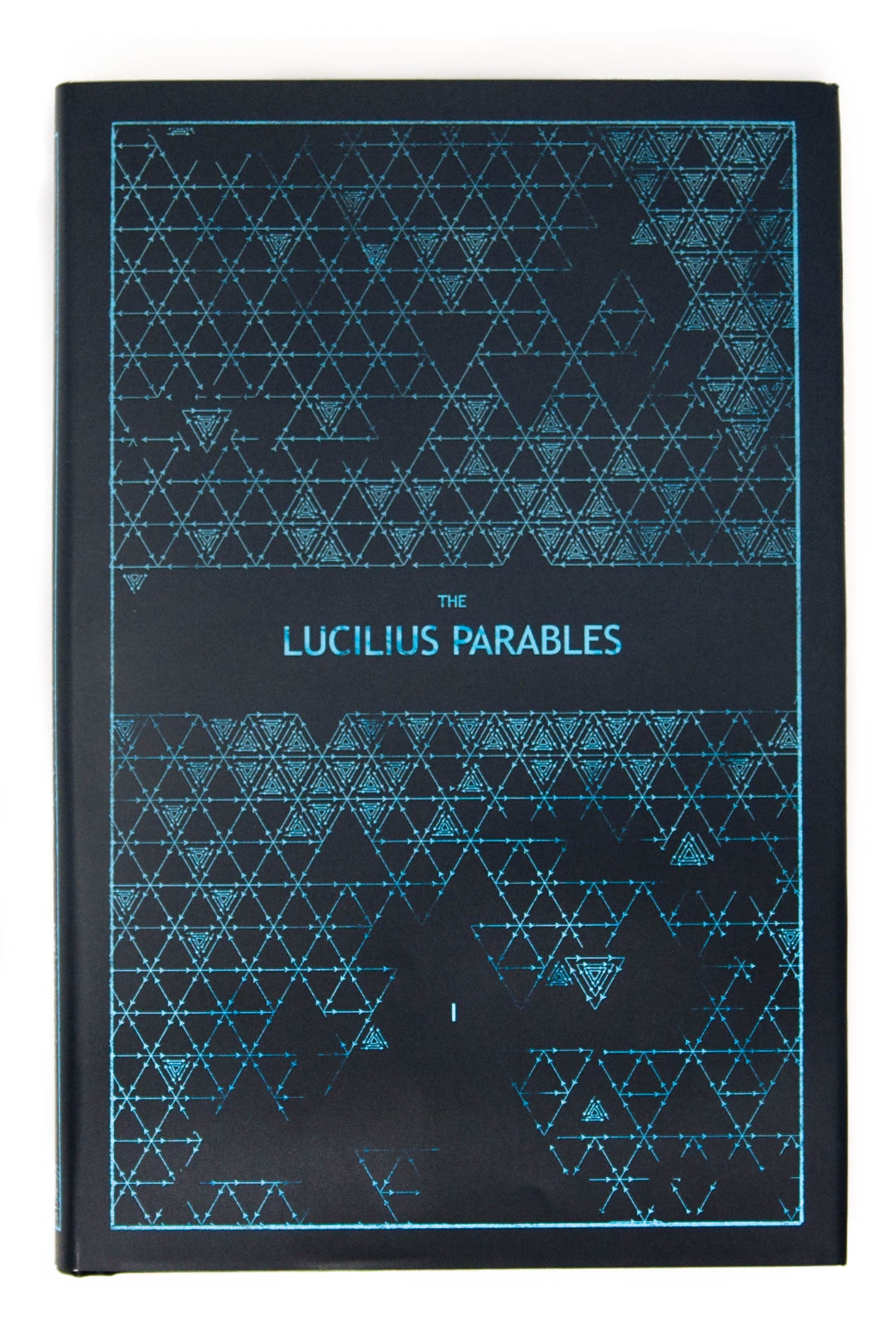
The SECOND illustrated book from Tinkered Thinking is now available!

SPIN CHESS
A Chess app from Tinkered Thinking featuring a variant of chess that bridges all skill levels!

REPAUSE
A meditation app is forthcoming. Stay Tuned.




LISTEN ON REPEAT
March 2nd, 2020
Some songs hit you, and strike such a satisfying emotional chord that you just have to listen to it again, and again, and again.
Sure you can overdo it. But give it some time, a couple months or maybe even a couple years, and it’s no surprise that we’re ready for another dose.
It’s interesting to try and think about life in this way. What sort of life would you have to create so that you’d want to repeat it over and over and enjoy it all?
Much of our time is spent waiting for better circumstances. Whether we are working in order to have time off, or more money or both, much of human life is spent mired in the conviction that it could be better.
There are two ways to approach this potentially depressing framing.
Either we change our mindset about the given moment, and like someone cast in the role of student for a zen parable, we can challenge our mindset to find a way to smile despite the slings and arrows of limp fortune. That is certainly a worthy undertaking and there’s plenty of opportunity to hone your character into that role.
The other approach is to shake things up and start approaching one’s own insecurities with a bit more skepticism and even recklessness.
In can help to talk to yourself as though you’re the main character in a movie about you. In fact, that’s exactly what you are.
Oh, you’re nervous you might fail if you go after that interesting idea? Well I don’t care, I’m bored of this rerun you’ve got going. I want to see something more interesting.
It takes courage to act upon curiosity.
But this creates a kind of forward looking. Thinking about creating a life that you’d love to repeat creates a forward reflectiveness that gives you more reason to pause. It makes you more likely to take action that you’ll be less likely to regret.
Actions that you’ll be proud to see if you were to sit back in a movie theatre all your own and watch your life again through your own eyes.

A LUCILIUS PARABLE: BIRTHDAY
March 1st, 2020
When Lucilius finally died of extremely old age, he woke up and found that he was once again fourteen years old. He could remember his previous life vividly, but after a few weeks of bizarre and nostalgic déjà vu, the memory started to fade, and his life proceeded in much the same way it had before.
When Lucilius finally died of extremely old age, he woke up and found that he was once again fourteen years old. But this time he experienced a new a profound déjà vu: he was reminded of that experience when he’d been fourteen and he’d felt like he’d awoken after the death of an identical long life. This time, Lucilius got to work. He quickly took pen to paper and wrote down a number of stocks that he could vaguely remember did well during the next couple decades. He immediately started skipping school in order to work for some money and when the companies he’d written down finally went public, he invested his small savings and quickly became stupendously wealthy.
When Lucilius finally died of obesity and general gluttony, he wasn’t that old, but he woke up and found that he was once again fourteen years old. Upon waking he was struck by the notion that he should pause this time. He skipped out on school and went for a long walk to think about what was going on, and what he might do. It was difficult to separate all of the memory into the different lives. They seemed to blur into merely what was possible for this life. The first memory was such a good life, and he’d inadvertently thrown it all away in exchange for a life of gluttonous abundance. There was so much that he missed out on and things had ended so short. He endeavored to go about things a little differently. He worked a bit and still invested in the companies he could remember even more clearly now, but he played around with the course of the first life that he could remember. He began to discover subtle pain points that he was able to alter, opening up an entirely new avenue of life.
When Lucilius finally died of an extremely old age, he woke up and found that he was once again fourteen years old. He had now spent countless lives exploring the many ways he could love the people who generally filled his life. Lucilius could see himself easily spending eternity exploring these different ways, but curiosity also had word in the discussion, and Lucilius felt – perhaps mistakenly – that he could always return to this way of life. He began to dedicate his life to innovation and technology, using his investments to fund wildly amazing projects. The task nearly destroyed him as it was so exhausting but he discovered hacks in the fabric of nature and by understanding them deeply enough, he managed to catapult humanity into a golden age of peace and exploration.
When Lucilius finally died of an unimaginably old age, he woke up and found that he was once again fourteen years old. He nodded slowly, sitting on the side of his bed, as though acknowledging some kind of supreme power that was watching him wander through this maze. He went to a local bookstore, purchased a few notebooks and spent the next few days writing out the salient points of his previous life’s discoveries. When he was finally done, he sighed at all the work that had been undone, that he now felt obligated to carry out again. But an idea came to him. He ripped out each individual discovery and mailed each one to the relevant colleague that he knew he would meet. Unfortunately, one of them – and Lucilius should have seen this coming – weaponized the innovation and used it to install a world dictatorship. Everything got quite dystopian. Lucilius thought about starting over, and realized he might be able to make it happen faster, but worried that it might break the pattern. Instead he took up a dangerous hobby, that of trolling the government.
When Lucilius finally died at a fairly median age, he woke up and found that he was once again fourteen years old. He sighed in relief, grateful that he was once again at the start of it all. He again wrote down everything that was important, everything that he knew would fade from memory as he delved into this life. It eventually took Lucilius many lifetimes to get the wording just right. That of notes sent to colleagues who would develop beneficial technologies for humanity. Some of them he had to engineer meetings with and influence them in certain directions, but after a while Lucilius figured out how to provoke humanity into it’s golden age without much effort. And with each iteration he managed to get this whole process to be even more efficient with less effort on his part.
After what can only be paradoxically described as trillions of centuries, Lucilius woke up and found that he was once again fourteen years old. He breathed deeply, the satisfying air. He could not be sure, but he had a feeling that he’d finally intuited something so deep about understanding the universe and he was excited to see what might happen. He did not write anything down, but went about his life as he had in his earliest memory. During the third day, he was sitting in French class during third period. It was a fresh spring day and birdsong was floating in through the open window as the class babbled before the teacher rose to start. Lucilius removed his shoe and took out a pebble that had been bothering him. He looked at it, briefly and smiled, then he carefully chucked it without much aim out the window. That single action started a chain reaction that ultimately catapulted humanity into it’s golden age.
When Lucilius finally died due to transubstantiation via uploading into the cosmic digital cloud, Lucilius unexpectedly woke up and found that he was once again fourteen years old. He was briefly puzzled before he began laughing.
“What a neat game.” he said aloud to the mysterious force behind it all. Then he jumped out of bed to get started. He got it now, he could see the geometry behind the obvious, he felt the trigonometry of action as he took it. Each action he took, kicking the dirty laundry aside, the two steps to the door, slipping the threshold. Each felt now like a stroke of art, dynamic, as though painted upon a canvas of time that itself was now rethreading itself into permutations of the future. Lucilius had a beautiful eternity ahead of him, and he now knew – had finally decided how he would spend it. He knew them all, every single person that existed and would come to exist. He’d met them all through trillions of separate centuries, and now it was time to see them all together. He smiled thinking not just of how much work lay ahead of him, but how beautiful this work would be. He had already begun.
KNOWING NORTH
February 29th, 2020
A good explorer can go pretty far by just knowing which way is north. The quintessential navigational tool, the humble compass, points out north for us, something that a great explorer can figure out by just looking at the sky.
The lingo of navigation forms a metaphor that we use everywhere. In what direction should I take my career? How should we steer this company?
For each of these we might ask what the metaphorical true north is? What’s the one most important marker to help us understand which way we are going?
At first it might seem as though each domain in life might have it’s own true north. Business would maybe be profits, friends and dating might be love, something like that. But all of these can converge on a single house of light.
There is one star that we can use to guide them all.
Nearly everything that we do in life aside from solitude for it’s own sake is undertaken in order to elicit a response from other people. We show up to a job and do what we’re told because the response a week later is a paycheck.
There is one response central to nearly every interaction that we can strive for, one that permeates all domains and optimizes the direction that is most likely to lead to success.
The only question that you need to think about in order to guide your instincts is:
How do you get someone to genuinely say ‘thank you’?
If a product is truly great and one that people are thankful to have, they will gladly pay.
If a friend is grateful for your presence in their life, you will be loved.
But for so many things we look at it backwards, looking for what the payment will be before we provide our service or effort.
Better to forget about it
and
Just give all you can to the world.
What does it really matter if you get something in return? Why care? Thinking about the potential reward is like doing the dishes before you’ve even eaten. That sort of thinking is backwards.
Just do and give what you can.
We are an animal that thrives on reciprocity. And great work, or amazing gifts that we might release upon the world? These don’t go unrewarded. Sure someone might try to snatch the credit, but if you can do it once, you can do it again, and again and again.
Squabbling over some little bit of coin isn’t just petty, it takes up time and energy that could be better spent generating more generosity.
DISHONEST COMPUTER
February 28th, 2020
Honesty is the master variable in life. It’s the reason why we have money: it allows us to trust strangers to a hitherto unheard of degree. Because we need to interact with so many strangers, we don’t have time nor the memory capacity to vet them all, so money truncates this process. Like anything, it’s not perfect, but it gets the job done.
If everyone maintained the ability to be 100% honest, there would actually be less of a need for money. Most people can see this for themselves in personal relations. We generally don’t charge friends and family or at least we don’t charge them as much if say it’s business related, and we certainly don’t nickel and dime them because the degree of trust is much higher with those people than say compared with a random stranger.
Dishonesty is the most efficient disease for rotting close relationships. To highlight this in another way, consider this question: would you buy a computer that lies about the information it has stored? Say you are tracking your finances on a spreadsheet, but every time you bring it up, the numbers are different.
Such a computer is only good as a practical joke, and it’s certainly not something anyone would buy for the same reasons we actually do buy and use computers.
And yet, many of us, often by our own complicity keep company that is quite like this dishonest computer. The ambient dishonesty is perhaps fairly low, and perhaps that’s ok, but more likely, the harmless white lie keeps the slope to more serious deceptions slippery.
The strange thing is that most white lies are seen as a form of convenience, even though it requires additional memory in the long term. In the short term it might result in less effort and seem efficient, but in the long term this can be wildly inaccurate. The pun is, of course, intended.
Best to maintain the lowest tolerance possible, from one’s self and others.
After all, there’s certainly the possibility that our computer forgets something we need, that it crashes, or a bug disrupts it’s usual processes.
Not even a computer is perfect, but that doesn’t mean it’s not worth striving for.
FARMING LUCK
February 27th, 2020
If you need to make an important free throw, it’s much more likely to go well if you can make an enormous number of practice shots. Each practice shot presumably raises the probability that the important free throw that counts will actually go in the hoop.
Compare that to a situation where you are allowed to prepare for the free throw in any other way imaginable except practice shots. How would you prepare for the one single shot? All the calculus in world isn’t going to help, even if you can learn all of the technical details of the arc that will put a ball into a hoop.
The difference between the two and the lack of wisdom in the latter are obvious. And yet this comparison forms a pretty good analogy for the way we think about opportunities and carry out plans. For example starting a business carries with it the cultural expectation of having a thorough business plan – a structure that is supposed to map perfectly the arc from initial investment up to early adopters, then first customers and all the way to profitability. How does this example map on to the previous discussion of free throws?
Another way to think about the dynamics of success is with farming, or even gardening. Even when planting just a single plant, we don’t put just one seed into the soil. We put a bunch of them, more or less depending on the species of plant and the different likelihood of sprouting that each species have. If a plant has a lower chance of successfully sprouting than we put more seeds in, which raises the chance that we’ll get one, or a couple seedlings.
These examples, of planting many seeds and taking numerous free throws are ways of hedging bets and mitigating the chance of a downside. But the business plan is an example of putting all your eggs in one basket, but unlike all the seeds in one planted spot, the basket can drop and the downside is that we loose everything, all our effort, energy and investment.
Ok, but how to go about something like a business plan?
Sure, it can be very useful to sketch out an arc towards profitability, but it becomes dramatically less useful through time as the plan fails to succeed. What’s required here is a willingness to change the plan or even abandon it all together, and treat every little step of the plan as an experiment that gathers information that once interpreted might point us in a different direction than the planned path.
The gathered information, or the feedback is the most important part. Like with the free throws, each shot indicates how we should change. The ball bounced off of the left side of the rim, so the next throw needs to be a little more to the right. The ball bounced right off the backboard? So the next shot need to be a little lighter so it will fall a little shorter. The idea of iterating is very intuitive when it comes to the physical world like this. Feedback is instant, and that distance between instances of feedback is key.
The faster we can iterate our action, the more often we get new information, the faster we can fine tune our direction.
But here’s the thing, no matter how strong and finely tuned our mental model, or no matter how many free throws we take, the result of our next action will always have a degree of unpredictability.
Even Tiger Woods misses 2 foot puts every now and then.
Whether throwing a ball at a hoop or initiating the next phase of a business plan, there’s simply no way to be absolutely certain what the outcome will be. But the more we can poke around for the right direction and the faster we can do this, the more likely we are to hit our target.
There’s really two concepts at play here and they are both methods for cultivating, or farming luck.
In one case we have multiple irons in the fire. Perhaps we have a couple of projects on the go in order to see if one of them might take off, just like the seeds in the ground. Nurture them all and see if any grow. The one that pops up first is maybe the one to nurture.
The second is iterating a single project. Like a bloodhound constantly sniffing around, each action we can take with the project can help us figure out which way to go if that action gains any real feedback.
Compare this to planning and working on something in isolation for many years and then finally releasing it. This sort of situation only creates one opportunity for feedback.
Now how well does it seem that situation will be at cultivating and capturing luck.
In fact, has anything really been cultivated?
Not every seed sprouts.