-compressed.jpg)

Daily, snackable writings to spur changes in thinking.
Building a blueprint for a better brain by tinkering with the code.
subscribe
rss Feeds
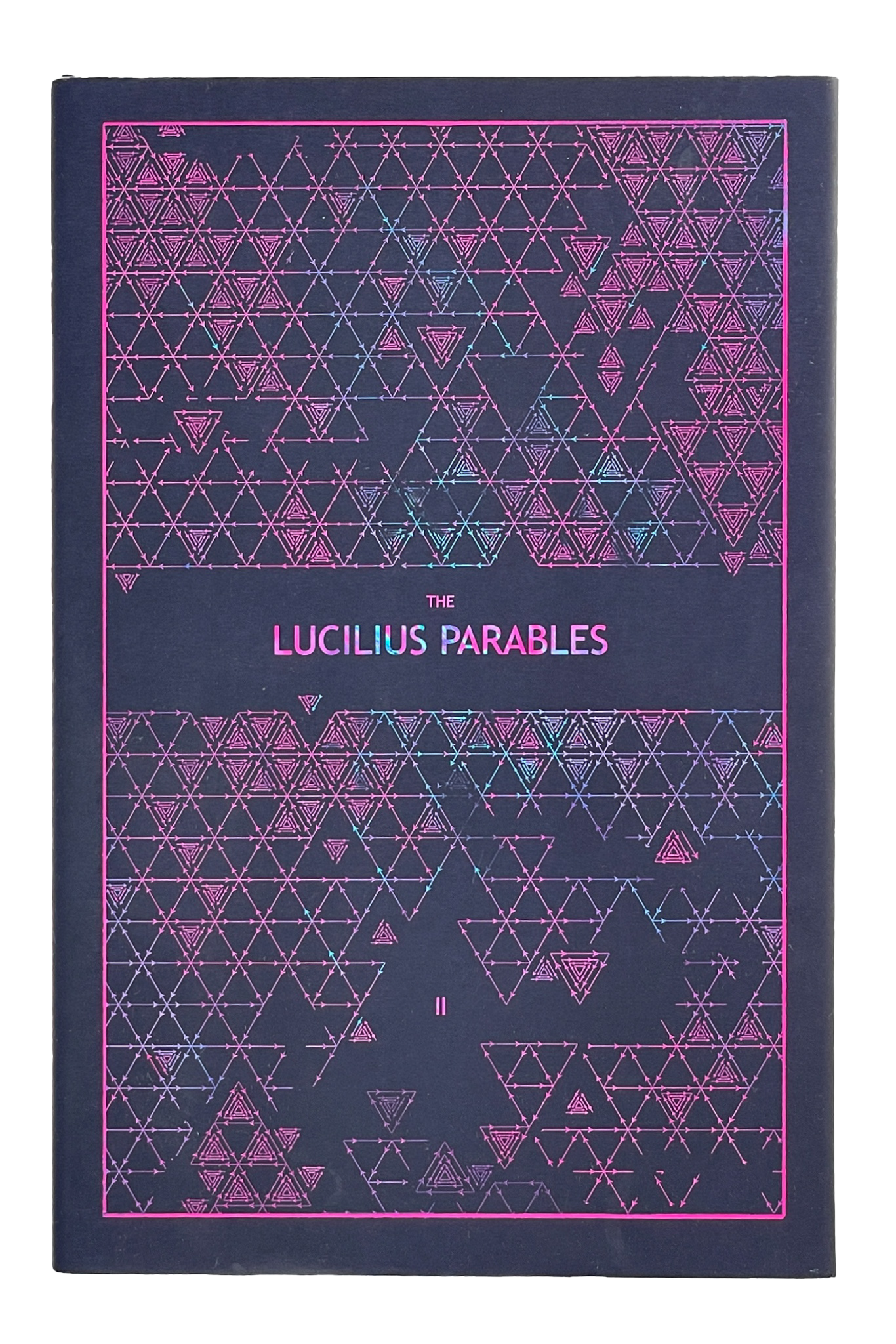

The SECOND illustrated book from Tinkered Thinking is now available!

SPIN CHESS
A Chess app from Tinkered Thinking featuring a variant of chess that bridges all skill levels!

REPAUSE
A meditation app is forthcoming. Stay Tuned.




DARK SIDE OF SOLITUDE
March 27th, 2020
Solitary confinement is our most severe form of incarceration. We lock people in a room all alone. This is apparently worse than being amongst the other people who are also in prison. And yet, some people, love solitude.
The French philosopher Pascal once wrote that “All of humanity’s problems stem from man’s inability to sit quietly in a room alone.” There’s certainly a good deal of obvious truth to this statement, but what about the other side of it? What’s going on with the people who covet and adore their solitude? Do these people have something figured out?
Perhaps, but if a person seeks solitude as voraciously as another eschews it, then there is likely something equally amiss.
Those who do everything in their power to keep from being alone are clearly avoiding that experience of being left alone with their thoughts. We must ask: is the person seeking solitude avoiding something similar?
If the entire world suddenly fell under the spell of Pascal’s wisdom and suddenly sought to spend more and more of their time alone with their own thoughts, it would have huge repercussions. As a species we are successful, indeed, we are the strangest, most innovative and interesting thing to pop up on this planet because of our ability to cooperate.
Cheetah’s can’t be said to get much done, as they only spend a couple days in company during the whole year. While we might celebrate the animal as a prime example of solitude, we certainly can’t count on such an animal to get much done in a group activity.
If the extrovert – for lack of a better word, is avoiding their own thoughts with gregariousness, then perhaps the introvert is –in part – avoiding the thoughts of others with solitude.
We are told not to care about the opinions of others, but when it comes to group settings and collaboration, being able to have a finely tuned idea of what other people are thinking is key. Our wise adage is at odds with the practice of our progress. The one who seeks solitude may in fact suffer from the exact inverse of the problem that Pascal points at. The introvert – in many instances – is likely to be so sensitive to the workings of someone else’s thoughts, or merely even an idea of it, that their usual manner of thought is completely snuffed out. This is dark side of solitude. While time alone is replete with benefits that should be explored, it can be a crutch, one used to avoid the balance missing from social situations.
Giving up control can be a relief or a terror depending on the person. The extrovert who gives up their attention to the group gives up control for some relief here. Whereas the introvert can suffer from such an admission.
Health, once again resides in a paradox. Just as we can’t live in the moment at the expense of the future, nor do the opposite by constantly planning for the future while missing the present, we must do both. The paradox for the lover of solitude is to develop both the ability to maintain solitude in the company of others while being open to relinquishing attention to the minds of others. This isn’t so much like balancing on a tightrope as it is trying to light an ice cube on fire. It is a paradox, and both sides of the equation cannot each take half of the spotlight. Health is a transmission of adaptation, full of gears that all must be kept well oiled so that when the moment arises, we can fall into the right one and be at peace with our circumstances.
SEED OF CURIOSITY
March 26th, 2020
Are you ever curious when you are stressed? The two don’t seem to sound good together. ‘Desperate to find a solution’ might be the closest thing we experience when stressed.
It doesn’t take much experience, thinking or research to realize that prolonged stress severely limits our more creative faculties. Robert Sapolsky has made a tour de force effort in his books “Why Zebras Don’t get Ulcers” and “Behave” to explain the underlying neuroscience of stress and how it inhibits creativity and decision making abilities.
We can, on the other hand think of curiosity as having prerequisites, somewhat like a seed. A seed requires certain conditions to activate. It needs some moisture, some heat, and after it cracks itself open, it needs some soil, nutrients, and oxygen, and eventually, sunlight. All told, a seed has quite a few prerequisites that need to be filled before it does it’s trick.
Curiosity is no different. With stress and worry in the picture, curiosity keeps to itself. With a busy schedule, curiosity stands by, letting you do your thing. Trauma, tragedy, drama, desperation… all of these keep that shy character out of the picture.
Curiosity is like that great teacher, who smiles on our fumbling, but does not instruct. Who waits patiently, perhaps even forever, without talking loudly, only occasionally pointing at something when we look its way. It does not lead, but ventures with us, when we make the time. It’s the teacher that smiles softly, and speaks even softer, speaking only in questions.
PLAYTIME
March 25th, 2020
How much playtime do you have during a normal day? It’s a serious question. And the answer isn’t the same as how much free time you have. We all have more free time than we realize, and the current situation of many people is probably showing just how poorly we use that free time.
Playtime is something altogether different. It’s free time with energy.
Whereas most free time is squandered with vegetative activities like Netflix and eating, playtime is a thoughtful, energetic, creative use of free time.
We can think of it for a moment in terms of money. Many many people don’t have much money to play around with. Certainly money is squandered, but this is different. To play with money in this instance does not mean what it can get you, but what it can do for you. The wealthy play with money in a way that those living paycheck to paycheck laugh at in self-deprecating ways. The wealthy try to figure out where they can plug their money, usually in order to see if it’ll result in more money. Those truly invoking the notion of play put their money into an idea to see if that idea can be brought to life. Those with less money don’t play in this way, they go to a restaurant, or take a trip, or buy that fancy do-dad that they’ve always wanted.
Now let’s return to time.
How is that free time being used? Is it squandered on petty pleasure?
Or is it being leveraged by curiosity? Is it being mined for possibility, is it being put to the test by experiment?
MEDITATION: WANDERING WAVE
March 24th, 2020
This episode is dedicated to an individual on Twitter who goes by the handle @Cojaill.
All of us are usually surfing. Sounds fun, but some of these waves are enormous, of a size that we often do not have the skill to surf. These monsters curl in on us and shake us from our balance, then crush us down into the turbulence. We are battered and bruised, and yet we go back for more, as though compelled by some kind of spiritual masochism.
Consider waves in this way: Can you have a wave without water?
What about water without the wave?
Of course, we can have calm seas.
So too with the mind. You can have a mind without thought – though it is rare, tricky and often requires much practice. But you cannot have a thought without the mind.
Observe now as this thought ripples through your consciousness. This concept is a kind of wave that is shaping your sense of what it means to exist right now. That is, if you’re paying attention. Otherwise, it’s something else. The smell of cooking from the kitchen. The pretty girl who just walked by. The ach and pain from the toe you just stubbed. The embarrassing episode from last week that still lingers, as though haunting you. Whatever it is that’s taking up the most real estate in your mind at the moment is shaping it.
We think of our minds generally like containers, and thoughts are some how doing their thing inside that container, that is, our head, our skull. But the reality is a bit inside out. Our mind is wherever our attention is, and if you pay close attention, it’s possible to see that there’s nothing confirming that it’s somehow inside your head. All you have to do is sit down in the theater and watch a fantastically engrossing movie. You feel transported. Who’s to say you aren’t?
What’s even more accurate is to forget about where the mind is, but rather be concerned with it’s shape.
That great movie is a wave that is moving through your mind, bending your mind, warping it, eliciting all sorts of aspects as it does.
Many of us are wandering waves in search of calm seas.
But realize, a wandering wave will never find a calm sea, always failing to understand that what it seeks is always present but corrupted by the seeking.
Meditation is first about gaining the ability to simply see the waves as they pass through your visceral experience of existing. To see the anger rise up like a huge wave and pass through you, hot as a bright iron, seeking to crush you, crumble you and bend you to say those awful things. But if you can see it, you can eventually gain the ability to just watch it pass.
With enough practice, your gaze eventually has a soothing effect on these waves. They becomes less prominent as you realize how unnecessary so many of them are. Eventually, when you give up that incessant habit to climb atop the waves and try to surf, no matter how fun or dangerous. Eventually, you find the calm sea, right where you are, just where it has always been.
RESPAWN
March 23rd, 2020
If you woke up in a different place, at a different time, could you wake up as a different person? A different time and place would certainly help. This is part of the reason why people sometimes let go of their life, and move to a different city, a different place in order to start over. It’s not so much that there’s a problem with the things around us, it’s that these things, these habits, these people, the interactions keep our own personality contained in a certain rut of behavior.
Waking up in the same place, at the same time, with suddenly nothing to do is a tricky situation. It’s one that many people find themselves in right now as normal schedules are obliterated. Where is the structure? Where is the routine? Without these things time seems to smear, slurring into day after day. The moment can seem achingly slow, meanwhile days seem to tick off faster than seconds.
In this circumstance it’s incredibly valuable to have personal habits, and it’s a perfect opportunity to try and create some new habits.
When it seems like there’s nothing to do, this is a sign that it’s time to experiment. To try out new ways of behaving, operating and thinking. Or to kindle that nearly lost idea to life.
You have humanity’s greatest research tool literally at your fingertips.
It’s time to explore, create, iterate, and stretch the sense you have of who you are.
In a game, when you fall off a cliff or lose a battle, you usually respawn not far from where you left off. In a way this happens everyday for everyone. We wake up, and this is a kind of restart, a respawn. We get another chance at life, another opportunity to explore and experiment. Finally we are forced against doing the same old thing that we’ve done day after day. Perhaps it’s time to take things in a new direction.