-compressed.jpg)

Daily, snackable writings to spur changes in thinking.
Building a blueprint for a better brain by tinkering with the code.
subscribe
rss Feeds
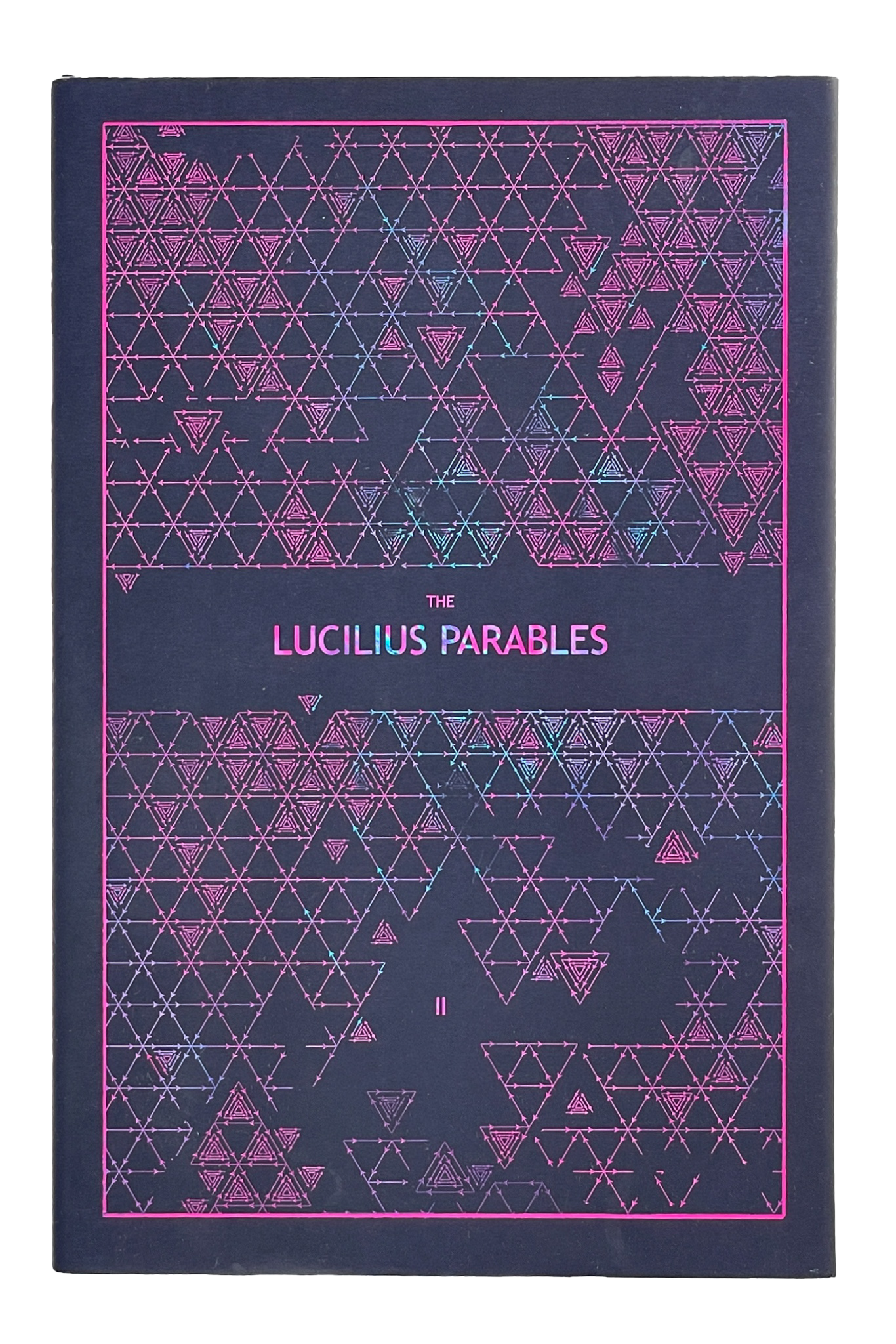
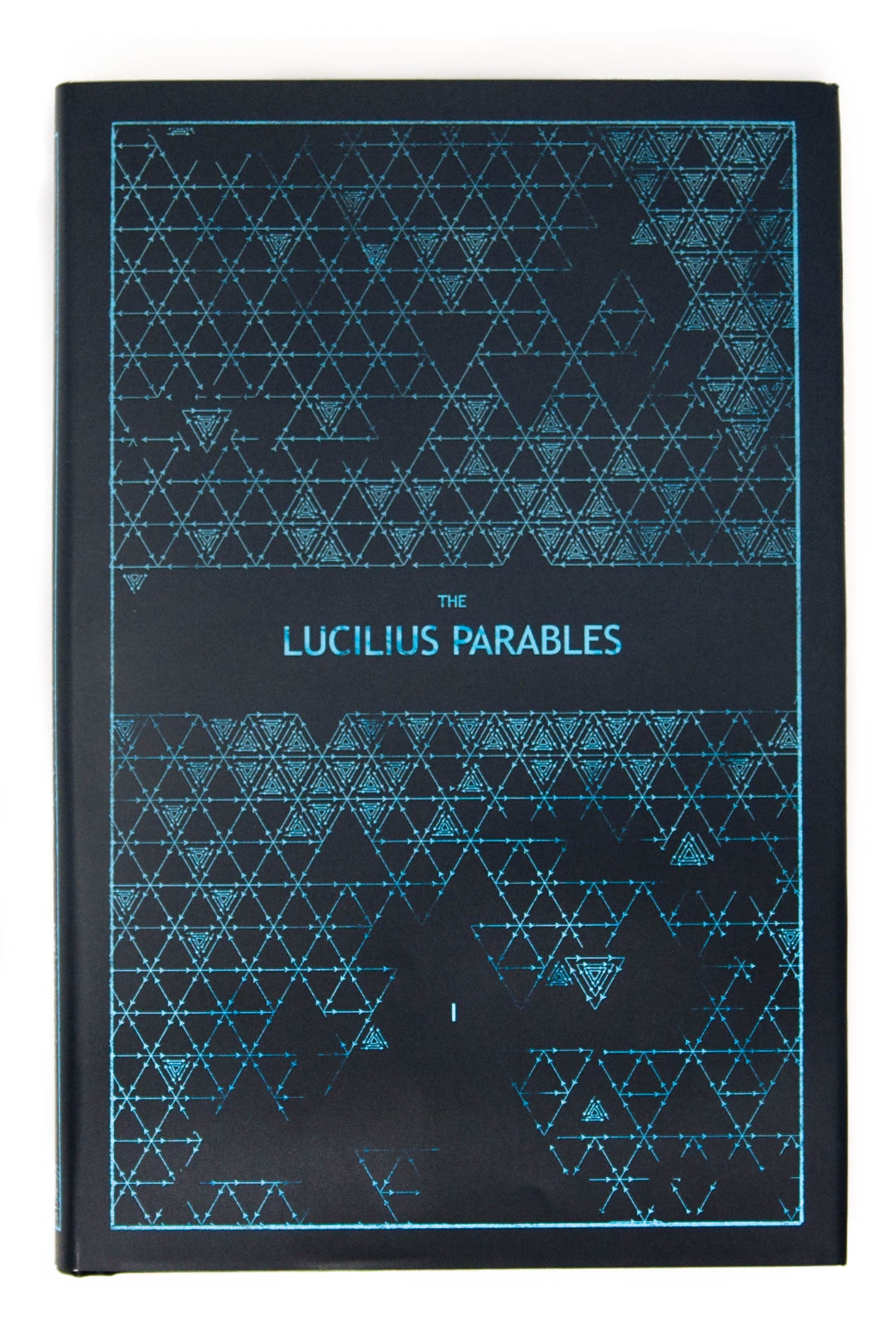
The SECOND illustrated book from Tinkered Thinking is now available!

SPIN CHESS
A Chess app from Tinkered Thinking featuring a variant of chess that bridges all skill levels!

REPAUSE
A meditation app is forthcoming. Stay Tuned.




CRITICAL DETAILS
April 11th, 2020
A skill rarely developed among people is the ability to receive and integrate criticism. Examine the way we normally phrase this, it’s all about how well you take criticism, as though it were a punch in the gut. During a time when so many people seem to have forgotten that only sticks and stones can break our bones and words need not ever hurt us, skillfully handling and using criticism is a superpower by default of its rarity. While most are too busy trying to figure out just how injured they should be based on the word choice of others, a person who looks only for beneficial interpretation is fortifying their own agency.
The difference between the two seems at first obvious, but in reality is a bit more subtle. The ‘snowflake’ as such sensitive people are referred to in an ironically affectionate way, derives their worth from the view the rest of the world takes of them. While the person who has developed a process for ingesting criticism has an internal source of worth.
Most personal hells would melt away for people if they could make this subtle switch from external validation to internal. Or rather external invalidation, as this is how much criticism is interpreted.
The subtle issue in this difference is that the individual who takes criticism well isn’t just deflecting it without emotion or ignoring it, but taking it in, just as our snowflake can’t help but hear every last critical word. The difference is what happens to that criticism in the mind of each. To ignore criticism is to miss an opportunity. It’s certainly not pleasant when people throw verbal rocks in your direction, but its important to take a moment to see if any of those rocks are diamonds. It would certainly be an important detail to overlook, indeed critical to what’s really going on.
It says a lot about a person who responds to criticism by seeking out more details of that criticism.
Such an individual has developed the skill of decoupling emotion from such situations. How does a person do this? By understanding deeply that there really is opportunity buried beneath that unpleasant emotion. And the spoils of that opportunity always outweigh the consequences of giving in to unhelpful emotions, if only for the fact that it’s an opportunity to handle those internal emotions and gain a little more agency with regulating and managing them.
But interest in the details of criticism goes a step further. It involves a question, from the person being criticized to the one with the difficult opinion or sobering observation. A question, if not sarcastically or belligerently phrased often comes across as a subtle compliment. It says “I’m not just interested in your point of view, but I value your point of view. So much in fact that understanding your point deeply is more important than my pesky emotions.”
A question is a supertool for softening a person by giving them the opportunity to open up. The act honors their perspective, and the effect of such flattery has a chance of making any further criticism more thoughtful and less abrasive.
Flashy, vitriolic criticism is often an attention stunt, and it can be diffused and converted into real value by the willing perspective of a person who seeks only to improve, even in the eyes of their enemies.
WRITING RUSSIAN ROULETTE
April 10th, 2020
Nassim Nicholas Taleb has written that the art of writing is the ability to repeat one’s self without anyone noticing.
Meanwhile teachers of writing caution against repetitive writing. No one wants to read the same sentence over and over.
So what is going on here? Should books be much shorter, with their main point distilled down to a sentence? Do books exist as a giant repetitive elaboration just to have something of “substance” to sell as a product?
Or is there a point to repeating your point?
Taleb’s prescription at first seems cheeky, like a paradoxical joke. However, it’s better interpreted as a riddle with a concrete solution. The point isn’t to fool the reader into reading the same thing over and over. The point of repetition is to account for the fact that all readers are different, and what resonates with one reader will go unnoticed by another, and that second reader might find the same idea in a different incarnation within the same pages.
The purpose of kneading the same point over and over is to present it in as many lights as possible from as many angles as possible. Great fiction writers will describe a scene using all the senses. Visual people will clue into the visual, described scents will light up in the brains of people with good noses, and the musical among us will hear the rhythms and melodies of the author’s imagination. At the end of the day, it’s all the same scene, but every scene evokes a different experience in each person.
The author with a point to make attempts to repackage their idea in as many ways as possible so that it has a chance to land with as many different kinds of people as possible.
Tinkered Thinking, for example, only has one core idea. This idea is encapsulated in a single sentence, and each of the hundreds of episodes is an attempt to approach that idea from a slightly different angle.
We might imagine an idea in the center of a circle. As a reader and a thinker, we can imagine stepping on to this circle and looking at the idea in the middle. We can then take a step to the side and see the same idea from a slightly different angle. We can keep taking steps until we’ve gone around the entire circle. But of course, a circle has infinite points. We can go around the circle again taking half steps and technically see the same idea in a new and nuanced way with each new step.
On top of this issue of nuance and iterative presentation is the fact that we humans don’t get the obvious point until it’s been made obvious. It perhaps does well to note that the word ‘obvious’ means ‘frequently encountered’. Burying the sole point of a book into one single sentence makes it likely that very few readers will actually catch it. Most are often too distracted by the desire to take another sip of that latte. But state it again, preferably in a new way, and you’re likely to catch the reader while they notice.
On top of this, perhaps a reader picks up on the point quickly, but is unimpressed. It’s not until later that this reader sees the same idea described within the parameters of a specific application that the true profundity of the idea finally hits home.
It’s not just a matter of different people, but a matter of different attitudes, emotions and perspectives that take place within a single person.
To catch someone at just the right moment, when that person is in just the right state of mind, to understand some subtle idea is indeed more rare than we’re perhaps prepared to admit. But spin the chamber again and pull the trigger, and after enough tries, the point will land home.
PLACATE OR PURSUE?
April 9th, 2020
Most people don’t give boredom a chance. There’s something a bit unnerving about boredom. It’s something to be quelled and filled in order to push it away. Watch this rerun, or play this mindless game, anything to keep the boredom out of the picture.
But endure boredom long enough and something new happens. Curiosity slowly starts to unravel itself from a deep sleep. But it takes time.
You can heat up water, in fact you can heat it above room temperature for a long long time, but until it hits 212 degrees Fahrenheit, it’s simply not going to boil.
Likewise, boredom will not rouse that latent superpower if we can’t sit with that boredom for long enough. That is, in the more subtle, productive forms.
Curiosity and boredom are easily muted by the new tv show, with it’s cliff hangers and it’s perpetual guess about the next moment.
Such distractions perhaps play into the structure of curiosity and boredom too well. There’s never a chance for such things to motivate us towards something new, to pursue as opposed to being placated.
Feed a cat and it’ll grow fat, but let it alone and it’ll root out all the mice in the neighborhood.
Curiosity is much the same way. If we keep it fed with a steady diet of mindless consumption, it loses all agility, all facility to propel us deeply into new subjects.
We either placate curiosity, or we let it grow hungry, until it chases us into new and interesting endeavors.
FINISH LINE
April 8th, 2020
Fewer experiences are better than finishing a project. Most celebration is taken in relief of some task, be it daily work or some other grind, but finishing a project that is self-designed and self-executed seems to carry with it it’s own reward. Finishing such a task is reward and relief all wrapped up into one. There seems little need to heap on extra celebratory activities, but of course, why pass up such a warranted opportunity?
These instances, however, are few and far between. In the meantime, we need to draw and quarter our projects into much smaller increments, the smaller, the better. Because on the flip side of feeling good about finishing a project is getting to the end of the day and feeling as though the whole day was wasted chasing something that never materialized. In any arena, it’s not too hard to get stuck chasing the endless bottoms of rabbit holes that lead to nowhere productive.
There’s a special meta-skill in learning that enables a person to realize when they’ve entered an unproductive rabbit hole, and to back out and try one’s hand at some other task that might work out.
The ideal of any day is to set a clear and achievable finish line that is realistic. Getting to the end of the day with a sense of success further fuels the energy we have for tomorrow, and this is what we need – momentum, more than anything. Momentum of action and execution is the greatest factor to determine whether we will come to the final finish line, regardless of how small the success of each day.
Projects are fractal in this way. Few things worth doing can be pulled off in a single day. Projects require many days of dedicated focus. Our goal then is to develop a skill of guessing what we might actually be able to get done in a day. Success can become like a falling line of dominos if this skill is well honed.
Any finish line is really the end of a series of finish lines. Sectioning that main goal off into graspable days of work is just as important as any skill that is required to actually carry out the project.
IDEA TRAP
April 7th, 2020
This episode is dedicated to $Stun
It’s a funny fact of the human mind that we can remember having a good idea but completely fail to remember what that good idea actually is.
If the priority our own mind applies to memories can be so out of whack, is it any wonder that our priorities are often out of order?
The individual who inspired this episode described a hack for this situation that has proved to be remarkably useful.
Whenever you have a good idea: text it to yourself.
Cell phones have become as ubiquitous and necessary as our own right hand. It’s almost certain that we have it with us.
One might argue that a good idea can just be logged into an app for notes, but texting yourself is superior for a couple of reasons.
A text comes complete with a notification, and we get a preview of the text without opening it. This allows us to keep the notification while simultaneously checking what we texted ourselves about. Keeping the notification can be important if your day hasn’t unwound to the point where you can properly process that idea.
It’s also quicker. There’s no need to create a new note, or scroll to the bottom of an existing note, or any of that. And chances are, our use of texting is well – oiled in comparison to a notes app. Our fingers, our hands, and our mind can most likely get the task done via a text which we are constantly doing all day, much faster as opposed to using a different app that is only seldom opened. Plus, notes don’t have notifications and it’s easy to forget about the good idea logged. Whereas a text with a pending alert somewhat ensures that it won’t be forgotten.
The best part of this is you don’t even need service for it to work. Any hanging unsent texts to yourself are… still logged, as unsent messages.
Give it a try and see if it allows you to trap more ideas.