-compressed.jpg)
Daily, snackable writings to spur changes in thinking.
Building a blueprint for a better brain by tinkering with the code.
subscribe
rss Feeds
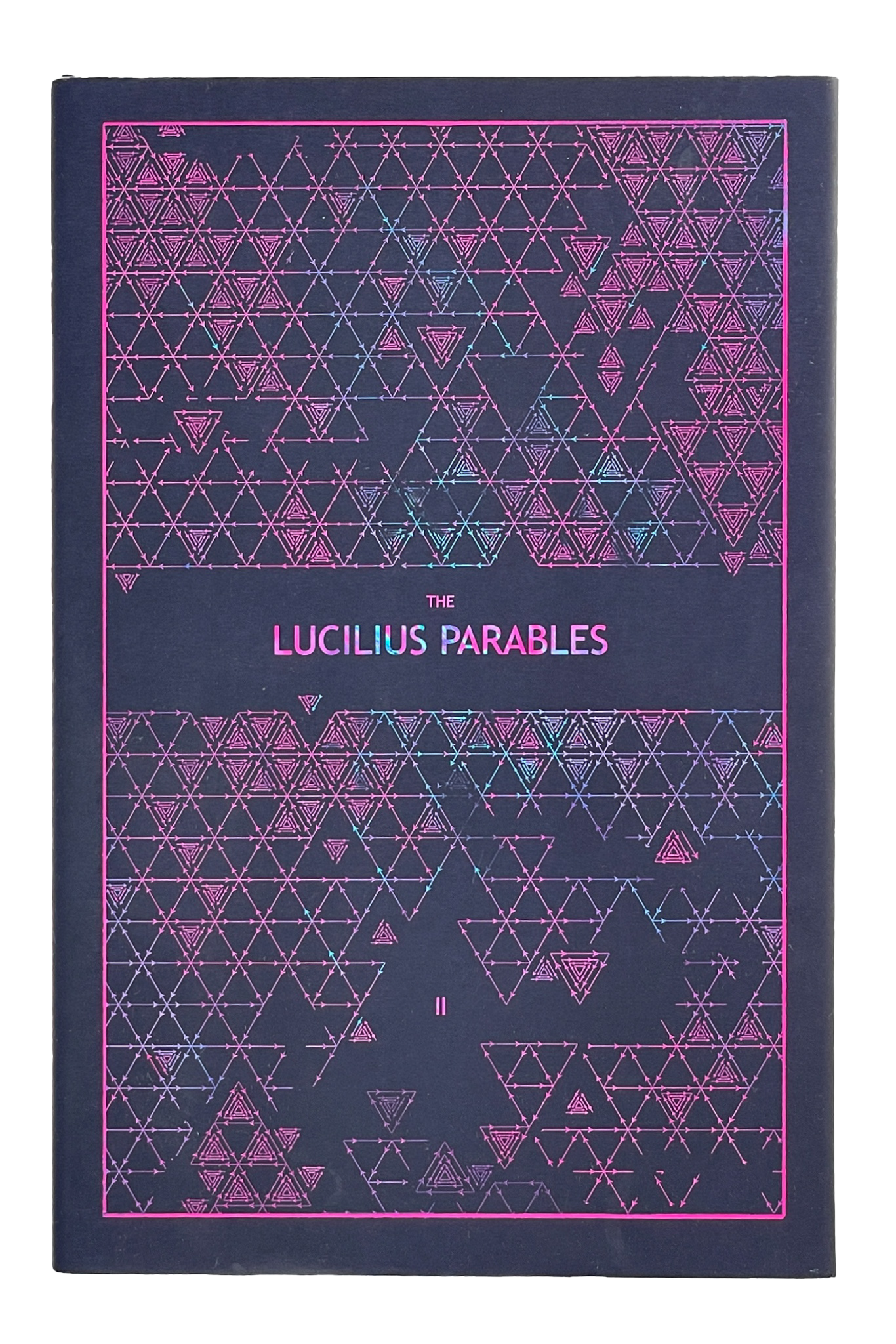
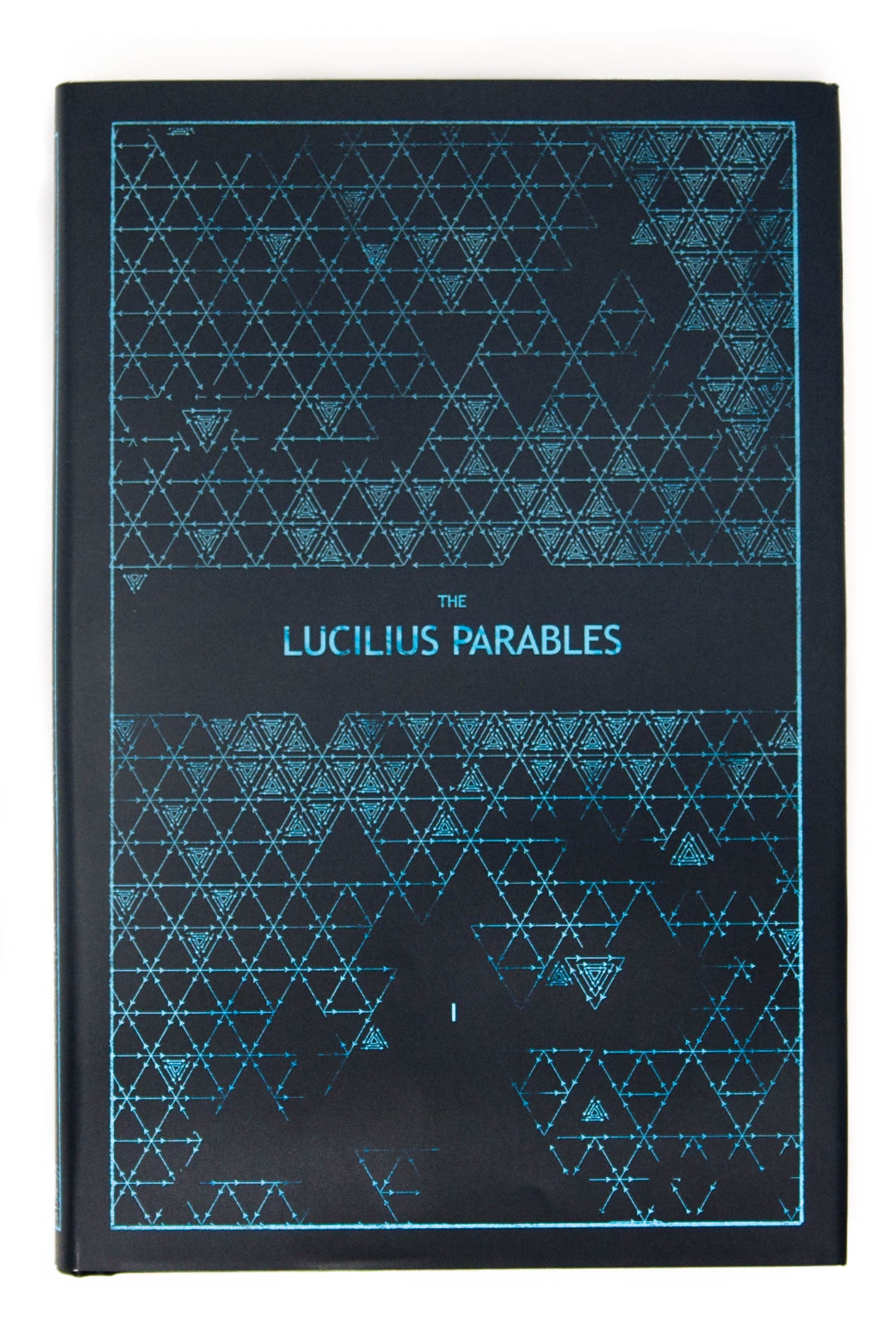
The SECOND illustrated book from Tinkered Thinking is now available!

SPIN CHESS
A Chess app from Tinkered Thinking featuring a variant of chess that bridges all skill levels!
REPAUSE
A meditation app is forthcoming. Stay Tuned.




LOOPHOLE
May 26th, 2020
Is a loophole good or bad? It seems to inherit a bit from both worlds. It’s good for the individual who can use it and it seems to imply something unfair about the system in which it’s found. Or is it just evidence of an imperfect system? Which raises the question:
Is it bad to make use of a loophole that you find?
It’s no secret that the bloated complexity of law is erected for the purpose of being taken advantage of by those who know the variegated holes in all it’s looping complication. It’s from privileged positions such as these that loopholes garner a reputation of unfairness.
But then again, is it really a loophole if you consciously embedded it?
How might we better think of this loophole phenomenon?
Tearing the word apart and thinking about it a bit literally makes the concept a bit more personal. Everyday we are waking up and going about our routines. Some of these are powerful and treasured, whether that be something as simple as the first cup of coffee or something with deep impact like a hard-won meditation practice. Many of our habits and habitual obligations, however, do not benefit us, and if anything form constant sources of frustration and stress.
The commute to work – it’s quite literally a loop, to and from work, undertaken hundreds of times a year, and fraught with the perfect combination of factors to perfectly stress out a human being. Traffic jams, road rage, construction detours, strings of red lights and cops on the prowl for filling monthly quotas.
For those who have been able to retain their job during this unprecedented year, many such people have had a hole poked in this obnoxious loop of the daily commute. Turns out, it’s possible for many people to work from home. While it’s not a benefit for everyone, a large cross section of this population is enjoying the new loophole. Rarely are such loopholes discovered en masse.
Many of the loops upon which we function are embedded on the deepest level possible: on a neurological level.
We all have bad habits that we’d love to shed, and each time we go around that loop, the behavior seems to get entrenched deeper and deeper. It can seem as though we are locked in the system of our own behavior. We listen to loud and hard protestations about willpower and just doing it, and much of this talk just makes a person feel even more powerless in the face of the inertia they feel from their own past.
Will power, and for that matter free will, need not even be a part of the conversation. The desire to somehow be better is ever present, for nearly all of us, and this makes the idea of a ‘decision’ to somehow magically be better a bit of a trap.
And just like the random individual who realizes that it’s much much easier to replace a bad habit with a different habit as opposed to just going cold turkey, we can pay closer attention to our behavior, and watch as we go round and round in the same old ways and search for the hole in the loop through which we can escape to a better life.
DANCING PERFECTION
May 25th, 2020
A perfect ideal can amputate our progress in two ways: it can permanently bridle our attempts to even get started as we try to plan a way to achieve the perfect, and it can also keep our efforts iterating in perpetuity as we seek that impossible instance when we finally produce that perfection.
Having a vision for the end product of a project is often what gets us motivated to start and keeps the wheels turning during the whole slog of a process. A vision, and even an ideal is a good thing, working the way North does in relation to a compass. Ideals and a vision create a larger, simpler structure which helps us navigate smaller decisions with greater ease. Should it be orange or purple? How does this serve the greater mission?
Is this question even relevant to the larger mission?
That question is key to finding a balance between perfection and progress. Spending gobs of time trying to decide between two close shades of blue is a waste of time. It’s a way of procrastinating and it sacrifices progress. The final product will almost never be what we initially imagine, and so the question becomes:
On what points do we hold our ground, and what do we let slide?
We can rephrase the question and sharpen it up in order to provoke answers:
How much can change without losing sight of the vision we have in mind?
As reality boils an idea with progress, the answer to this question turns out to be a lot. Sometimes these changes are call tradeoffs or compromises. And for such people who think of such developments only in these terms, it’s unfortunate.
Another way to approach this pesky and often disappointing notion of tradeoffs is to think of the vision, the final product as something that the future has in store for you. Progress is what reveals how it exists in reality. If, just for this situation, we think of life as a movie, with the ending predetermined, already scripted, acted and shot, then as the real project morphs and shapes itself in the direction of our vision, reality reveals this part of our story. We can begin to see the process more like a dance as opposed to some arduous birth. The point of life isn’t some final product. Just as the point of a dance is the entire process, and not some final outcome, for which, with dance, there isn’t any tangible outcome. The process is the outcome.
We can take the same view of any endeavor. As fate seems to slam down upon our efforts, and our determination rises, the necessity of perfection can shed from the progress. The question can become:
Ok, what shape does this vision have to take in order to exist at all?
This, in a single question, is evolution. All species are doing this, all the time. Changing as needed and as possible in order to continue existing.
The evolution of a project is best served by following similar strategies. Species change in response to their circumstance, and sometimes the circumstance changes because of how species change. The volley is a constant dance, and so to must be our efforts.
Notice that the questions throughout this episode are all effectively the same question. But each one evokes a slightly different perspective. Each question is a step in the dance of these words with your brain, with an attempt to paint an overall point in your mind. The degree of success such a process has had is certainly variable depending on an enumerable slew of factors. But at the very least, the episode found a way to exist. For better or worse, it’s been interesting to see how the ideas unfolded, even if the final product isn’t perfect.
A LUCILIUS PARABLE: TENDING THE BLOOM
May 24th, 2020
This parable is now published in the second volume of Lucilius Parables. Click on the book below to visit the store to consider purchasing.
Lucilius kept a garden that extended into a cool stand of woods. There was no line between the area he tended and the woods that tended themselves. It was a dance of attention that he paid and had been for many years. Beyond the bright light of the main garden, he felt he could find deeper sanctuary where the world tended itself. He was sitting on a huge old root, the spot bare and smooth from years of sitting, surrounded by felt moss. He opened his eyes from meditation and found that a wild orchid had finally fully bloomed. The color was like a hole in the canopy, a pop of brightness heldfast in time.
Lucilius smiled, having watched the green stem rise over the years, the ghostly roots tapping their way out around the rock that pinched in, to it’s hold in the earth.
The sound of taps on the lazy stone path drifted and pulled Lucilius’ gaze toward the way back to the garden. A young man approached with cowed face, his brow bent round some pain, warning of some question that haunted the man.
The young man bowed before Lucilius.
Lucilius chuckled. “No need to bow, my friend.”
The young man stuttered to speak. “I’m told that you have answers.”
“Eh,” Lucilius said, amused by the statement. “Well, it’s not like I keep anything hidden away, so I’m not sure what I have in that respect.”
The young man looked confused, nearly afraid, and Lucilius’ compassion for the young man helped him take a different approach.
“What can I do for you?”
“I want to know how…” the young man stopped, as though suddenly searching for words that he’d had planned for so long. “well, I don’t – I don’t like myself. I hate who, I am. I can’t stand the person I am.”
He fell silent for a moment, the twist of it now out.
Sheepishly, he raised his eyes to meet Lucilius. “And, I want to know how to become someone who does not hate themselves.”
Lucilius tilted his head a bit, looking the young man up and down. He noticed how worn and dirty the man’s sandals were.
“Where are you from?”
“I have travelled from very far, to ask you this question. Very far,” the young man said, nodding his head.
“You left your people, your family, to travel all this way to ask me?”
The young man nodded.
“Why would you do such a thing?”
The young man looked confused.
“If your mother needed a medicine from very far away, would you make the journey to fetch it?”
The young man nodded, “yes, of course.”
“And why would you do that? Why would you go through so much trouble for your mother?”
“Because she is my mother! And I love her deeply.”
“But my boy, don’t you see you’ve just done that?”
The young man was confused. “but I’m not here for medicine to bring my mother.”
“You’re right. You’re not here for your mother. You came to find medicine for yourself. If you hated yourself, why did you go through all this trouble, come all this way to try and do something so kind, for yourself?”
Lucilius began to shake his head softly as the young man’s eyes were wide with the notion. The young man looked around, slowly, as though seeing the world anew. He looked back at the short stone path he’d taken into the wood.
“It’s hard for me to see any hate in someone who has already shown such extraordinary kindness.”
MEMORY FASTING
May 23rd, 2020
While reading or listening to these words, how is it that we are able to make sense of each and every one? Memory. We have some sort of prior experience with each word. It may be that we’ve never come across this particular combination of words, but our memory of each one individually allows us to connect them in fluid ways.
In a very real sense, this sentence is reorganizing your current thoughts by means of plugging into your memory of each word and threading those memories together in a new way in order for you to have a novel experience in the present.
But this extends far beyond words.
We can identify a chair that we’ve never seen as a chair because we are referencing our memory of chairs. But beyond this, we are doing it with all categories at all times. In some sense, our experience of the present is a constant reorganization of past memories. We are constantly identifying the objects of the present in terms of previously formed categories.
It seems as though we are ineluctably tied to the past as a means of making sense of the present. Our utter dependency on memory to make sense of anything makes it natural and perhaps obvious that the past can be so difficult to let go of. Not only does it feel as though the past defines who we are, the past is how we define everything else. A subtle catch-22 seems to arise: how do you escape from the only life-raft you have?
How does one become present in the moment without making sense of it with aide from the past?
As with anything, with practice.
We can take a page from the way the body operates, and apply it to the mind to great effect. There is a long standing scientific consensus that fasting, that is, not eating, is very healthy for the body. In recent years a large amount of literature has emerged on the subject and seems to indicate that many of the body’s most incredible superpowers are unlocked by the absence of food. One example is autophagy. Given no food, the body starts trolling itself to find poorly made proteins and cells that aren’t doing their job. It then rips those defunct actors down to their most basic building blocks and then it rebuilds needed parts with a lot more care and attention. This is just one of the operations that turns on while fasting.
Now let’s take this and apply it as a loose analogy to the mind.
While meditating, at least in the vipassana tradition, one of the main exercises is to simply dwell in the present moment by focusing on what’s actually going on, the breath entering and exiting the body, the sounds that drift in, the feeling of temperature, and the body’s own weight. Inevitably this attention is disrupted by some memory of a thing you need to do. Or a fantasy and dream about the future butts in. Minutes pass until we snap back to the present and realize we’re far off track of the exercise.
But what happens in the total absence of this exercise and without any innate talent or drive to reside peacefully in the present? Our minds are a sea of memory and hope, swirling with anxieties and desire.
How useful are all these desires and worries?
A few of them are certainly worth some attention. But all of them? Many of the thoughts, memories and desires that plague our experience are like those broken cells and poorly made proteins, roaming the body, spewing toxins and causing trouble and bringing the whole operation down a little. Many of our thoughts, memories, desires, worries are just as useless, and worse, they bring the whole mind down a little.
Meditation is an attempt to have a memory fast. That is, to let go of the past, and the future alike, and to dwell squarely in the present. And without that perpetual aid and information of the past, the present moment can take on a surreal aspect, as though everything is again for the first time, and blazingly new.
Otherwise, we are essentially force-fed with memories of our ability or inability to make the best of the present.
Meditation is a past fast.
NETWORK OF CATEGORIES
May 22nd, 2020
This episode is dedicated to “Till’s Journal” which presumably is someone named Till who operates the Twitter handle @tillsjournal
What’s the difference between a trade school and a degree at a university? We might say that one is more practical, or one is more of a “blue collar” training. But if we dig down into the divide, where does the difference really land?
Trade schools generally instruct a person on the ins and outs of some sort of physical system. Like electrical wiring, or refrigeration repair, things that often require your hands, and usually some sort of physical manipulation.
A university on the other hand is more concerned with abstract concept. Whether that be physics or what was going through Joyce’s head when he wrote Ulysses.
One way to define this difference between university and trade school is that one deals in physical systems and the other deals in conceptual systems.
The operation of nearly all university and most degrees can be simplified into a single task: nearly all degrees are just huge vocabulary lessons.
Each field has its own particular jargon. The medical field is great for this. As we explore the body and it’s workings with more detail, new names crop up to describe hitherto unknown regions. As our resolution increasing in brain imaging, sub regions of sub regions of sub regions emerge with hypothesized functions. A similar ballooning of jargon can be found in a field as seemingly different as literature. New terms are constantly being invented, for better or worse to try and describe new ways of looking at things.
As we discover nuance between and across categories, we end up creating more categories to demarcate these spaces, giving birth to new words. This process might not have an end as our attention focuses in on smaller and smaller slivers of nuance between categories that we’ve already created. More importantly though, we can look backward and see how human thought has grown from a simpler form of conceiving of the world.
Take for instance how we teach language to children. We start with the biggest, starkest and most obvious categories.
Dark, light.
Up, down.
Left, right.
Good, bad.
Yes, no.
As should be obvious, a lot of these categories come in a pair and form a dichotomy. It’s only later on that we begin to explore the space between these categories. The dichotomy of yes/no ends up being ineffective, so we invent a hazily nuanced set of categories that exit between yes and no.
Maybe
Probably
Sort of
Suddenly a network with just two diametrically opposed nodes grows in complexity and has a string of nodes connecting the ends, creating a spectrum.
Language grows to consume the space within the spectrum it defines.
Especially with a voracious, cannibalistic language like English which ingested huge portions of a variety of languages and continues to innovate with it’s own schema.
The trade off, of course is complexity. While language gains the ability to describe every little crevice of experience and knowledge, it also balloons past what individual humans are capable of remembering. There’s a fairly good chance that Shakespeare actually knew most if not all of the words in the English language. But that task is effectively impossible today since English is actually quite a bit bigger than it used to be. There are now entire volumes of medical text books stuffed with words that did not exist a century ago. And this is multiplied across a number of fields of study that have likewise expanded.
Notice also the degree of definition within a single category. Take for example the word Laryngectomy. It simply means ‘removal of the larynx’. But a full definition of the word would be a step by step understanding of the entire process, which would inevitably require knowing a huge amount of technical knowledge that surrounds the process and governs the underlying principles that lead to a successful procedure. The word laryngectomy is part of a huge network that requires a medical degree to properly explore.
What’s all this categorization and sub categorization for? Why does the term high heels not suffice? Why do we also talk of Mary Janes and Louboutin’s?
The entire vast project of language, of categorization is simply an attempt to figure out and track what is going on.
It’s worth pointing out that the word ‘existence’ might have the largest definition of all. While we can define it simply, as we did with laryngectomy, to define ‘existence’ in a truly exhaustive way would require a definition of all the categories that exist, which in effect would be…
everything.