-compressed.jpg)
Daily, snackable writings to spur changes in thinking.
Building a blueprint for a better brain by tinkering with the code.
subscribe
rss Feeds
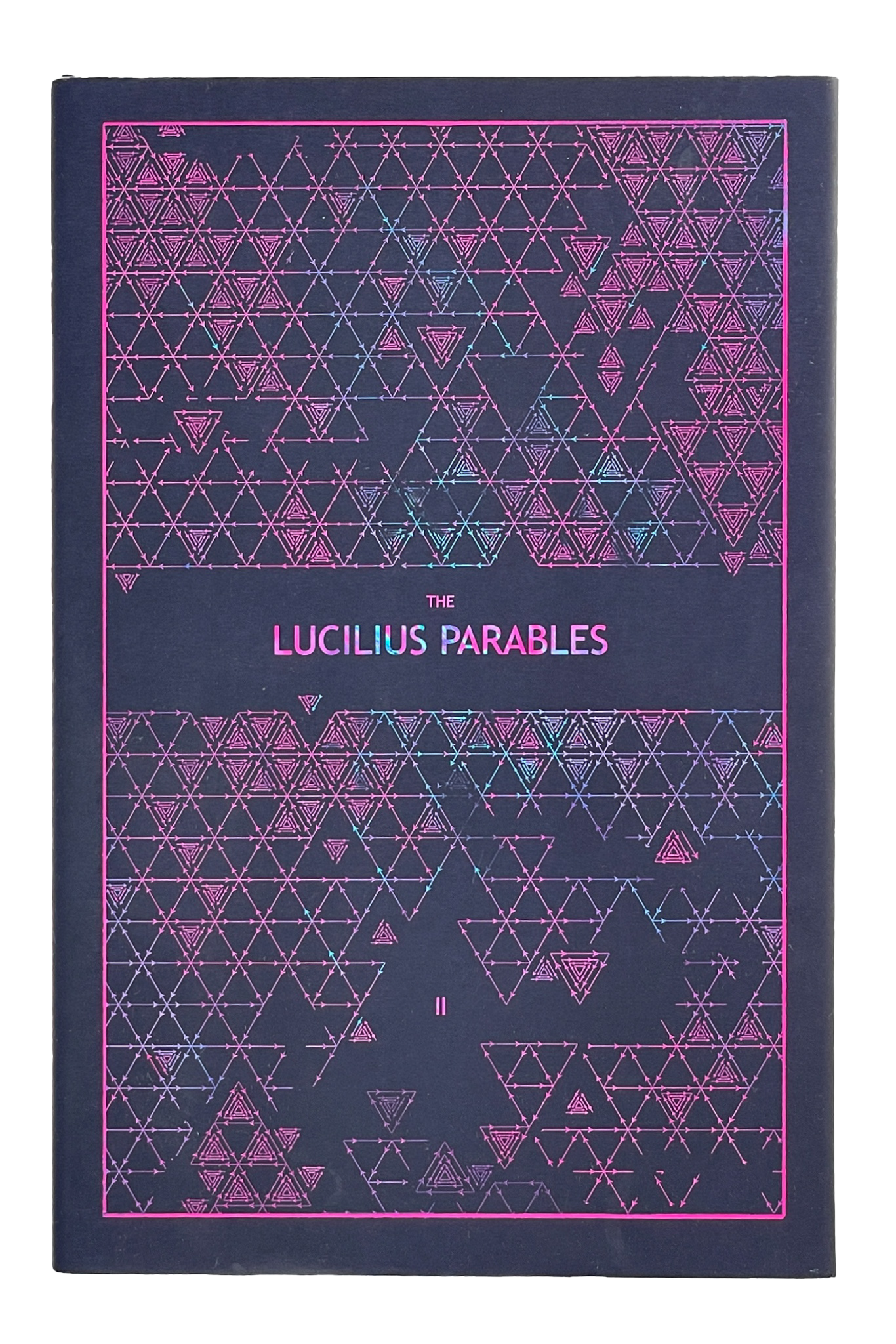

The SECOND illustrated book from Tinkered Thinking is now available!

SPIN CHESS
A Chess app from Tinkered Thinking featuring a variant of chess that bridges all skill levels!

REPAUSE
A meditation app is forthcoming. Stay Tuned.




EACH IN TURN
June 30th, 2020
It’s one thing to know the definition of a word, it’s quite another to understand the full breadth of the concept we use. And beyond this, we each individually use these words and concepts in nuanced ways that differ from others. The troubling trend around this is how seldom people examine the concepts and the language they use, and as a result they become victims to drift in meaning as the words they use become unanchored from their history and function.
Each word in a sentence is appropriated, not because of a deep investigation of it’s meaning and use, but often just because the word approximates a detail of an emotional push that has provoked the uttering of the sentence. We’re all aware of those who can rattle off a great number of words without ever saying anything, and the quacking of these sorts of ducks is the best example to hint at the emotional root of talking and communicating. What such people are doing has little if anything to do with meaning and information, and everything to do with the satisfaction of a particular emotional impulse. An orator, if dressed correctly and in the right setting and equipped with the right force of voice can sway are great many people to their side of the story, even if that story has practically no substance to it. We are creatures that communicate primarily through emotion.
Introspection, as we seem to understand it and think of the word is some sort of practice of looking within our own being to see and know what is there. But what exactly is the experience of our inner being? We feel a spectrum of emotion glittering throughout the body. There are of course other physical sensations that don’t really accord to an emotion, and then there is the hazy realm of thought which occasionally gels into expressible forms: that is, words.
Introspection, as a practical effort may boil down to simply investigating the way you use words and what you think they mean. Words, in this regard, are the substrate upon which the unique orientation of our person resides. To think of it another way, we only need ask:
How would you understand who you are without language?
It otherwise stands to reason that understanding how we work is really a matter of understanding the concepts we use, the way we use them, and how they do or don’t work together in ways that create meaningful results.
In some sense, Tinkered Thinking is just a daily meditation on the effort to investigate, explore and test the function of the words and concepts that make up the practical mechanics of a mind. If one thing is clear, it’s how fruitfully surprising this practice has been. Many of the words we use, the concepts upon which we rely, have details and nuances of meaning and function rooted in their history and etymology that result in a clarifying lens through which to see their warped use in the present.
A simple and current example is the word truth. The phrases “my truth” and “your truth” completely undermine the definition of the word ‘truth’. This is not a concept that is separated by perspective and individuality. It’s the exact opposite:
Truth is what can be verified across perspectives. It is the understanding of reality that can be shared and relied upon without previous testing.
To bifurcate it’s meaning into mine and yours, and then to further ramify the meaning into many puts at risk the ability for language to carry a common thread between perspectives. What’s been done seems to be that words like ‘opinion’ and ‘perspective’ failed to have enough emotional force in recent public discourse, so the foundational sounding ‘truth’ has been appropriated so as to give more intestinal fortitude to statements regarding opinion and perspective.
Of course, there’s no mechanism in language to protect against this. It’s fundamental feature of language that words can lose their meanings and gain new ones.
But there is a human mechanism to protect against the morass of unintelligibility that such drift in the case of the word truth may cause. That mechanism is simple, albeit perhaps rare, it’s introspection. It is the practice of looking at words and concepts -each in turn- plainly for what they have meant, and more importantly, to incisively capture the function of that word which is at the heart of it’s original need to be created.
EMBELLISHMENT
June 29th, 2020
The word embellishment has roots in the French word for ‘handsome’. We’re more familiar with translation of ‘beautiful’. That root, of course is, belle. So what does handsome or beauty have to do with embellishment? And more importantly: why do we embellish?
It’s not too much of a stretch to see how embellish relates to it’s roots. We embellish in order to make a story more attractive, more ornate, more impressive.
So why do we relay the story as fending off 5 guys behind the bar when it was only 2? Or 1?
Why do we add a few hundred feet when we describe the hike we took, the mountain we scaled?
Whenever we tell a story, there is a part of our mind that is modelling the mind of the listener. As we tell our story we try to imagine how the story is about to land in the mind of our audience. This powerful capacity is responsible for a great deal of our success as a civilization. It enables us to have empathy. It is the core of how trust functions in a world without absolute verification. It’s how we have been able to cooperate in order to build civilization.
But this capacity can also lead us astray, as with the tendency to embellish. As we hear ourselves tell the tale of our story, we listen as though from the perspective of another and we sense a disconnect: the story doesn’t match our sense of what it felt like to live the story. Our mind thinks: wait, this isn’t right, what happened was far more difficult or amazing than it sounds when we just tell it like it is, and that’s not fair – the whole point of telling the story is so that someone really understands what it was like to actually be there. And so we embellish, to make up for this disconnect.
Call it the limits of empathy, or call it a limited ability of storytelling, the disconnect between what it felt like to go through the ordeal and the raw facts of the story certainly feels like it’s remedied by a little embellishment.
At the end of the day, this is somewhat understandable, but only because it’s lazy communication. With embellishment, it’s not the disconnect between our experience of the story and the record of the raw facts that we’re attempting to fix. The disconnect is between the experience of our story and our inability to communicate effectively. We make up – not for the impact of the story on our listener – but for our inability to make an impact on the listener.
The true remedy is to pause, to gather one’s wits and reflect deeply on what it felt like to live that bit of life, and convey, not just the details of the story, but also what it felt like from a personal perspective to encounter and deal with those details.
Otherwise, to make up for that inability with a little embellishment, and then a little more, just means that you’re lying.
A LUCILIUS PARABLE: CANCELLED
June 28th, 2020
“You’ve been arrested for an improper thought that you had at 12:17.”
Lucilius blinked, looking at the masked official, and then looked around for a clock. He didn’t even realize it was already past noon. There was no clock around, and it didn’t matter anyhow. He squinted, his brow knit in confusion and effort to remember, as though something horrible were there in memory. But it was already absurd. How could he have any idea which thought it was if he didn’t even really know what time it was. Lucilius looked back up at the masked official.
“What was it?”
“Due to it’s improper nature, it is illegal to utter the thought.”
“But I don’t remember having an improper thought.”
“Memory of an improper thought has no influence on it’s propriety.”
“So you are arresting me for having a thought that I can’t even remember having?”
“You are being arrested for an improper thought.”
“This is dumb, you can’t even tell me what it was or why it was improper?”
“Careful, your speech is bordering on the realm of impropriety.”
“Well what’s it matter now if I’m already arrested for a bad thought?”
“That is an improper and illegal question.”
“So does that mean I’m like… double arrested?”
“The full force of the law will be brought upon you when it is made aware of your crimes.”
“It? Like, the law? When the law is made aware of my crimes.”
“Yes, the law.”
“Well the law just a set of rules, it has no consciousness. And the law is expressed through individuals like you, officers and officials who are tasked with carrying out the law.”
“Yes, this is correct.”
“So isn’t the law already aware of my crimes because you’re aware of them?”
“Judge and jury shall decide your fate.”
“Praise be the system, at last.”
The official began to motion Lucilius toward the vehicle that would whisk Lucilius away for his arraignment. But after a step, Lucilius grew rigid, turning to the official.
“May I ask you a question?”
Seeing that Lucilius was otherwise compliant, and that he presented no real risk, the official decided to entertain it.
“Yes, but anything you say may be held against you in the court of law.”
“Sure, sure, I’m all for it,” Lucilius said. “I’m just wondering, how would I have avoided the improper thought?”
The mask worn by the official remained blank. Lucilius leaned in slightly and squinted as if he might be able to see through the mask. After a moment the mask jolted back, as though finally noticing how close Lucilius was. Lucilius also moved back, startled.
“What were you thinking?” Lucilius asked.
“It’s time to go,” the official said.
“You weren’t.. having an improper thought were you?” Lucilius teased.
“Your question borders on treason.”
“Well, I prefer to keep interesting neighbors. But before we move on, I have on more question, simple, harmless, I promise. I’m really just interested in being a good citizen, and who better to show me the way than the law as embodied by you good sir?”
The flattery seemed to work as the official hesitated.
“What blasphemous question do you have now?”
“Well, I’m just wondering how you avoid having improper thoughts. You for example, are clearly an upstanding citizen as you’re so well acquainted with the law that you essentially are the law. Anyway, my question is, how do you predict your next thought in order to know whether it’s improper or not?”
There was only silence from the masked official.
“Can you predict your next thought?” Lucilius prodded a little more. “Wouldn’t that be necessary in order to avoid an improper thought? The only thing that enables a person to get out of the way of a speeding car is to see it coming and move out of the way before it actually gets to you. But with thoughts, do you ever really see them coming? Don’t they just happen, like unannounced guests barging into your house?”
The masked helmet of the official tilted off slightly, as though the mind encased beneath were considering something.
“To predict a thought is to actually have the thought. So how do you get out of the way of an improper one?”
Lucilius watched the silent mask.
“You… didn’t just have an improper thought, did you?”
“No! Absolutely not.”
Lucilius raised his open hands. “Sorry, sorry, I was just wondering. . . . But, how do you know you’re not about to have one?”
THE RIGHT FEELING
June 27th, 2020
Can you distinguish between what feels good and what is right?
Before even trying to answer this question, it’s a worthy exercise to examine the language itself. To understand why, we need only rearrange the wording slightly to see how subtle and potentially problematic the language can be.
Can you distinguish between what feels right and what is good?
as compared with the original question:
Can you distinguish between what feels good and what is right?
The two may seem functionally identical at first sight, but the juxtaposition aides in the exploration of the words in a way that leads to a more fruitful consideration as to what an answer may be. It’s not much of a stretch of the imagination, nor do we require much experience to realize that what feels good isn’t always right, not to mention the rebelliously adolescent notion that things feel even better if they are bad or prohibited in some way. The allure of the unavailable is a braid of desire spun from both curiosity and pleasure. Given this inconvenience of human nature, how can we ever trust an ability to know what’s right when it can slide so far away from what feels good?
Another way to breach the question is to wonder if our experience of something feeling right and feeling good are the same. While we can parse between them, it’s more important to note that we use the two phrases interchangeably. After a meeting everyone can stand up and agree that all feel good about their plans and that they all believe that it’s the right path forward. This conflation is important because it highlights the main trouble: things that don’t seem right might actually be good, and other times that which feels good might not be right. But more importantly, this switch of assessment can apply to the exact same situation, and this happens when we come across a counter-intuitive realization.
What exactly does it mean for something to be counter-intuitive? Intuition refers mainly to emotion, and the way we feel. Something is counter-intuitive when our initial feelings on the subject turn out to be incorrect. We experience a disconnect between reality and the way our feelings attempt to guide our thoughts in order to make sense of that reality. It happens every time we understand something and declare simultaneously, that’s weird. That weirdness is how we experience the change in our mental model as it updates to accurately reflect the world given the new information or realization.
But what happens after we have that weird realization? What happens once time has past and we are comfortable with the information, idea, or the realization? Does it still feel weird? Or do we gain an ability to intuit the counter-intuitive? This switch in our feelings is, potentially, at the core of the conflation between what feels good and what feels right. Just as we can come to realize that what feels good can turn out to be bad or incorrect, we can also come to see that what doesn’t feel immediately good is actually right. Eventually, once the notion of what is ‘right’ has settled in, it’s possible to associate a new feeling, a good feeling, with what we know is right.
This promiscuity of feeling among ideas, concepts, and practices is both our downfall as a people trying to get along, and the core of our creativity. What it means is that two people can grow to have completely opposing feelings about some mundane neutral fact. It also means that we have the ability to entertain novel combinations of ideas, and this is a parent of innovation.
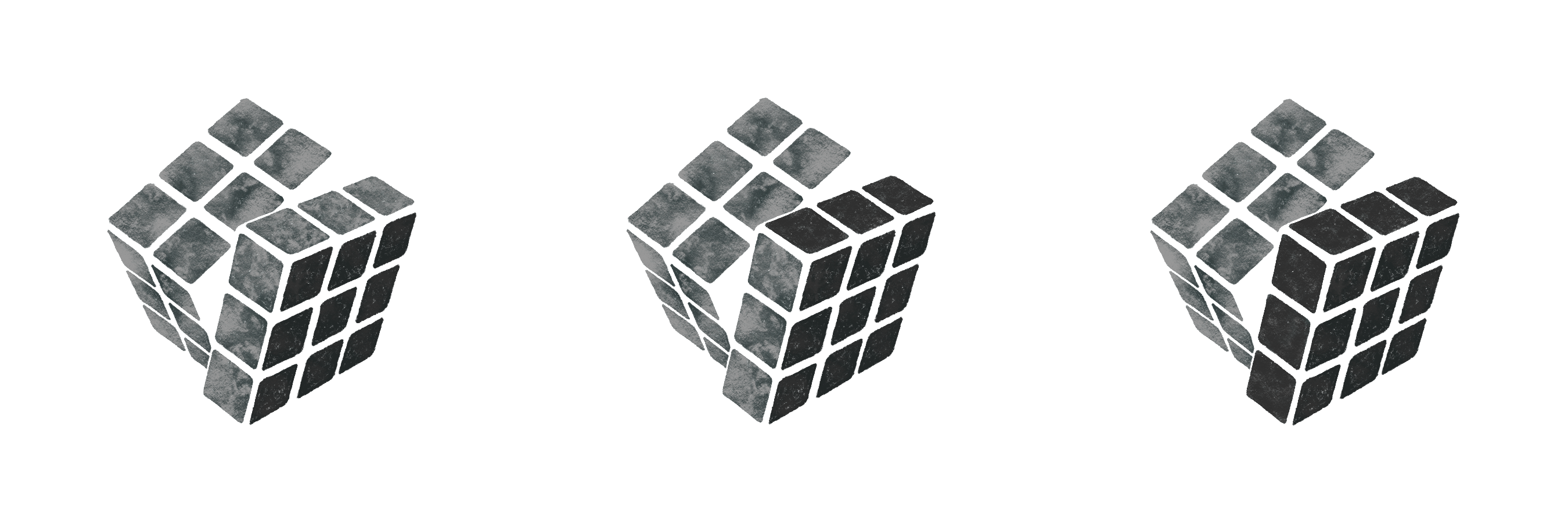
What is right shifts depending on which metrics you use to answer the question. What feels good also shifts depending on your experience and what thoughts and realization inform and interpret that experience. When all is accounted for, the realms of good and right are both shifting planes that alter the movement and scope of each other. Not only is this happening on an individual level, but also on the level between people. It’s as though each and everyone of us is a two sided rubix cube that is rearranging itself in an attempt to figure out what is right based on a fickle notion of what feels good, and society is a collection of these puzzles, each of us poking and prodding at other people’s notions of what is right and what should feel good. If this sounds like a roiling, turbulent lake that you’d never be able to skate on, then perhaps it’s no surprise that our news cycles, and our social media feeds are the same. Is it any wonder that such distilled versions of our lack of alignment on a mass scale don’t make us feel good? Of course, it’s yet to be realized whether or not it’s the right way forward, regardless of how we feel right now.
BRAND
June 26th, 2020
What’s the difference between a brand and a reputation? The two seem remarkably similar, but few people think about their own person as a brand. Certainly people rebrand themselves when seeking to switch careers, but do we think of our own personal brand on a daily basis? When talking with friends, while meeting someone new, while working on a personal project, while working for someone else?
Reputation seems to be the word we gravitate towards in most of these circumstances. We have a reputation to uphold. . . supposedly.
The two words have one subtle difference that holds across all these considerations: Reputation is what you end up with based on what you’ve done, whereas a brand is a concept through which we project.
Certainly there is an enormous amount of overlap between these two words, but notice this way of using them. We end up with a reputation, we don’t end up with a brand. At the same time, a brand can have a reputation, for being a good brand or a cheap, flimsy, unreliable brand.
If a Brand can have a reputation, does that mean a reputation can have a brand?
There’s something awkward about trying to make the words fit in reverse in this way. The reason may be because one is forward looking, and the other, our reputation, is evidenced only by looking backward. A brand is a kind of template, or a limited pallet of emotional and topical considerations. This isn’t to say that something is necessarily out of the purview of the brand, but that the constraints of style and concern that are represented by a brand create a productive lens through which to move forward. The blueprint of a brand functions like a guiding set of principles about what to create and how to create it. Whether this be a physical product, a service, or even a relationship between people.
We all have a reputation, for better or worse, and we all seem to settle on a style, also for better and often for worse. The result of our life in these capacities is somewhat passive compared to the pressure that a brand-concept can sear into a vision of the future. In this way, a brand is deliberate, and can aid each of us in the effort to be more deliberate about the life we want to live, tomorrow.